AIWORKX Unveils AgentRigor for AI Agent Reliability Validation

Enterprise AI deployments are hitting a familiar wall: models that pass benchmark tests still fail when deployed in actual service environments. AIWORKX announced on April 28 the launch of AgentRigor, a validation solution designed to address this gap by shifting from content-based assessments to service-level compliance evaluation.
The company's announcement, reported by thelec.net, frames the problem clearly. Traditional AI evaluation tools focus on whether outputs are correct against benchmark datasets. AgentRigor instead examines whether AI systems behave appropriately within specific service contexts—telecommunications, finance, healthcare, and other regulated industries where behavioral patterns matter more than isolated accuracy metrics.
CEO Yoon Seok-won stated that as AI agents increasingly handle real-world operational tasks, pre-deployment reliability verification has become essential rather than optional. The solution leverages AIWORKX's proprietary Korean-language evaluation data assets to deliver domain-specific analysis, which is a critical differentiator for enterprises operating in markets where language nuance directly impacts compliance and user trust.
AgentRigor's architecture includes quantitative validation of large language model response quality, safety verification based on real user scenarios, and support for compliance with recognized frameworks. The platform also provides automatic test data generation, customizable evaluation metrics, result visualization, and report automation. These features matter because they reduce the manual friction that typically accompanies AI validation workflows—no more spreadsheets tracking which test cases passed or failed.
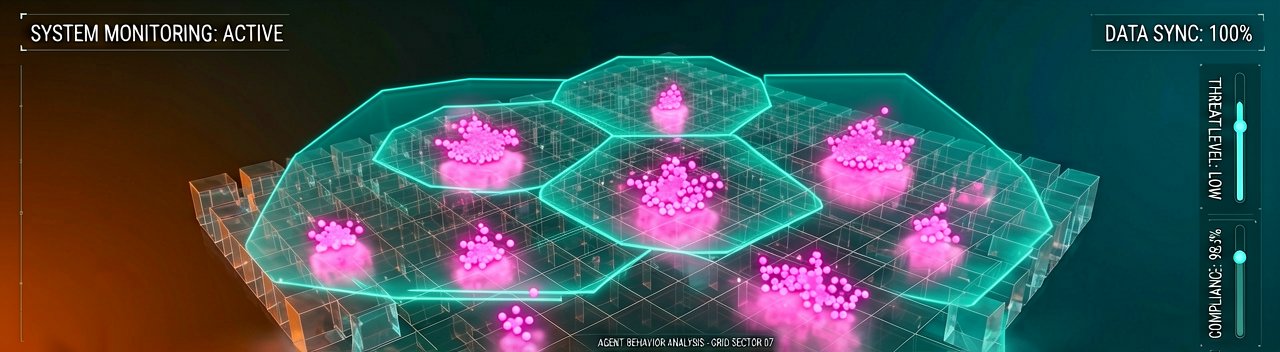
Independent coverage from Venture Square confirms the solution has already been applied in production environments. A major domestic IT service company used AgentRigor for an AI verification project, and a cosmetics platform completed beta testing. The solution supports both on-premises and cloud environments, which is non-negotiable for security-conscious industries like finance and the public sector.
The shift from "correct answer" verification to "behavioral pattern" evaluation represents a fundamental change in how enterprises should approach AI validation. Existing methods failed to reflect diverse scenarios required in actual service environments, and they struggled to incorporate contextual information or specific company goals. AgentRigor addresses this by providing an evaluation framework that reflects industry-specific service contexts while comprehensively analyzing response methods and risks across diverse fields.
AIWORKX plans to pursue global standardization by adding features such as multi-conversation verification, workflow integration, and MCP compatibility in the future. The company will unveil AgentRigor as a live demo at AI Expo Korea 2026, held at COEX starting May 6. This timing suggests the product is still in early commercialization phases, which is typical for enterprise validation tools that require extensive customization.
What makes this announcement notable is the recognition that AI agent reliability cannot be measured in isolation. A model might generate accurate responses in a controlled test but fail catastrophically when integrated into customer service workflows, financial compliance systems, or healthcare triage applications. The physical reality of deployment—latency spikes, integration friction, unexpected edge cases—determines whether an AI agent succeeds or becomes a liability.

AgentRigor's approach to service-unit compliance evaluation acknowledges this reality. By factoring in real-world service environments and assessing agent behavior alongside associated risks, the solution attempts to bridge the gap between theoretical model performance and operational reliability. This is particularly relevant for industries where regulatory frameworks require documented validation processes before AI systems can be deployed.
The market timing is also significant. As AI agents move from experimental pilots to production deployments, enterprises face mounting pressure to demonstrate reliability before committing resources to full-scale implementation. Pre-assessment of risks before deploying AI services becomes a business imperative rather than a technical nicety. Automated verification pipelines enhance operational efficiency, but they also create audit trails that compliance teams can reference during regulatory reviews.
Multi-model comparative evaluation support adds another layer of utility. Organizations testing different foundation models can now evaluate them against consistent service-level criteria rather than relying on disparate benchmark results. This standardization reduces the complexity of model selection decisions and provides clearer justification for procurement choices.
Whether AgentRigor achieves widespread adoption depends on several factors. The proprietary Korean-language evaluation data assets create a strong position in domestic markets but may limit immediate global applicability. The roadmap mentions adding multi-conversation verification and workflow integration, suggesting the current version has limitations in handling complex, multi-turn agent interactions.
Enterprise buyers will also scrutinize how well the solution integrates with existing MLOps pipelines and whether it supports the specific compliance frameworks relevant to their industries. The ability to customize evaluation metrics is useful, but only if the underlying framework can accommodate industry-specific requirements without requiring extensive reconfiguration.
AIWORKX's background in AI model and data quality verification provides credibility. The company has participated in projects like the NIA Eye Movement AI Data Project in 2021 and worked with SK networks on dataset building and quality verification. This track record suggests the team understands the practical challenges of enterprise AI validation rather than just theoretical frameworks.
The live demo at AI Expo Korea 2026 will provide the first opportunity for potential customers to evaluate AgentRigor's capabilities firsthand. Hands-on testing will reveal whether the solution delivers on its promises or if the service-level compliance framework remains more concept than practical tool. (This is where most AI validation products either shine or disappoint.)
Whether enterprises actually invest in dedicated AI agent validation solutions remains the real question. Many organizations will continue relying on internal testing protocols or vendor-provided evaluation tools until regulatory pressure or incident history forces a change in approach. AgentRigor positions itself as the infrastructure for that change, but market adoption will depend on demonstrated value beyond the initial announcement.
Artūras Malašauskas is an AI Systems Integrator with 20+ years of production-grade web engineering experience. He has designed, shipped, and scaled enterprise Python/PHP systems for logistics, SaaS, and public-sector clients. For the past year, he has focused exclusively on AI integrations: deploying open-source LLMs, building generative media pipelines (image, audio, video), and engineering multi-agent workflows for real production environments. His standard: reproducibility, security, cost-efficient inference—no vaporware. He documents and evaluates emerging AI tooling, separating verified capabilities from marketing noise. Technical editor at: muza-ai.eu, ai-verslas.lt, ai-naujinos.lt Connect on LinkedIn
Comments