AITX Unveils Revenue Realities Amid Heightened OTC Market Scrutiny
Operating in the over-the-counter markets requires a delicate balance of ambition and extreme transparency, especially when you are selling the promised land of artificial intelligence. Artificial Intelligence Technology Solutions Inc. (AITX) put this on full display in July 2026 by publishing its first-quarter financial results. The update gives Wall Street's retail contingent an unvarnished look at how hard it is to scale an AI-driven security firm when macro conditions sour and penny-stock investors grow impatient.
The headline figure shows that AITX generated total revenue of $1,831,202 for the three months ending May 31, 2026. According to the company's official financial disclosure published via OTC Markets, that is a minor 1% dip year-over-year compared to the $1,854,837 brought in during the same period in 2025. It also marks an 8% sequential drop from the previous quarter. At a glance, it looks like stagnation, but a deeper dive into the revenue breakdown reveals a more nuanced story of a business attempting to diversify away from its biggest vulnerability: extreme customer concentration.
The Customer Concentration Paradox
For a micro-cap tech firm, landing a massive anchor client is a dream that can quickly turn into a golden cage. AITX explicitly noted that the slight revenue contraction stemmed from reduced sales to its largest single customer. If you strip that dominant whale out of the equation, the core business actually looks remarkably healthy. Revenue from all other clients jumped to $1,463,319, which is a massive 52% year-over-year increase compared to the $960,007 those same tiers brought in last year.
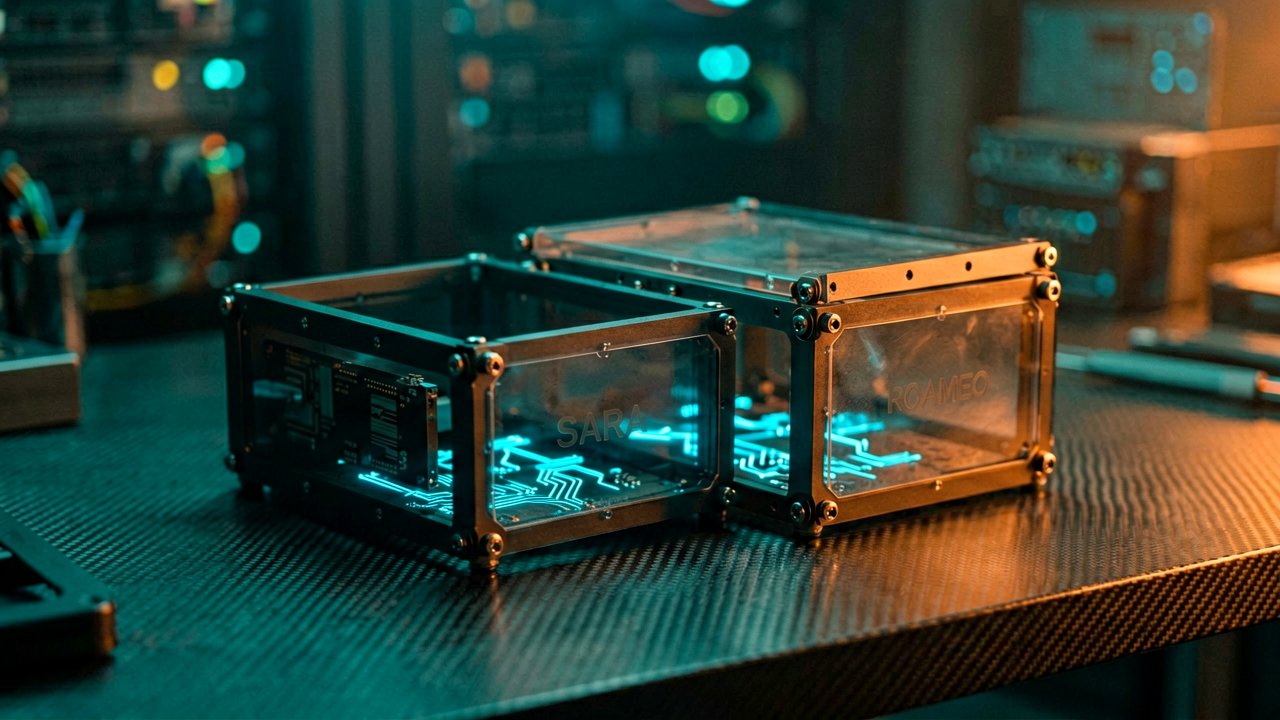
This diversification strategy is vital for long-term survival. Management is aggressively shifting its focus toward a recurring monthly subscription model. This Solutions-as-a-Service architecture allows the enterprise to retain ownership of its proprietary hardware, like the SARA and ROAMEO autonomous security units, while locking in predictable cash flows. Moving away from lump-sum hardware sales toward sticky software subscriptions is a textbook tech play, but it takes time to reflect on the bottom line.

Expenses Tamed, but Net Loss Creeps Higher
If there is a silver lining that should appease anxious retail traders, it is the company's newfound operational discipline. Driven by CEO Steve Reinharz, AITX managed to slash its quarterly operating expenses by roughly 12%, bringing them down to $3,893,188. This budget tightening helped narrow the company's operating loss from $3,178,669 down to $2,709,364, an impressive 15% operational improvement that proves management is paying attention to its cash burn rate.
Unfortunately, the balance sheet still faces heavy structural friction. Despite the progress in day-to-day operations, the company's total net loss widened significantly to $5,715,838 for the quarter, up from a net loss of $4,594,018 in the prior year's opening frame. The culprit here is not operational inefficiency, but rather a crushing $3 million wall of non-operating costs. This includes steep interest expenses and fluctuating fair-value adjustments on derivative and warrant liabilities that frequently plague micro-cap equities. For investors navigating the brutal landscape of OTC tech stocks, these results underscore a classic corporate narrative: the product engine is expanding, but the capital structure remains a heavy anchor to drag.
Behind the Scenes of the OTC AI Boom: The financial tightrope AITX is walking reflects a much larger, systemic challenge facing micro-cap tech companies trying to commercialize artificial intelligence. Over the last few years, the broader market has been flooded with "AI companies" that are little more than marketing shells wrapped around a ChatGPT API wrapper. AITX, conversely, deals in heavy, tangible infrastructure—rolling out physical security robots and stationary monitoring pillars that require substantial upfront capital expenditures. For an over-the-counter entity, balancing the massive cost of hardware manufacturing with the slow, trickling returns of a subscription-based software model is an incredibly high-stakes gamble.
Industry insiders have long pointed out that the traditional security guard industry is ripe for disruption due to rising labor costs and chronic understaffing. This structural shortage provides a genuine market opportunity for autonomous monitoring units. However, institutional investors typically avoid the OTC markets due to lighter regulatory oversight and high volatility, leaving companies like AITX heavily reliant on retail investors. This reliance creates a unique pressure cooker environment where management must constantly communicate operational milestones to sustain investor enthusiasm, even as long-term financial restructuring grinds along slowly behind the scenes.
The company's pivot toward a recurring subscription model is a direct response to this financial friction. By keeping ownership of the physical hardware and leasing out the artificial intelligence capabilities as a service, the enterprise aims to build a predictable, compounding revenue stream that will eventually outpace its operational burn rate. The challenge is that this shift requires patience from a retail shareholder base that is often looking for rapid, exponential growth rather than the methodical, quarter-by-quarter scaling of an enterprise security network.
Compounding these operational hurdles is the heavy drag of historical toxic debt and warrant liabilities that frequently plague micro-cap balance sheets. Even when a company successfully slashes its overhead and grows its core client base, non-cash adjustments and high-interest financing can easily wipe out operational gains on paper, as seen in the widening net loss. For seasoned market observers, the true test for the company moving forward will not just be whether it can deploy more robots, but whether it can successfully clean up its capital structure to prevent financing costs from swallowing its hard-won operational revenue.
Artūras Malašauskas is an AI Systems Integrator with 20+ years of production-grade web engineering experience. He has designed, shipped, and scaled enterprise Python/PHP systems for logistics, SaaS, and public-sector clients. For the past year, he has focused exclusively on AI integrations: deploying open-source LLMs, building generative media pipelines (image, audio, video), and engineering multi-agent workflows for real production environments. His standard: reproducibility, security, cost-efficient inference—no vaporware. He documents and evaluates emerging AI tooling, separating verified capabilities from marketing noise. Technical editor at: muza-ai.eu, ai-verslas.lt, ai-naujinos.lt Connect on LinkedIn
Comments