Ukraine Unveils Miniature FPV Drone 'Mothership' as Naval Warfare Evolves
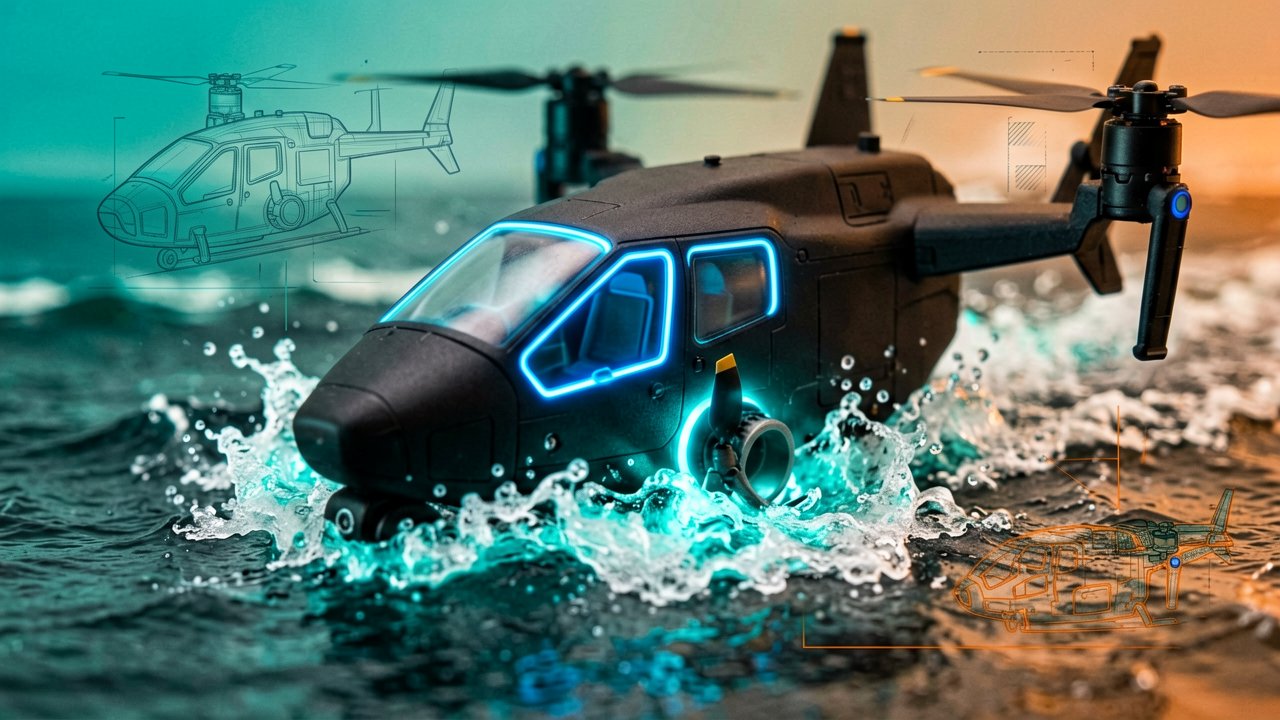
Ukraine has leveled up its asymmetric naval warfare playbook with the introduction of a miniature, remote-controlled carrier purpose-built for deploying first-person view (FPV) drones. Engineers within the Omega Special Purpose Center's diving unit, an elite detachment under the National Guard, pulled back the curtain on this tech-driven innovation in mid-2024. The compact vessel operates as a mobile launch pad, significantly extending the operational reach of loitering assets across open waters.
According to reports from Militarnyi, this specialized watercraft serves as a "mothership" to push capabilities closer to contested coastlines. Military analysts are already looking at the strategic ripples of this deployment, speculating that the underlying architecture hints at the potential for submarine-based launchers. By moving the launch platform below the surface, forces could theoretically minimize radar signatures, introducing a covert vector for aerial operations.
Expanding the Coastal Defense Network
The immediate goal for these low-profile carriers extends beyond simple transit. Teams intend to configure future iterations to carry interceptor drones designed to identify and neutralize aerial threats over the water before they reach the mainland. Shifting the frontline offshore adds a crucial early layer against reconnaissance and other assets targeting port infrastructures.
The Engineering Pivot Behind Sub-Surface Ambitions
What Most Reports Miss: The evolution from surface-bound drone carriers to theoretical submarine-based UAV launchers isn't just about sticking wings on a torpedo; it is a fundamental shift in fluid dynamics and signal management. Operational teams face steep hurdles when designing a system that can transition from a high-pressure maritime environment to the open air. The miniature FPV carrier serves as a critical sandbox for testing hull stabilization, remote command relays, and salt-tolerant electronics before engineers even attempt the complexities of underwater deployment.
Naval defense experts point out that current aerial drones are notoriously susceptible to moisture and corroding sea spray. Operating a surface mothership allows the Omega unit to refine specialized coatings and sealed payload bays that keep internal components bone dry right up until the moment of ignition. Transitioning this to a submersible platform requires solving the additional problem of dry-launch chambers, similar to the ballistic missile tubes used on massive nuclear submarines, but scaled down to fit compact, unmanned submersibles.
Strategic planners view these experimental platforms as a direct response to a tightening naval bottleneck. As traditional electronic warfare assets line coastal perimeters, launching a drone directly from the water's surface bypasses predictable land-based flight paths. A submersible variant would take this a step further, allowing a strike team to bypass radar networks entirely by sneaking a launch platform deep behind defensive lines before releasing a loitering munition into the air.
The industrial footprint behind these projects relies heavily on a decentralized network of volunteer groups and specialized military tech clusters. Rather than waiting on multi-year defense acquisition cycles, small teams iterate design blueprints in weeks, utilizing commercial off-the-shelf components mixed with custom 3D-printed brackets. This fast-paced cycle ensures that the lessons learned from the current miniature carrier are already influencing the digital models of next-generation underwater hulls.
The Logistics and Realities of Littoral Drone Carriers
Reading Between the Lines: The romanticized notion of a submersible drone fleet operating invisibly beneath the waves ignores the brutal physics of radio wave propagation through water. While surface-level motherships solve the immediate problem of drone battery depletion over long distances, going fully underwater severs the real-time, low-latency analog or digital video links that FPV pilots rely on to steer their crafts. A submarine launcher that must surface its antennae to maintain control entirely defeats the purpose of choosing a submersible hull in the first place.
Furthermore, the current enthusiasm for these miniature naval carriers glosses over a glaring operational vulnerability: recovery and reusability. Military announcements frequently showcase the dramatic launch phase, yet they rarely detail how these small, unstable watercraft handle the recovery of expensive electronics in choppy littoral waters. If these platforms are ultimately treated as single-use, expandable assets, the financial math behind "cheap" FPV warfare rapidly falls apart when factored against the cost of custom-built hulls and outboard propulsion units.
There is also a stark tactical contradiction in deploying drone interceptors from these mobile sea platforms to protect mainland ports. Fixed radar installations on shore already struggle with the horizon limits of detecting low-flying incoming threats; relying on a bobbing, uncrewed surface vehicle to detect, track, and successfully intercept an incoming drone introduces a high margin of error. The platform risks becoming an expensive, floating target before it can even deploy its defensive payload.
Ultimately, these innovations represent a desperate, highly creative attempt to compensate for a lack of traditional blue-water naval power. They force adversaries to expend resources monitoring vast coastlines, but they do not yet constitute a sustainable, systemic replacement for conventional naval dominance. Until the foundational limitations of underwater data transmission are solved, the submarine drone carrier will likely remain an effective psychological tool and a niche sabotage asset rather than a widespread tactical standard.
Building a miniature aircraft carrier for drones is a brilliant way to turn the Black Sea into a high-stakes arcade game, provided your remote control doesn't lose signal the moment a wave hits the antenna. It turns out that while ruling the waves is historically prestigious, making the waves cooperate with 2.4 GHz Wi-Fi is an entirely different battle.
Artūras Malašauskas is an AI Systems Integrator with 20+ years of production-grade web engineering experience. He has designed, shipped, and scaled enterprise Python/PHP systems for logistics, SaaS, and public-sector clients. For the past year, he has focused exclusively on AI integrations: deploying open-source LLMs, building generative media pipelines (image, audio, video), and engineering multi-agent workflows for real production environments. His standard: reproducibility, security, cost-efficient inference—no vaporware. He documents and evaluates emerging AI tooling, separating verified capabilities from marketing noise. Technical editor at: muza-ai.eu, ai-verslas.lt, ai-naujinos.lt Connect on LinkedIn
Comments