How Runway’s New Media Routing Architecture Reshapes the Economics of Enterprise Generative Content

The generative artificial intelligence landscape has reached an infrastructure-driven inflection point. As documented by TechCrunch , Runway has launched its Media Router via the Runway Dev platform, a release designed to intelligently orchestrate media generation requests across multiple internal and third-party models. Rather than operating strictly as a foundational model provider, Runway is actively positioning itself as an infrastructure and orchestration layer for enterprise multimedia production.
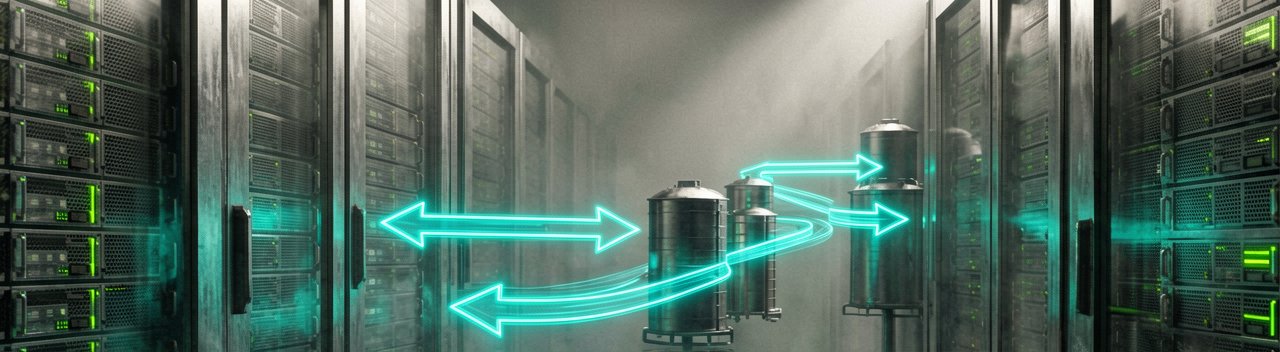
Enterprise content creators have historically faced volatile cost structures and erratic latency parameters when integrating frontier video, image, and audio models. Runway’s orchestration layer resolves these pain points by offering a single endpoint capable of evaluating a request against an array of models, such as Runway's own Gen-4.5, Google's Veo, and ElevenLabs, as noted by MLQ News. This unified framework dynamically routes tasks based on developer-defined weights for quality, execution speed, or maximum cost caps.
Algorithmic Selection Over Manual Tool Fragmentation
Enterprise media workflows suffer from severe operational friction when creative teams must manually switch between isolated model ecosystems. Runway's Media Router systematically analyzes incoming requests and evaluates current network performance across available APIs, as detailed by Mezha.net. By caching repetitive queries and switching execution contexts dynamically, the architecture drastically collapses the duration of production pipelines.
Enforcing Cost Governance and Budget Optimization
Uncontrolled token spending and fluctuating multi-modal compute prices frequently blow out enterprise budgets. According to Hyper.ai, the integration of an intelligent routing framework allows corporate clients to establish rigid pricing ceilings directly within their media pipelines. The system routes non-critical draft iterations to highly economical models while reserving top-tier, resource-intensive models exclusively for finalized assets.
Data Sovereignty and Compliance in Corporate Production
Large-scale creative agencies and enterprise studios must operate within strict geographic and regulatory parameters. The routing engine accommodates these mandates by allowing enterprises to filter models based on geopolitical origins and data center locations. Furthermore, the platform integrates robust operation logging, data auditing, and tailored support for private instances, allowing companies to satisfy rigorous internal security policies without sacrificing automated optimization.
The Hidden Gravity of Infrastructure in Creative Pipelines
What Most Reports Miss: The shift toward dynamic orchestration layers like Runway's Media Router is fundamentally an admission that no single artificial intelligence model can win the media generation race. For the past several years, venture capital and corporate strategy focused heavily on the pursuit of a singular, omnipotent foundational model. However, enterprise deployment has proven that a model optimized for hyper-realistic human skin textures is rarely the most cost-effective tool for animating wide-angle landscapes or generating rapid storyboards. By decoupling the creative interface from the underlying model, studios are finally able to treat machine learning models as modular, hot-swappable components rather than restrictive ecosystems.
This technical evolution mirrors the early architecture shifts of the cloud computing boom, where enterprises moved away from single-vendor lock-in toward multi-cloud architectures. In high-end visual effects and advertising production, data pipelines are notoriously fragile. Forcing creative directors to jump between disparate APIs meant managing separate billing accounts, varying data retention policies, and incompatible asset frameworks. An intelligent routing layer acts as a buffer, translating a unified creative prompt into whatever localized model dialect is optimal at that exact millisecond, hiding the underlying complexity from the user interface.
Behind the scenes, the economic implications for model providers are severe. When enterprise platforms route traffic based on programmatic cost-to-quality calculations, frontier models become commoditized utilities. If a competitor drops its API pricing by fifteen percent, an automated media router can instantly shift petabytes of rendering volume to that cheaper model without requiring a human developer to rewrite a single line of production code. This structural shift strips pricing power away from model builders and hands it directly to the orchestration layer, forcing providers to compete fiercely on raw execution speed and margin optimization.

Furthermore, this architectural layer solves a persistent cultural friction within creative agencies: the pushback from traditional artists against erratic tools. When a model update alters the stylistic output of an established prompt overnight, ongoing commercial campaigns can be derailed. By pinning specific production pipelines to highly managed routing protocols, technical directors can guarantee visual consistency across thousands of assets. The technology transforms generative AI from an unpredictable, chaotic creative assistant into a reliable, enterprise-grade industrial pipeline.
The Architectural Mirage of Universal Optimization
Reading Between the Lines: The celebration surrounding intelligent media routers glosses over a fundamental contradiction in the generative content economy. Enterprises are rushing to adopt orchestration layers under the premise that automated model switching will permanently lower their production overhead. However, this logic assumes that model capabilities and pricing structures will remain stable enough for an algorithmic gatekeeper to make clean, objective trade-offs. In reality, the rapid release cycles of foundational models mean that what is a cost-effective "draft-quality" model today may be rendered entirely obsolete by a competitor's price drop tomorrow, turning the maintenance of routing rules into a continuous, labor-intensive engineering task.
There is also a hidden operational tax associated with multi-model reliance that marketing materials rarely address. While a media router successfully unifies API endpoints, it cannot unify the latent idiosyncrasies of different neural networks. A prompt that yields a cinematic masterpiece on one video model often produces nonsensical geometry when automatically routed to another due to network latency or budget constraints. This architectural fragmentation forces technical directors to design highly complex, lowest-common-denominator prompts, effectively neutering the unique creative strengths of top-tier models in the pursuit of marginal cost savings.
Furthermore, relying on a third-party orchestration layer introduces a single point of failure that could jeopardize entire studio production schedules. By positioning itself as the central switchboard for enterprise creativity, Runway is essentially asking corporations to trade vendor lock-in with foundational model providers for infrastructure lock-in with Runway itself. If the routing platform experiences an outage or alters its proprietary weighting algorithms, an enterprise's entire automated content pipeline could grind to a halt. This shifts the strategic risk from the creative domain to the infrastructure domain, leaving agencies highly vulnerable to the platform stability of a single middleware provider.
Ultimately, the rise of the media router signals that the true value in the AI ecosystem has migrated from the intelligence itself to the control of the pipeline. As frontier models become increasingly commoditized and indistinguishable in raw performance, the entities that manage the flow of data and capital will dictate the rules of commercial art. Enterprises may find that while they have successfully optimized their computing budgets, they have handed the keys to their creative distribution networks to a new class of digital gatekeepers.
"We spent a decade trying to liberate creative teams from the tyranny of complex rendering software, only to realize we’ve successfully automated the process of arguing with an API about the price of a pixel."
Artūras Malašauskas is an AI Systems Integrator with 20+ years of production-grade web engineering experience. He has designed, shipped, and scaled enterprise Python/PHP systems for logistics, SaaS, and public-sector clients. For the past year, he has focused exclusively on AI integrations: deploying open-source LLMs, building generative media pipelines (image, audio, video), and engineering multi-agent workflows for real production environments. His standard: reproducibility, security, cost-efficient inference—no vaporware. He documents and evaluates emerging AI tooling, separating verified capabilities from marketing noise. Technical editor at: muza-ai.eu, ai-verslas.lt, ai-naujinos.lt Connect on LinkedIn
Comments