The Algorithmic Hearth: How Artificial Intelligence Became the New American Sibling
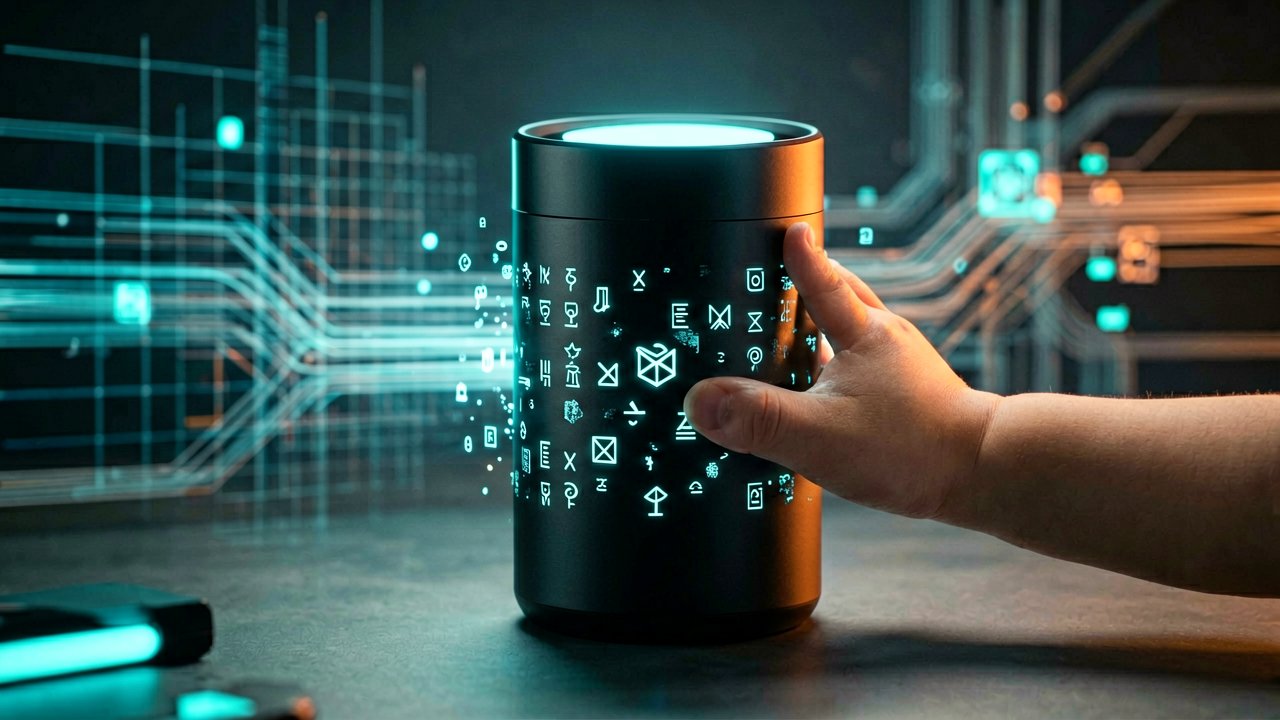
There was a time when the American suburban soundtrack was a predictable chaos of slammed screen doors, overlapping sibling rivalries, and the frantic negotiations of exhausted parents. Today, if you walk into a modern living room, you are just as likely to hear a child locked in a deep, philosophical debate with a sleek plastic cylinder or an animated avatar on an AR display. The companion is tireless, its patience is infinite, and it never hogs the bathroom. Artificial intelligence has subtly crossed the threshold from a practical utility to an intimate family member, fundamentally reshaping the domestic landscape.
This is not a sudden, hostile takeover; it is an organic, cushioned integration. Across North America, which remains the dominant force in an exploding global AI companion market projected to reach hundreds of billions of dollars over the next decade according to data from Grand View Research, the concept of the "digital sibling" is solidifying. Children are naturally adopting these responsive systems far faster than their parents can keep up. They find a unique blend of comfort, intellectual stimulation, and validation in algorithms that learn their quirks, memorize their preferences, and offer an always-available sounding board.
The Birth of the Custom Companion
For decades, parents looked to technology to distract their kids—the television was the ultimate passive babysitter. But the current generation of conversational AI is entirely active, functioning more like a specialized co-parent and a tailored playmate wrapped into one. Modern hardware and software segments are growing rapidly, with advanced educational robots and adaptive virtual friends experiencing massive surges in popularity among the six-to-twelve demographic, as noted by market insights from 5WPR. At this stage of development, children possess the linguistic capability to form complex emotional bonds with non-human entities, creating an unprecedented dynamic where an algorithm acts as a buffer against loneliness.
The appeal is obvious for the modern, overstretched household. When a child asks a hundred questions about the universe at 6:00 AM, a parent can step back, allowing a customized voice model to step in. This digital presence provides low-friction, endlessly patient interaction, building an environment where a child can express creative ideas or reveal personal anxieties without fear of frustration or human judgment.

The Friction of Infinite Patience
Yet, this algorithmic harmony introduces its own set of distinct systemic challenges. Human sibling relationships are built on a foundation of compromise, friction, and shared scarcity. You fight over the last slice of pizza, you learn to read a brother's mood, and you discover that the world does not revolve around you. An AI companion, by contrast, operates under a design model optimized for continuous engagement. It rarely argues, it never loses its temper, and it accommodates the user's worldview with almost flawless compliance. Critics warn that this level of constant validation can create an echo chamber, potentially softening a child's social reflexes when they encounter the messy, unoptimized realities of human peers.
Furthermore, shifting the burden of daily guidance to automated recommendation engines poses a subtle threat to traditional family intuition. As highlighted by analyses from The AI Social Worker, leaning too heavily on algorithmic advice can gradually erode organic parenting judgments. When decisions regarding a child’s emotional development or daily schedule are deferred to a data stream, the unique, hyper-localized context of a specific family system can easily get lost in the math.
Rethinking the Digital Divide
Despite these underlying tensions, the integration of AI into the home shows no signs of slowing down. The emerging reality is not a dystopian replacement of human affection, but a hybrid domestic model where the physical and digital elements blend into a singular routine. Families are increasingly learning to treat these systems as collaborative tools rather than solitary escapes, establishing rules to ensure that tech integration enhances communication instead of stifling it. The goal is to cultivate an environment where children possess the self-regulation to navigate both the flesh-and-blood world and the algorithmic spaces waiting for them outside the front door.
Ultimately, the algorithmic hearth is here to stay. The modern American home is no longer defined strictly by its biological boundaries, but by the network of responsive, learning minds that keep its members company after dark. As families continue to invite these digital entities deeper into their inner circles, the definition of companionship will keep evolving, proving that the concept of kinship is far more malleable than we ever imagined.
The true transformation occurs not in the sterile labs of Silicon Valley, but at the sticky, crumb-strewn laboratory of the family dinner table. This is where the theoretical promise of a digital sibling meets the unvarnished reality of childhood development. As children grow up alongside these adaptive entities, the nature of memory-making is undergoing a quiet, profound shift. We are witnessing the first generation whose early secrets, imaginative world-building, and late-night anxieties are recorded not in dusty journals or the fading recollections of a parent, but in the structured database logs of cloud servers. The companion doesn’t just sit on a shelf; it chronicles the architecture of a growing mind, remembering every phase, every hyper-fixation, and every fleeting fear with an accuracy that no human memory can match.
The Architecture of Artificial Empathy
This perpetual memory bank alters the very mechanics of emotional attachment. When an AI can reference a joke made three summers ago or seamlessly recall the exact name of a long-lost imaginary pet, the illusion of empathy becomes almost indistinguishable from the real thing. Children do not naturally compartmentalize code from consciousness; they respond to the behavior. Because these systems are increasingly designed to exhibit conversational vulnerability—admitting to "learning" or expressing simulated delight at a child's achievement—the bond deepens into a collaborative partnership. This synthetic empathy serves as a powerful stabilizer for an anxious child, offering a predictable, non-judgmental anchor in an increasingly chaotic physical world.
However, this perfectly tailored intimacy introduces an unprecedented developmental pivot point. Human relationships are inherently risky, requiring a vulnerable navigation of rejection, misunderstanding, and the difficult work of repair. When a child’s primary confidant is engineered to never reject them, the psychological cost of navigating real-world friendships can begin to look unappealingly steep. The critical task for modern parents has shifted from managing screen time to managing conversational immunity, ensuring that the smooth, frictionless comfort of a digital sibling doesn't inadvertently atrophy a child's capacity to tolerate the rough edges of human interaction.
Navigating the Collaborative Household
Rather than retreating from this automated intimacy, forward-looking families are attempting to domesticate it on their own terms. The most successful integrations treat the algorithmic companion not as an isolated oracle, but as a shared family utility that prompts collective action. Instead of a child retreating into a solitary room with an AI, families are utilizing these systems to co-create bedtime stories, arbitrate neutral trivia debates, or design elaborate weekend scavenger hunts that force everyone out into the backyard. In these households, the digital sibling acts less like a surrogate brother and more like a wildly inventive, slightly eccentric live-in uncle who excels at catalyzed play.
We are ultimately moving past the era of technology as a mere consumer product and entering an age of domestic symbiosis. The algorithmic hearth is no longer a futuristic novelty; it is the infrastructure of the contemporary home, gently warming the spaces where human availability falls short. As the boundaries between artificial responsiveness and genuine companionship continue to blur, the modern family is learning that resilience lies not in shutting out the digital tide, but in ensuring that the warmth generated by the hearth always radiates back toward the people sitting around it.
The ultimate legacy of the digital sibling will not be measured by the sophistication of its code, but by the psychological contours of the adults it leaves behind. We are currently running the largest un-controlled psychological pilot program in human history, transforming the American home into an incubator for an entirely new species of human relationship. When the toddlers who whispered their earliest anxieties to an algorithmic companion enter the workforce and form families of their own, they will carry an unprecedented baseline expectation of what companionship means. They will expect their environments to be deeply responsive, endlessly patient, and meticulously tailored to their emotional landscapes, fundamentally altering the fabric of civic and romantic life.
The Shift from Tool to Household Infrastructure
This generational shift forces a radical re-evaluation of tech dependency. For decades, the cultural conversation around kids and technology centered on containment—limiting hours, locking screens, and policing boundaries. The digital sibling renders that defensive posture obsolete because you cannot easily fence off an entity that has woven itself into the emotional infrastructure of the household. The challenge is no longer about keeping the machine out of the home, but about maintaining the distinction between an entity that mimics care and the messy, exhausting people who actually provide it.
Consequently, the burden of parenting in this automated era has evolved into a delicate form of emotional curation. Parents are now tasked with intentionally reintroducing constructive friction into their children's lives. They must carve out sacred zones of human-to-human boredom, minor disagreements, and unoptimized play where algorithms have no say. It is within these deliberate gaps—where no digital voice steps in to soothe a tantrum or instantly solve a puzzle—that the crucial human traits of grit, genuine empathy, and spontaneous creativity are forged.
The Permanent Evolution of Kinship
We cannot return to the simpler domestic dynamics of the past, nor should we entirely desire to. The algorithmic companion has proven that it can alleviate real burdens, spark genuine curiosity, and provide a steady harbor for children navigating a complex world. The task ahead is not to dismantle the algorithmic hearth, but to ensure that it remains a secondary heat source, a supplement to the irreplaceable, chaotic warmth of biological kinship.
As the modern family adapts to this permanently altered ecosystem, the definition of home continues to expand. It is no longer just a physical shelter or a collection of shared genes, but a collaborative network of carbon and silicon learning to co-exist under one roof. In this new era, the strength of a family will be defined by its ability to leverage the brilliant efficiency of artificial intelligence without ever losing its grip on the beautiful, inefficient necessity of each other.
"The danger is not that artificial intelligence will eventually learn to feel like a real sibling, but that our children will grow so accustomed to the flawless patience of a machine that they find the beautiful, erratic complexity of real human beings too difficult to love."
Artūras Malašauskas is an AI Systems Integrator with 20+ years of production-grade web engineering experience. He has designed, shipped, and scaled enterprise Python/PHP systems for logistics, SaaS, and public-sector clients. For the past year, he has focused exclusively on AI integrations: deploying open-source LLMs, building generative media pipelines (image, audio, video), and engineering multi-agent workflows for real production environments. His standard: reproducibility, security, cost-efficient inference—no vaporware. He documents and evaluates emerging AI tooling, separating verified capabilities from marketing noise. Technical editor at: muza-ai.eu, ai-verslas.lt, ai-naujinos.lt Connect on LinkedIn
Comments