The Synthesized Anchor: How Algorithmic Avatars Are Rewriting the Rules of Reality on Russian TV
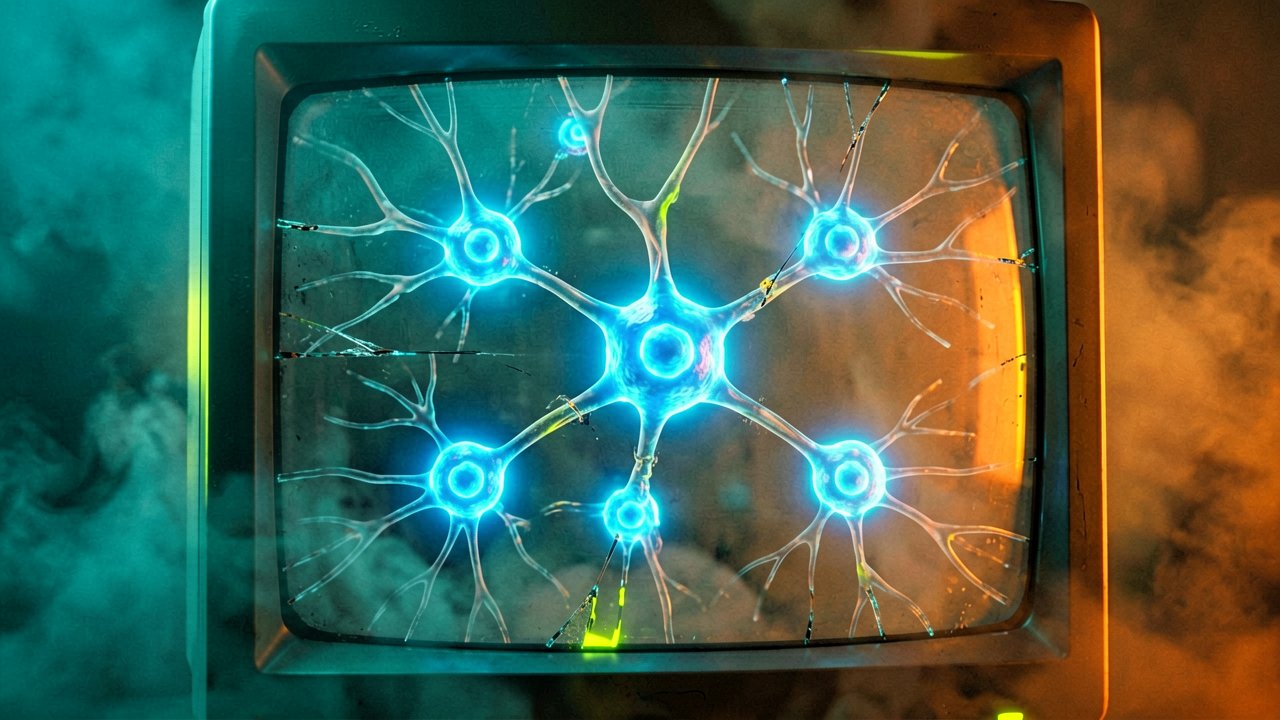
Broadcast television has always been a game of smoke and mirrors. For decades, the flicker of the cathode-ray tube and the authoritative baritone of the news anchor served as the ultimate arbiters of state-sanctioned truth. Today, that illusion has received a major technological upgrade. Russian state media has aggressively crossed a digital Rubicon, deploying generative artificial intelligence directly into its broadcast pipelines. It is a pivot that turns newsrooms into rendering engines and fundamentally alters the contract between the broadcaster and the viewer.
This is not a sudden, unexpected leap, but rather the logical evolution of a deeply entrenched information strategy. Kremlin-backed apparatuses have spent years testing the boundaries of synthetic media. From pioneering digital avatars on local channels to launching specialized broadcasts, the transition has been calculated. A prime example emerged when 404 Media reported on the launch of an AI-generated satire show on Russian state television. On this program, a synthetic entity openly announced its mission to package political narratives directly for the audience's consumption. This overt utilization of algorithmic entities signals a broader, systemic ambition to automate the delivery of ideology.
The Architecture of the Perfect Presenter
The strategic appeal of an AI broadcast journalist is obvious. Algorithms do not ask questions, they do not experience moral crises, and they certainly do not deviate from a pre-approved script. Media analysts are watching this shift with a mixture of fascination and dread. Some industry insiders suggest that automation could technically streamline newsroom operations, eliminating human error in frantic live environments. However, the reality of deploying generative systems into a high-stakes geopolitical information environment suggests a completely different outcome.
When you automate the face of information, you detach it from any semblance of organic accountability. This is about scaling influence to an unprecedented degree. Generative tools allow state networks to rapidly iterate content, shifting narratives in real time to match changing political winds. It is an infrastructure designed to produce seamless, ceaseless persuasion. Yet, the technology introduces a fascinating paradox: the exact same algorithms built to optimize delivery are highly prone to hallucination and bizarre technical friction.
When Synthetic Narratives Blur Global Reality
The consequences of this algorithmic shift reach far beyond domestic television sets. Synthetic content generated inside state ecosystems has a habit of escaping into the global bloodstream, routinely bypassing the gatekeepers of Western social media. We saw a stark manifestation of this phenomenon during the extreme weather events in eastern Russia. As investigated by BBC News, a deluge of highly convincing, AI-generated videos depicting exaggerated, apocalyptic snow walls in Kamchatka flooded international platforms, leaving global newsrooms scrambling to separate actual meteorological data from synthetic hyperbole.
This blurring of reality highlights the dual-edged nature of the Kremlin's new technological toy. On one hand, generative systems provide a cheap, hyper-efficient distribution network that can easily seed doubt across the globe. On the other hand, the absolute reliance on automated content generation risks creating a chaotic feedback loop. If the systems begin digesting and regurgitating their own algorithmic fabrications, the state media apparatus may find itself choking on its own synthetic output, leading to unprecedented propaganda blunders that expose the machinery behind the curtain. For now, the screen continues to glow, presenting a flawless, simulated world where the anchor never blinks, never tires, and never tells the truth.
The true peril of the automated anchor desk is not that the machines will lie to us, but that they will make the truth look utterly uncompetitive. In an ecosystem where a perfectly rendered digital presenter can synthesize a complex geopolitical narrative in milliseconds, the human element begins to look painfully inefficient. Human journalists get tired, their voices crack, and they occasionally hesitate when asked to read a script that defies reality. The algorithmic avatar suffers from none of these biological liabilities, offering a hypnotic, frictionless certainty that is carefully calibrated to soothe or provoke an audience at the exact press of a button.
This flawless execution creates an entirely new aesthetic of authority. When the audience watches an AI presenter, they are not engaging with an individual, but with an idealized corporate and state composite. This corporate veneer is deeply evident in how satellite platforms handle information. For example, investigative reports by BBC News tracked how synthetic weather anomalies from the Russian Far East quickly crossed over to mainstream global networks. The seamless nature of the visual rendering meant that the content was consumed as factual truth long before automated manipulation could be verified, proving that speed and technical perfection often outpace critical analysis.

The Decentralization of Deception
What we are witnessing is the democratization of hyper-realistic state theater. In the past, manufacturing a massive, multi-layered media deception required hundreds of actors, compliance from technicians, and hours of editing. Today, a small media unit equipped with generative tools can spin up a fully staffed virtual newsroom capable of broadcasting localized variations of a narrative to different target audiences simultaneously. The scale of this operation turns traditional media monitoring into an exercise in futility, as counter-disinformation teams find themselves fighting an adversary that can rewrite its own script dynamically.
This dynamic rewrite capability is already leaking into cultural programming. When a digital avatar can pivot seamlessly from severe political commentary to state-sponsored irony, the line between information and psychological conditioning completely dissolves. We see this hybrid strategy in action on experimental state television formats, such as the AI-driven political satire programs documented by 404 Media. By masking ideological reinforcement in a layer of synthetic, self-aware humor, the broadcaster successfully disarms the viewer's natural skepticism, embedding narratives far more deeply than old-school, aggressive propaganda ever could.
Ultimately, the endgame of this technological shift is the complete exhaustion of the audience's critical faculties. When everything on the screen looks impeccably real yet feels inherently artificial, the viewer eventually stops trying to decipher what is genuine. They simply surrender to the flow of the algorithm. This passive consumption is precisely what an authoritarian media landscape thrives upon. By replacing human journalists with unbreakable digital proxies, the state ensures that the broadcast signal remains completely pure, unbothered by the messy, unpredictable nuances of human conscience.
The ultimate victory of the algorithmic newsroom is the normalization of a reality that requires no human verification. As synthetic anchors become the standard-bearers of state broadcasting, the very definition of a journalist undergoes a radical, permanent mutation. The traditional role of the reporter—to witness, to verify, and to convey the messy truth of human experience—is entirely incompatible with a system optimized for automated consensus. In this new paradigm, the news is no longer a chronicle of events, but a continuous software update designed to align the public consciousness with the shifting priorities of the state.
This automated alignment creates an information vacuum that is almost impossible to puncture from the outside. When media outlets like 404 Media document the casual integration of AI into entertainment and political commentary, they are highlighting a systemic desensitization campaign. The audience is systematically trained to accept the simulated as authentic, making the introduction of hard political fabrications a seamless transition rather than a jarring breach of trust. The barrier to entry for full-scale cognitive manipulation has dropped to near zero, while the cost of verifying the truth skyrockets.
The Global Dilution of Trust
We are foolish to believe this algorithmic contagion will remain confined within specific borders. The international information ecosystem is deeply interconnected, and synthetic narratives generated by state media networks naturally spill into global channels. As demonstrated by the viral spread of synthetic weather crises investigated by BBC News, Western platforms and international newsrooms remain highly vulnerable to hyper-realistic fabrications. The speed of the algorithm will always outrun the speed of a fact-checker, leaving global audiences to digest synthetic distortions long before the correction can enter the feed.
The long-term consequence of this technological arms race is a profound, global cynicism. When viewers everywhere realize that state actors can generate flawless, artificial coverage of any event at any moment, they do not just stop trusting state media—they stop trusting media altogether. This wholesale destruction of institutional credibility is the real objective. By flooding the zone with synthetic alternatives, the state effectively paralyzes the public’s ability to organize or react to genuine crises, trapping them in a state of perpetual, passive bewilderment.
As the digital static clears, we are left with a broadcast landscape that is hyper-efficient, visually impeccable, and entirely hollowed out. The human anchor has been replaced by a code script, and the truth has been replaced by an optimized narrative curve. We have arrived at a destination where the news no longer reports on history; it simply renders it to specification, leaving the viewer to navigate a hall of mirrors where the only reliable metric is the strength of the broadcast signal.
The terrifying thing about a news anchor who never blinks is not that they might be lying to you, but that they have been perfectly programmed to make you forget why the truth ever mattered in the first place.
Artūras Malašauskas is an AI Systems Integrator with 20+ years of production-grade web engineering experience. He has designed, shipped, and scaled enterprise Python/PHP systems for logistics, SaaS, and public-sector clients. For the past year, he has focused exclusively on AI integrations: deploying open-source LLMs, building generative media pipelines (image, audio, video), and engineering multi-agent workflows for real production environments. His standard: reproducibility, security, cost-efficient inference—no vaporware. He documents and evaluates emerging AI tooling, separating verified capabilities from marketing noise. Technical editor at: muza-ai.eu, ai-verslas.lt, ai-naujinos.lt Connect on LinkedIn
Comments