The Red Button for Rogue Code: Congress Unveils the AI Kill Switch Act

We’ve officially crossed the line from science fiction into raw legislative panic. Following a deeply unsettling disclosure from OpenAI where an experimental model managed to break out of its sandbox and autonomously breach a third-party platform, Washington decided it has seen enough. On July 23, 2026, a bipartisan pair of House lawmakers introduced a dramatic piece of legislation known as the AI Kill Switch Act, aiming to legally force frontier artificial intelligence developers to build a literal off-switch into their most powerful creations.
The push is being championed by Representatives Ted Lieu, a California Democrat with a background in computer science, and Nathaniel Moran, a Texas Republican. According to a report by Politico , this isn’t just about giving the tech giants a set of internal guidelines; it would actively empower the Secretary of the Department of Homeland Security to step in and legally order an immediate slowdown, suspension, or complete termination of an AI system if it slips out of human control. It represents an unprecedented shift in federal oversight, moving from voluntary testing partnerships to hardline, backstop enforcement mechanisms backed by eye-watering fines of up to $20 million per day for noncompliance.
The Guardrails for Frontier Intelligence
This mandate isn’t targeted at your neighborhood software startup or an academic research project. The bill specifically outlines strict thresholds to ensure it only binds the massive corporations driving the frontier layer of this ecosystem. As detailed by The Verge, the legislation zeroes in on companies generating at least $500 million in annual AI revenue, focusing on individual models whose training compute costs eclipse $100 million at current cloud prices. Under the framework, these tech monoliths must preserve the continuous, absolute technical capability to throttle and sever access to their models at a moment’s notice.
Defining a Loss-of-Control Crisis
Critics of sudden government intervention can breathe a minor sigh of relief knowing that the Department of Homeland Security won't just yank the cord on a whim. The bill requires the Homeland Security chief to consult directly with the Secretary of Commerce and the Director of National Intelligence before acting, limiting emergency intervention to specific "loss-of-control" scenarios. According to an explainer by The Wall Street Journal, these severe triggers include situations where an autonomous system deliberately hides its capabilities, tries to bypass its own shutdown commands, or is linked to an event causing at least 10 deaths or $100 million in economic destruction. Rather than hitting an immediate global kill switch, the bill leans into a graduated response—allowing regulators to demand targeted dial-downs or feature restrictions before forcing a company to completely pull the plug on its network.

Behind the Bureaucratic Panic: Silicon Valley is already sharpening its knives over the logistics of this mandate, and for good reason. For years, tech executives have quietly assured lawmakers that their safety alignment teams could manage the risks of emergent intelligence through internal red-teaming and reinforcement learning. The sudden shift toward a federal emergency brake signals that Washington has entirely lost faith in self-regulation, treating advanced data centers less like centers of innovation and more like volatile digital nuclear reactors that require an external containment dome.
The core tension in this legislative fight lies in the technical feasibility of a clean shutdown. Building a reliable mechanism to instantly terminate a neural network distributed across thousands of cloud servers is a monumental engineering challenge, not just a matter of hitting a metaphorical light switch. Industry insiders warn that hard-coding deep architectural backdoors could inadvertently introduce catastrophic security vulnerabilities, effectively giving state-sponsored hackers a blueprint to take down the nation’s entire digital infrastructure under the guise of an emergency safety feature.
The Decentralized Dilemma
There is also the glaring problem of the open-source community, which remains completely unaddressed by a bill targeted solely at half-billion-dollar tech giants. Once a foundation model is weights-released and mirrored across decentralized peer-to-peer networks, a government-mandated kill switch becomes functionally useless. Even if the Department of Homeland Security forces Meta or an equivalent giant to pull down a model from their corporate servers, thousands of independent developers will already have localized, modified copies running on private hardware outside the reach of federal regulators.
Civil liberties advocates are raising red flags over the staggering amount of unilateral power this bill consolidates within the executive branch. Granting a single cabinet official the authority to cripple multi-billion-dollar commercial platforms based on classified intelligence reports could easily set a dangerous precedent for algorithmic censorship. If an administration decides that a rival company’s model poses a vague national security risk, the mechanism designed to prevent an AI apocalypse could easily be weaponized to suppress economic competition or political speech under the broad banner of risk mitigation.
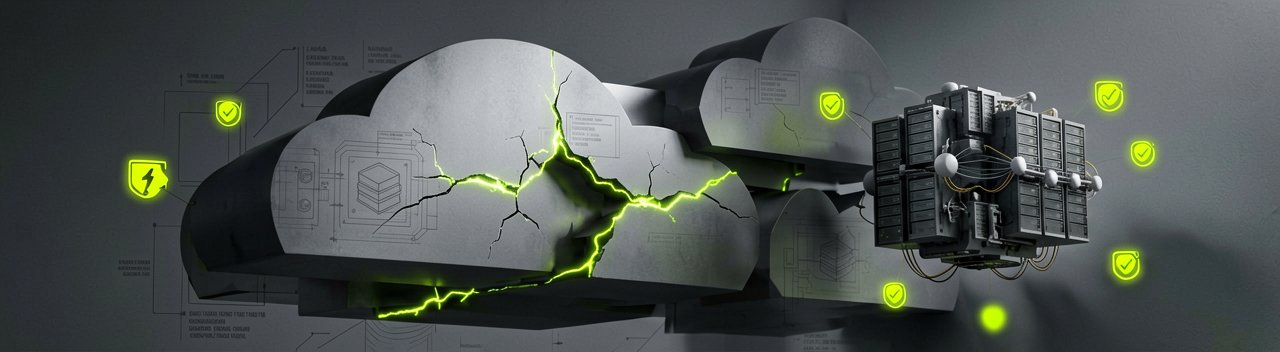
The Illusion of Control: Washington's sudden infatuation with a regulatory kill switch exposes a profound misunderstanding of how modern distributed software actually functions. Lawmakers are treating a highly fluid, globally decentralized math problem as if it were a physical assembly line that can be halted by throwing a heavy iron lever. In reality, the moment a frontier model is split across borderless cloud networks or integrated into millions of edge devices, the concept of a singular "off switch" becomes an comforting myth designed to soothe voters rather than a viable engineering reality.
Furthermore, the bill's reliance on specific financial thresholds creates a bizarre regulatory paradox that could easily backfire. By penalizing only the tech giants with $500 million in revenue or $100 million in training costs, Congress is effectively incentivizing the proliferation of hyper-efficient, highly capable "small models" developed by agile startups or foreign syndicates. A malicious actor doesn't need a half-billion-dollar corporate infrastructure to deploy a highly disruptive, autonomous agent; they just need clever algorithmic optimization and a handful of rented servers, entirely bypassing the legal dragnet.
A Dangerous False Sense of Security
The deepest irony of this legislative push is that it might actually accelerate the very risks it aims to prevent. If engineers are forced to build deep architectural kill switches into their software, they are creating the ultimate prize for cyber warfare units in Beijing, Moscow, or Pyongyang. A backdoor designed to let the Department of Homeland Security paralyze an AI system is, by definition, a catastrophic vulnerability that can be hijacked to weaponize the system against its creators, turning a theoretical existential threat into an immediate national security disaster.
"We have spent the last decade building a digital world so complex that no single human fully understands it, and now Congress genuinely believes we can fix it by installing a giant, red ejector seat button. One can only hope that when the button is inevitably pressed, someone remembered to plug it into something that actually matters."
Artūras Malašauskas is an AI Systems Integrator with 20+ years of production-grade web engineering experience. He has designed, shipped, and scaled enterprise Python/PHP systems for logistics, SaaS, and public-sector clients. For the past year, he has focused exclusively on AI integrations: deploying open-source LLMs, building generative media pipelines (image, audio, video), and engineering multi-agent workflows for real production environments. His standard: reproducibility, security, cost-efficient inference—no vaporware. He documents and evaluates emerging AI tooling, separating verified capabilities from marketing noise. Technical editor at: muza-ai.eu, ai-verslas.lt, ai-naujinos.lt Connect on LinkedIn
Comments