NVIDIA and South Korean Titans Forge Historic Half-Trillion-Dollar AI Alliance
NVIDIA has formalized an unprecedented $500 billion artificial intelligence infrastructure initiative in partnership with South Korea’s leading technology and industrial conglomerates, including SK Group, Samsung Electronics, Hyundai Motor Group, and Naver. Announcing the massive project during a high-profile summit with South Korean President Lee Jae Myung, NVIDIA CEO Jensen Huang confirmed that the collaborative effort will systematically integrate advanced chip design, next-generation high-bandwidth memory (HBM), and sovereign software ecosystems. The sheer scale of this deployment represents one of the largest single commitments to infrastructure in computing history, fundamentally restructuring how physical AI factories and global semiconductor supply chains operate.
The anchor of this massive pact is a direct partnership between NVIDIA and SK Group, which establishes an extensive roadmap for next-generation hardware manufacturing. Under this initiative, SK Telecom will construct a massive two-gigawatt AI data center factory powered by NVIDIA's upcoming Vera Rubin processors and SK Hynix’s advanced HBM4 memory architectures, scheduled to begin initial operations in 2027. Concurrently, NVIDIA is executing a parallel $1 billion investment in Naver to expand highly secure regional cloud infrastructure, alongside specialized joint chip design frameworks with Samsung Electronics to secure supply lines and mitigate mounting global production bottlenecks.
The Strategic Architecture of a Half-Trillion-Dollar Bet
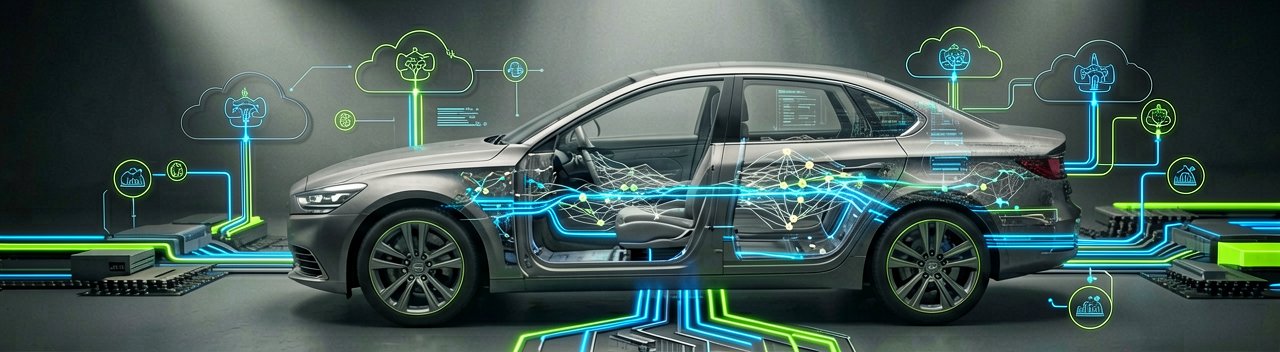
The magnitude of this alliance shifts NVIDIA's operational model from a transactional chip vendor to an infrastructure partner inextricably bound to an entire nation's industrial output. By combining its sovereign AI frameworks with local industrial giants, NVIDIA secures a domestic proving ground for "physical AI" systems—most notably through automated smart factories and next-generation autonomous Genesis vehicles engineered alongside Hyundai Motor Group. For South Korea, the alliance acts as a definitive safeguard for its semiconductor economy, anchoring Samsung and SK Hynix at the absolute center of global HBM allocation.
Market Impact and Global Supply Chain Realignment
From a macroeconomic perspective, this consolidation represents a proactive defense against geographical supply single-points of failure and the rising threat of import tariffs. By building high-capacity, multi-gigawatt AI nodes directly alongside the fabs of the world's premier memory suppliers, NVIDIA successfully converts its primary chip providers into massive, long-term enterprise consumers. This circular ecosystem essentially insulates both NVIDIA and its South Korean partners from market volatility, creating a hardware-and-software monopoly that global competitors will struggle to disrupt over the next decade.
Deep coverage of these unfolding infrastructure developments can be explored via Reuters , with deeper context regarding corporate integrations provided by The Korea JoongAng Daily and technical specifications documented by Tom's Hardware.
Anatomy of the High-Stakes Semiconductor Cartel
Beyond the Billion-Dollar Billboards: The true catalyst for this monumental alliance lies in a desperate race against physics and regional silicon choking points. For the past three years, the tech sector has wrestled with severe packaging and high-bandwidth memory (HBM) deficits that routinely delayed the deployment of enterprise-grade AI clusters. By locking down SK Hynix’s forthcoming HBM4 output and bringing Samsung into a highly coordinated co-design framework, NVIDIA is effectively building a private industrial pipeline. This strategic integration is designed to insulate NVIDIA from Taiwan-centric manufacturing vulnerabilities while establishing an airtight monopoly over the foundational physical assets required to power next-generation computing architectures.
The geopolitical undercurrents of this agreement are just as critical as the hardware metrics. South Korea has long operated under intense pressure to balance its technology ties between Western markets and regional manufacturing hubs. For President Lee Jae Myung's administration, this $500 billion initiative represents a decisive economic shield, elevating South Korea from a component supplier to the literal co-architect of global AI infrastructure. By embedding NVIDIA's Rubin architecture into domestic mega-projects, Seoul ensures that its domestic technology sector remains completely indispensable to the Western AI revolution, effectively securing its supply lines against shifting trade policies and aggressive international tariff structures.
Inside the corporate boardrooms of Seoul's largest conglomerates, the alliance is being treated as a necessary, if complex, survival pact. Samsung Electronics, which faced significant hurdles during the early HBM3 validation cycles, views this massive infrastructure plan as a golden opportunity to permanently close the gap with its fierce rival, SK Hynix. Meanwhile, Naver's involvement highlights the critical rise of sovereign AI—the reality that non-English-speaking nations require highly localized software ecosystems trained on native data, rather than relying entirely on generic, Western-centric models. This massive multi-company alignment successfully bridges the historic divide between South Korea's hardware muscle and its ambitions for global software dominance.
The industrial long game of this alliance stretches far beyond traditional data centers and standard cloud computing instances. By pulling Hyundai Motor Group into the fold, NVIDIA is anchoring its "physical AI" and omniverse platforms directly into the heavy manufacturing sector. The projected automated smart factories and advanced autonomous Genesis fleets are intended to serve as global blueprints for industrial automation, demonstrating how machine learning can orchestrate physical supply chains in real time. This ultimate convergence of silicon, localization, and heavy machinery cements a structural shift, transforming artificial intelligence from a digital novelty into the baseline operating system for global heavy industry.
The Architectural Fragility of a Consolidated Silicon Empire
Reading Between the Lines: The triumphalist rhetoric surrounding this half-trillion-dollar alliance deliberately glosses over the immense technical and financial contradictions inherent in binding fierce corporate rivals to a single corporate master. For years, Samsung Electronics and SK Hynix have engaged in a bitter, zero-sum war for global memory dominance, spending billions to out-maneuver each other's proprietary packaging techniques. Forcing these historic adversaries into a unified infrastructure framework under NVIDIA's banner creates an incredibly volatile corporate environment. The assumption that these conglomerates will seamlessly share intellectual property and align their production timelines ignores decades of intense competitive friction, raising serious doubts about the long-term stability of the project.
Furthermore, the astronomical $500 billion price tag relies on a dangerously optimistic projection of perpetual, uninterrupted demand for massive data center capacity. By committing to a multi-gigawatt infrastructure blueprint that stretches past 2027, NVIDIA and its South Korean partners are betting the health of their domestic economies on the belief that enterprise software monetization will finally catch up to hardware capital expenditures. If the enterprise market experiences a cooling phase, or if localized sovereign AI models fail to generate sustainable revenue streams, South Korea risks being left with massive, underutilized server farms and an oversupply of highly specialized HBM chips that have no alternative commercial buyers.
The geopolitical rationale behind this deal also contains glaring vulnerabilities. While the initiative is framed as a strategic diversification away from the Taiwan Strait, it merely swaps one concentrated geographic risk for another. Concentrating a critical mass of the world’s next-generation AI factories and HBM4 fabrication facilities within the Korean Peninsula exposes the global tech supply chain to severe regional tensions and localized energy grid strains. If a single corporate bottleneck or localized political disruption can stall the roll-out of the Rubin platform, then this massive consolidation has not actually solved the tech sector's systemic vulnerabilities; it has simply remapped them onto a different, highly volatile corner of the map.
"Building a half-trillion-dollar tech alliance to hedge your geopolitical bets is a magnificent strategy, right up until you realize you have spent the GDP of a medium-sized nation just to replace your total dependence on one island with a total dependence on a peninsula."
Artūras Malašauskas is an AI Systems Integrator with 20+ years of production-grade web engineering experience. He has designed, shipped, and scaled enterprise Python/PHP systems for logistics, SaaS, and public-sector clients. For the past year, he has focused exclusively on AI integrations: deploying open-source LLMs, building generative media pipelines (image, audio, video), and engineering multi-agent workflows for real production environments. His standard: reproducibility, security, cost-efficient inference—no vaporware. He documents and evaluates emerging AI tooling, separating verified capabilities from marketing noise. Technical editor at: muza-ai.eu, ai-verslas.lt, ai-naujinos.lt Connect on LinkedIn
Comments