AMD Goes All-In on the AI Factory with Helios, 2nm Venice CPUs, and Instinct MI455X
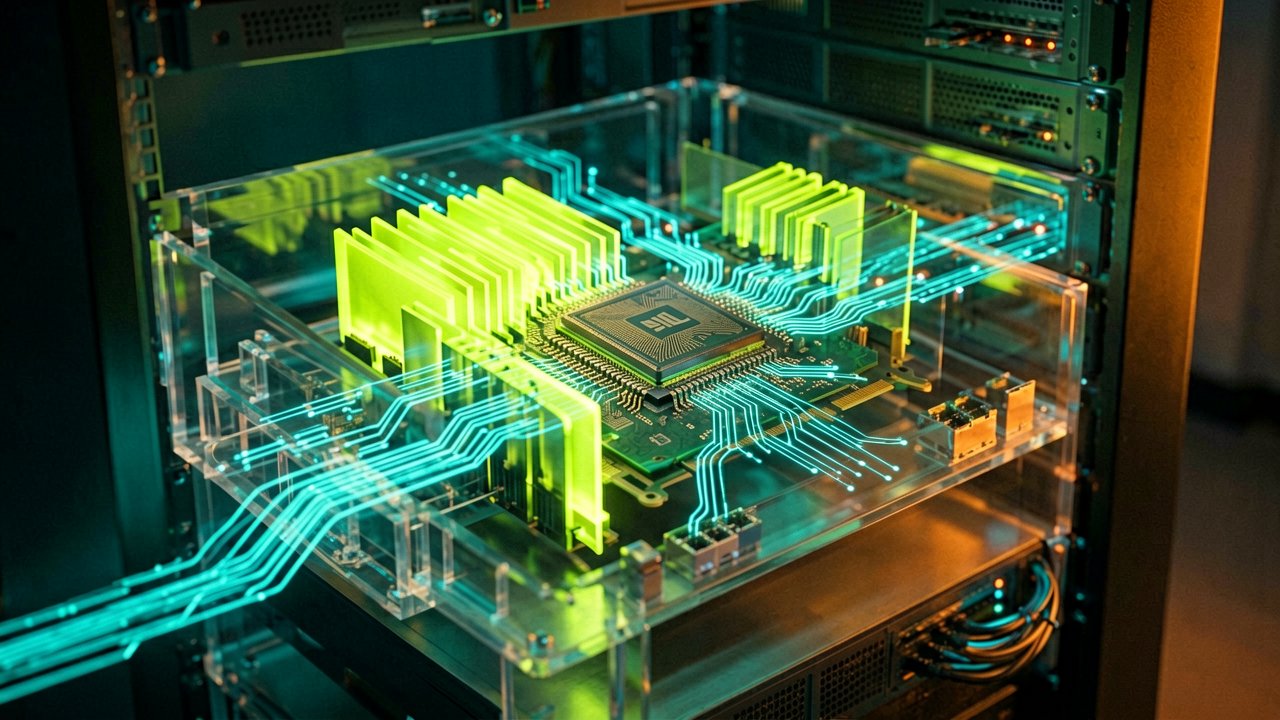
AMD just dropped a massive anvil on the server market. At its Advancing AI conference in San Francisco, CEO Lisa Su took the stage to unveil a full-stack hardware and software assault designed to dismantle Nvidia's dominance in the data center. The headline act is AMD Helios, an integrated, liquid-cooled rack-scale platform that treats compute, memory, and networking as a single unified system rather than a collection of separate puzzle pieces. It is a bold, turnkey play for the agentic AI era, signaling that the company is no longer content just selling elite chips—it wants to build the entire factory.
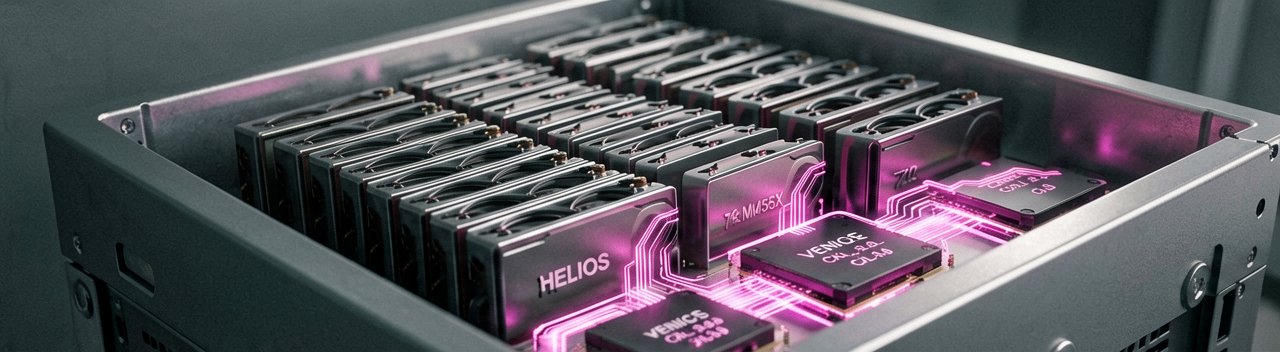
The engineering dense inside a single Helios rack is frankly staggering. The platform weaves together 72 of AMD’s newly announced Instinct MI455X GPUs, 18 of its 6th-generation EPYC "Venice" server CPUs, and specialized Pensando "Vulcano" 800 Gbps AI NICs. Instead of routing traffic through multiple traditional network hops, Helios utilizes an open-standard UALink-over-Ethernet fabric to bind all 72 accelerators into a single, cohesive scale-up domain. According to AMD's official technical blog published on AMD Blogs, this co-designed architecture cranks out a jaw-dropping 2.9 exaflops of dense FP4 inference compute and houses 31 terabytes of shared HBM4 memory. That gives the system a theoretical 15% compute advantage and 50% more memory capacity over Nvidia's competing Vera Rubin NVL72 rack.
Chasing the Trillion-Dollar AI Prize
The true standout of the showcase is the Instinct MI455X GPU. Fabricated on TSMC's cutting-edge 2-nanometer process node, this 320-billion-transistor monster features 432GB of HBM4 memory delivering a blistering 23.3 TB/s of memory bandwidth per chip. For cloud hyperscalers trying to tame the astronomical costs of running frontier models, the real-world implications are massive. On high-interactivity workloads like DeepSeek-V4-Flash, AMD claims the MI455X offers up to a 34x boost in token throughput and an 18x reduction in token cost compared to its previous-generation silicon. It is a direct answer to the memory bottleneck plaguing massive mixture-of-experts models, allowing massive key-value caches to remain completely local to the GPU.
Hyperscalers and Robotics Developers Are Snapping It Up
Unlike previous chip cycles where AMD had to beg for developer adoption, tech giants are already lining up with their checkbooks. Microsoft has committed to deploying Helios systems at scale within its Azure cloud infrastructure, introducing new virtual machine families tailored specifically for advanced reasoning and scientific computing. Meanwhile, a blockbuster multi-year partnership with Anthropic will see up to two gigawatts of Instinct accelerators deployed inside Helios frameworks to train future iterations of Claude. To seal the deal, AMD is investing $5 billion into Anthropic while integrating Claude into its own engineering workflows to accelerate future software optimization. Beyond the data center, AMD also refreshed its edge strategy by rolling out the Kria AI Robotics platform and Ryzen AI Embedded X100 chips, which are hardened to run autonomous workloads 24/7 for a decade in brutal industrial environments.
The Long Road to General Availability
Of course, winning a war on a spec sheet is very different from winning it in the real world. While AMD's simulated benchmarks claim a 30% advantage in tokens-per-dollar over Nvidia, the green team's Rubin architecture is already rolling off production lines and into data centers. AMD expects initial Helios production shipments to begin late this quarter before ramping aggressively through the end of the year. Hyperscalers like OpenAI are slated to bring their clusters online in the final months of the year, with deployments continuing well into next year. If AMD can smoothly execute this hardware rollout and maintain momentum with its open-source ROCm software stack, the AI infrastructure monopoly might finally face a true duopoly.
What Most Reports Miss: The Architectural Bet Against Nvidia’s Proprietary Grip
The real battlefield isn't the raw teraflops listed on a marketing slide; it is the fundamental philosophy of the data center fabric. For years, Nvidia has locked hyperscalers into its proprietary ecosystem using NVLink switches and Infiniband networking, effectively forcing cloud providers to buy entire proprietary clusters. AMD’s Helios architecture represents a calculated, multi-billion-dollar bet on open standards. By building Helios entirely around Ultra Accelerator Link (UALink) over standard Ethernet, AMD is offering cloud titans an escape hatch. This strategy allows massive cloud infrastructure teams to mix and match components rather than getting trapped in a single vendor's capital-expenditure cage, a critical distinction as data center power requirements balloon toward gigawatt scales.
Behind closed doors, the engineering feat of embedding the 6th-generation EPYC "Venice" CPUs into this topology is what has enterprise architects talking. Historically, CPUs in AI clusters were relegated to basic housekeeping duties, often creating data starvation pipelines for hungry GPUs. Venice changes the math by utilizing a massive cache pool and advanced CXL 3.0 signaling, ensuring that data pipelines between the systemic memory and the Instinct MI455X accelerators remain completely saturated. This structural tuning addresses the primary bottleneck of modern agentic AI workloads, where massive context windows and real-time reasoning loops require constant, low-latency communication between the processor and the accelerator fabric.
From a stakeholder perspective, the massive $5 billion financial and engineering alliance with Anthropic is the ultimate validation of this open-ecosystem strategy. Industry insiders note that Anthropic has grown increasingly wary of relying solely on Nvidia hardware, especially given the unpredictable allocation queues that have plagued the tech sector over the last two years. By anchoring their future Claude models to AMD's Helios framework, Anthropic secures a guaranteed, massive hardware pipeline while giving AMD a Tier-1 software partner capable of battle-testing its ROCm open software stack at absolute limit-load conditions.
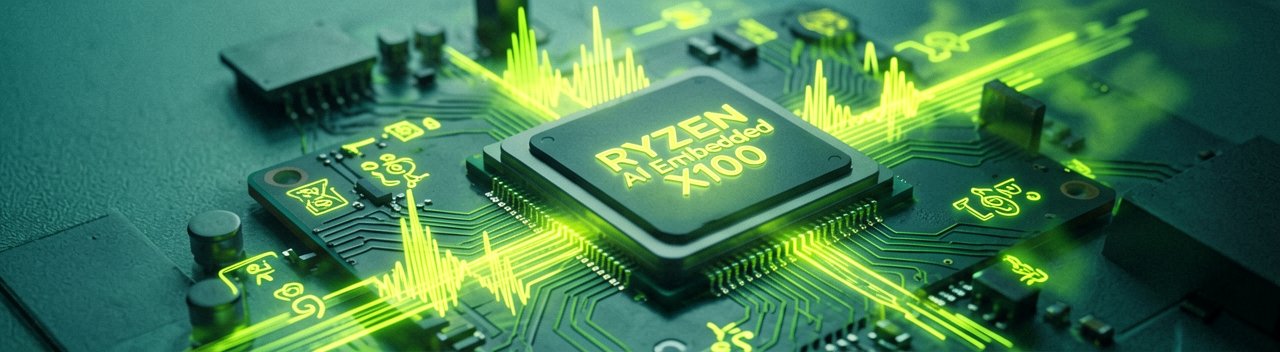
This aggressive data center expansion is being paired with an equally calculated play at the physical edge through the Kria AI Robotics platform. While the data center grabs the flashy headlines, industrial automation and autonomous logistics represent a massive secondary market that Nvidia’s high-power architectures often over-spec. AMD's introduction of the Ryzen AI Embedded X100 chips targets the literal factory floor, offering ruggedized, low-thermal silicon designed to survive a decade of continuous operation in hostile environments. It is a classic pincer movement: squeeze the competitor in the cloud with open-standard clusters, while undercutting them at the physical edge with hardened, low-power robotics silicon.
Reading Between the Lines: The Supply Chain Mirage and Software Reality Check
The euphoria surrounding AMD’s paper specs ignores the brutal reality of TSMC’s fabrication queues. Moving the Instinct MI455X to a cutting-edge 2-nanometer process node sounds like an engineering triumph, but it places AMD in direct competition with Apple and Nvidia for the most constrained wafer capacity on earth. Historically, when TSMC allocation gets tight, the largest checkbook wins, and AMD has rarely outbid its rivals for leading-edge allocation. If AMD cannot secure the physical silicon to meet its lofty promises, Helios risks becoming a brilliant boutique solution rather than the high-volume Nvidia killer Lisa Su envisions.
There is also a glaring contradiction in AMD’s sudden embrace of open standards like UALink. While promoting a democratic, vendor-neutral fabric appeals to cost-conscious hyperscalers, it simultaneously undermines AMD's ability to lock customers into its own ecosystem. Nvidia’s margins are legendary precisely because its proprietary NVLink and CUDA ecosystems make migration an existential nightmare for developers. By championing a plug-and-play architecture, AMD is effectively commoditizing the interconnect fabric, leaving itself vulnerable to any third-party chip designer who can underprice them on raw compute tokens down the line.
Furthermore, the software gap remains a formidable chasm that billions of dollars in partnerships cannot instantly bridge. The $5 billion alliance with Anthropic is a massive step forward, but optimizing the open-source ROCm stack for a single frontier model developer is a far cry from supporting the chaotic, global ecosystem of enterprise enterprise developers who have spent a decade writing CUDA-native code. Many enterprise IT shops lack the engineering headcount to port legacy workloads to ROCm, meaning that outside of a few hyperscale elites, the broader market may still default to Nvidia out of sheer operational inertia.
Ultimately, AMD’s dual-track strategy—dominating both the exascale data center and the ruggedized factory floor with the Kria platform—strains its software engineering resources at a critical juncture. Splitting focus between a 2.9-exaflop liquid-cooled cloud rack and a low-power embedded chip for industrial arms risks diluting the development of ROCm. In the hyper-accelerated AI race, trying to be everything to everyone often results in being second-best everywhere, a luxury AMD can ill afford when competing against an incumbent with singular, fanatic focus.
Building a faster chip is easy compared to convincing thousands of developers to rewrite ten years of software infrastructure, proving once again that in the AI gold rush, the hardest part isn't selling a better shovel—it's convincing the miners to learn a whole new way to dig.
Artūras Malašauskas is an AI Systems Integrator with 20+ years of production-grade web engineering experience. He has designed, shipped, and scaled enterprise Python/PHP systems for logistics, SaaS, and public-sector clients. For the past year, he has focused exclusively on AI integrations: deploying open-source LLMs, building generative media pipelines (image, audio, video), and engineering multi-agent workflows for real production environments. His standard: reproducibility, security, cost-efficient inference—no vaporware. He documents and evaluates emerging AI tooling, separating verified capabilities from marketing noise. Technical editor at: muza-ai.eu, ai-verslas.lt, ai-naujinos.lt Connect on LinkedIn
Comments