Synaptic: Breaking the Corporate Data Monopoly with Local-First AI Architecture

The centralized control of artificial intelligence is facing its most significant architectural challenge yet. Tech innovator Max Avery has officially introduced Synaptic, an open-source AI assistant explicitly designed to deliver enterprise-grade privacy to everyday consumers without degrading competitive performance benchmarks. The announcement signifies a profound strategic shift away from data-hungry corporate silos and toward fully localized, transparent, and decentralized AI intelligence networks.
For years, enterprises and private individuals have operated under the assumption that cutting-edge AI capabilities require a mandatory trade-off with data privacy. Hyperscale corporate monopolies have leveraged this assumption to gatekeep advanced large language models behind restrictive cloud ecosystems, capturing vast amounts of proprietary data in the process. Synaptic fundamentally rejects this premise by proving that a robust open-source alternative can run securely at the edge, shifting the locus of control entirely back to the user.
As detailed in initial disclosures across prominent media syndicates, including openPR and local affiliates like WBOC, the platform leverages local-first execution paradigms to bypass standard remote-server vulnerabilities. This specific technological framework addresses the growing corporate anxiety surrounding automated knowledge extraction and sovereign data loss, positioning open-source software as a primary driver of enterprise digital safety.
The Architecture of Edge-Based Sovereignty
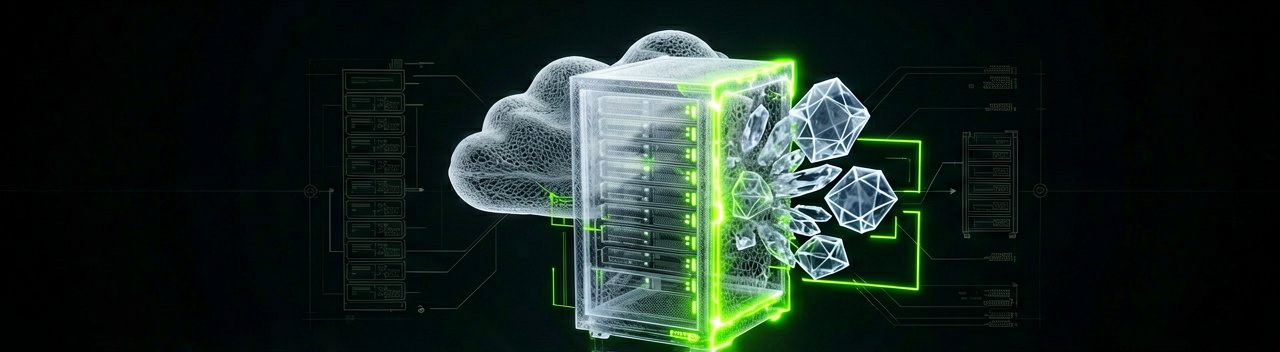
At the center of the Synaptic ecosystem is a strict local-first framework powered by Ollama, which handles complex model inference directly on the consumer's physical machine. This design eliminates the necessity of sending raw telemetry or sensitive operational text across the public web. By processing logic locally, the assistant mitigates common data breach points and prevents centralized entities from scraping proprietary interactions for continuous model training.
Granular Data Security and Verification
To deliver enterprise-level compliance, Synaptic introduces an integrated privacy classifier that continuously scans internal workflows, automatically flagging and redacting sensitive data prior to final output generation. Furthermore, the platform integrates evidence-backed tagging. Every output tag carries an explicit confidence score, an identifiable source quote, and a distinct privacy flag to guarantee full auditing transparency for data-sensitive corporate environments.
Extensible Tooling and Framework Native Support
Instead of locking developers into a closed platform, Synaptic features extensive structural compatibility with modern development environments through seven Model Context Protocol (MCP) tools. This protocol enables tools like Claude Code or Codex to interact natively with the Synaptic vault. Backed by thirteen specialized vault skills and structured around the PARA (Projects, Areas, Resources, Archive) organizational methodology, the architecture also features exact contribution tracking to log when a specific note directly informs a corporate decision, brief, or article.
Market Impact on Closed AI Ecosystems
The arrival of Synaptic threatens the commercial moat constructed by established AI monopolies that rely on continuous data harvesting to maintain market dominance. By offering a functional, auditable system that mirrors the capabilities of major closed-source tools, this launch accelerates a broader movement toward decentralized personal intelligence. As corporate entities demand robust data governance, the market is poised to reward open systems that decouple advanced reasoning capabilities from intrusive corporate surveillance.
What Most Reports Miss: The Architectural Counter-Revolution
What Most Reports Miss: The foundational battle over consumer artificial intelligence is shifting from raw algorithmic scale to physical hardware control. While mainstream industry headlines remain hyper-focused on escalating parameter counts and multi-billion-dollar cloud infrastructure investments, alternative frameworks like Synaptic are exposing a critical structural vulnerability in corporate models. By leveraging local computation engines rather than centralized server farms, these decentralized assistants actively dismantle the data-harvesting moats that commercial tech conglomerates have spent nearly a decade constructing.

Historically, Silicon Valley established a precedent where advanced digital utility required total submission of personal data privacy. Consumers routinely traded corporate access to their emails, location histories, and behavioral logs in exchange for precise search indexing and automated cloud organization. The introduction of large language models amplified this dynamic, forcing enterprises to upload sensitive intellectual property and proprietary text formatting directly to corporate remote platforms for remote processing, raising significant liability concerns regarding permanent data retention.
Security compliance officers have quietly warned that cloud-hosted commercial engines present permanent operational hazards, such as systemic exposure via third-party database breaches or automated data ingestion into foundational base models. Synaptic addresses this risk by containing its entire inference engine, memory cache, and contextual pipeline within the local user perimeter. Veteran software engineers recognize this approach as a necessary standard for critical institutional environments where unauthorized external communication constitutes an immediate compliance failure.
The Realities of Edge Computing Economics
Deploying private, localized architectures transitions the primary operational expenditure from recurrent cloud subscription models to upfront physical computer hardware upgrades. This paradigm shift demands that modern user terminals feature high-bandwidth unified memory architectures capable of handling demanding local quantization workloads without experiencing localized thermal degradation. For long-term enterprise deployment strategies, investing in robust consumer hardware terminals offers substantial long-term cost benefits compared to paying continuous, volatile data-processing fees to cloud platform monopolies.
Open-source architectures also create competitive open marketplaces for community-driven micro-models tailored to specific professional fields, bypassing the uniform generalized bias found in cloud systems. By stripping away corporate censorship protocols and hidden cloud telemetry frameworks, decentralized solutions return absolute tool configurations back to the individual operator. This structural flexibility allows small teams to easily run custom fine-tuned weights locally, bringing high-end mathematical reasoning and proprietary document indexing completely offline.
Reading Between the Lines: The Friction of True Decentralization
Reading Between the Lines: The idealistic promise of absolute data sovereignty routinely collides with the harsh realities of everyday consumer convenience. While the tech community applauds the architectural independence of local-first platforms like Synaptic, historical user behavior suggests that the average consumer values friction-free onboarding over stringent data privacy protocols. For decentralized AI to truly break corporate data monopolies, it must overcome a severe user-experience paradox, as most individuals will readily abandon their digital autonomy the moment a local system requires manual configuration or strains their hardware resources.
This dynamic reveals a stark contradiction in the open-source movement's broader market strategy. Open-source advocates champion localized edge computing as an equalizer, yet running high-performance models locally introduces a socio-economic barrier to entry. True privacy-first AI effectively becomes a premium luxury reserved for users who can afford high-end workstations with specialized unified memory architectures, while cost-sensitive consumers remain structurally dependent on the subsidized, data-harvesting cloud ecosystems of tech conglomerates.
Furthermore, projecting the long-term viability of fully private systems requires measured skepticism regarding model performance parity. Cloud-based corporate monopolies possess an undeniable data velocity advantage, continuously refining their models on millions of live user interactions and massive web-scale infrastructure. By completely severing the feedback loop to protect user identity, a truly local assistant risks falling behind the intelligence curve, forced to rely on frozen community weights that cannot match the rapid, adaptive evolution of centralized cloud systems.
The Approaching Corporate Retaliation
As decentralized architectures begin to capture meaningful enterprise interest, closed-source monopolies are highly likely to leverage ecosystem lock-in to defend their market share. This corporate defense will likely manifest through proprietary API deprecations, aggressive patent enforcement, and hardware-level optimizations optimized exclusively for closed ecosystems. The survival of decentralized AI will depend not just on code transparency, but on the open-source community's ability to maintain cross-platform web standards before corporate gatekeepers permanently close the physical endpoints.
"The ultimate irony of the modern privacy movement is that we are building incredibly sophisticated, local-first artificial intelligence fortresses, only for the end-user to inevitably copy the entire secure output and paste it directly into an unencrypted corporate chat window because they needed to send a quick update to their team."
Artūras Malašauskas is an AI Systems Integrator with 20+ years of production-grade web engineering experience. He has designed, shipped, and scaled enterprise Python/PHP systems for logistics, SaaS, and public-sector clients. For the past year, he has focused exclusively on AI integrations: deploying open-source LLMs, building generative media pipelines (image, audio, video), and engineering multi-agent workflows for real production environments. His standard: reproducibility, security, cost-efficient inference—no vaporware. He documents and evaluates emerging AI tooling, separating verified capabilities from marketing noise. Technical editor at: muza-ai.eu, ai-verslas.lt, ai-naujinos.lt Connect on LinkedIn
Comments