Huawei Cloud Pushes Agentic AI into Southeast Asia with Thailand Infrastructure and CodeArts Beta
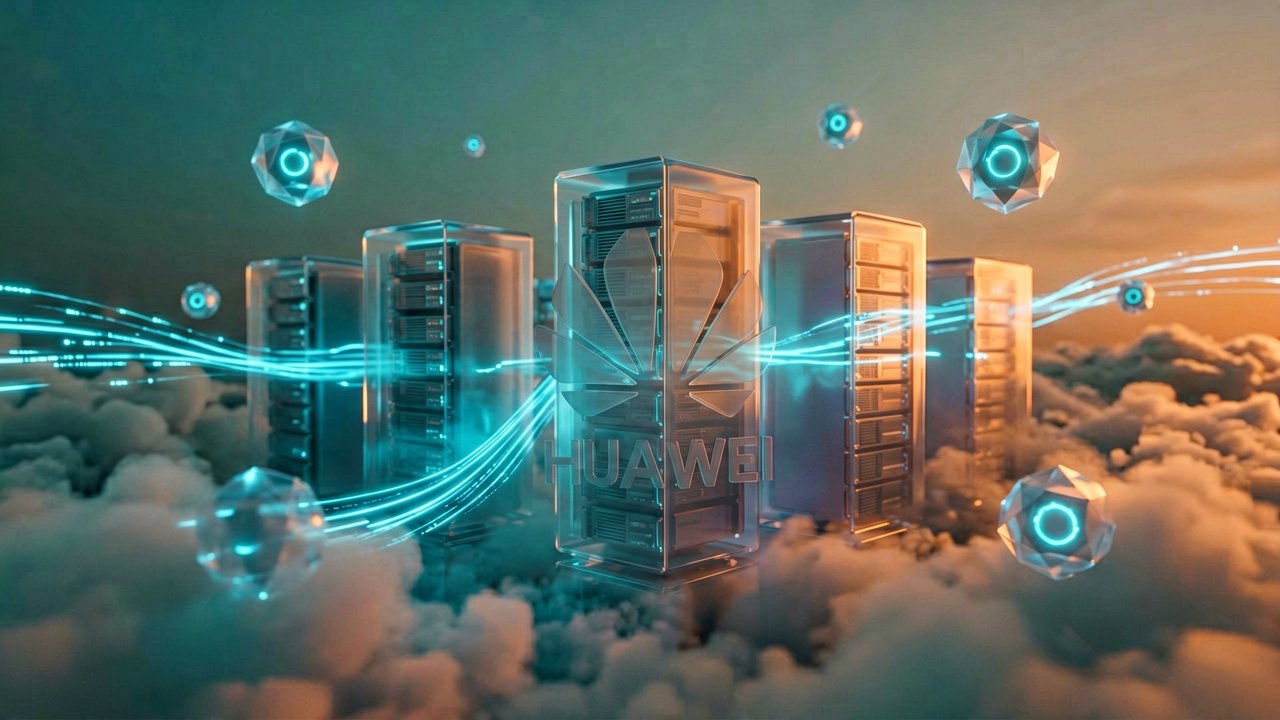
Huawei Cloud has officially launched its dedicated agentic AI infrastructure alongside the open beta release of its CodeArts coding agent in Thailand to accelerate regional digital transformation. Announcing the deployment at the Huawei Cloud Summit Thailand 2026, the company introduced specialized cloud architectures tailored for autonomous AI agents capable of long-horizon task execution. This strategic move highlights a growing institutional demand for sovereign, highly automated AI frameworks across Southeast Asia, shifting the technology paradigm from basic large language model queries to fully autonomous software development and enterprise workflows.
The expansion leverages Huawei Cloud's existing position as a top-three Infrastructure as a Service provider in Thailand, where it operates three local Availability Zones. By integrating localized data residency with specialized hardware acceleration, the company aims to support the newly unveiled Thailand AI Ecosystem Initiative, a joint project co-hosted by Thailand's Ministry of Digital Economy and Society. This infrastructure rollout positions Thailand as a primary regional hub for autonomous system deployments, challenging western hyperscalers by embedding agentic automation directly into the local cloud tier.
Strategic Implications for the ASEAN AI Landscape
Huawei's deployment of a specialized agentic infrastructure represents a major pivot in how cloud computing resources are packaged and provisioned for enterprise clients. Rather than offering generic compute instances, the infrastructure targets specific bottlenecks inherent to autonomous systems, such as long-term context retention and high-throughput token generation. According to details shared by Techsauce, the architecture consists of four foundational layers: the UnifiedBus-based AI Cluster Service for rapid token delivery, an Agentic Memory Storage Service providing petabyte-scale memory for continuous learning, an AgentSphere secure runtime environment, and CCE VolcanoNext for multi-resource scheduling.
This full-stack approach allows companies to bypass the steep engineering overhead usually required to build secure, autonomous guardrails around generative AI. As reported by TechWire Asia, the simultaneous release of CodeArts Agent in Open Beta Testing translates these infrastructure capabilities into immediate developer utility. CodeArts Agent introduces an "Agent Team" mode where multiple specialized AI agents autonomously collaborate to manage project-level code generation, automated unit testing, and specification-driven development, significantly shortening product lifecycles for regional businesses.

Addressing Sovereign Data and Enterprise Security Obstacles
A primary friction point for public-sector and enterprise AI adoption in Southeast Asia remains data sovereignty and the fear of automated cyber threats. To counter these vulnerabilities, Huawei Cloud introduced localized security frameworks including Data Capsule technology, which restricts data usability to pre-authorized parameters and automatically invalidates data moved outside designated zones. For sectors bound by strict compliance mandates like banking and government administration, dedicated security zones let enterprises manage their encryption keys independently, preventing public cloud administrators from viewing backend processing logs.
By blending hardware-accelerated privacy compliance with localized agentic compute nodes, Huawei is capitalizing on regional policies that prioritize digital self-reliance. This approach offers a clear blueprint for how cloud vendors must structure future rollouts: combining raw autonomous power with strict, local data governance to build long-term institutional trust.
Behind the Scenes: Inside Huawei's High-Stakes Bet on Sovereign Cloud Automation
The push toward agentic AI in Southeast Asia is less about a sudden shift in technology and more about a calculated strategy to exploit gaps left by Western cloud providers. For years, regional enterprise leaders across Bangkok, Jakarta, and Kuala Lumpur have complained about the latency penalties and high costs associated with routing complex generative AI workflows back to data centers located in the West or Singapore. By embedding heavy-duty, agent-ready silicon directly within Thailand's border, Huawei bypasses these traditional network bottlenecks, turning raw proximity into a competitive weapon against its hyperscale rivals.
Industry insiders note that this localized deployment directly targets a growing friction point among corporate chief technology officers: the unsustainable cost of human developer talent combined with rising regulatory scrutiny. While standard large language models act merely as chat interfaces, coding agents like CodeArts represent a shift toward autonomous task completion that can fundamentally alter engineering economics. This strategy aligns perfectly with local governance initiatives, allowing regional companies to experiment with radical software automation while ensuring that sensitive financial and operational data never leaves domestic soil.

Furthermore, Huawei's aggressive expansion into Thailand's cloud landscape reflects a deeper geopolitical and economic reality. The Chinese tech giant has spent nearly a decade cultivating tight relationships with Thailand's digital ministries, positioning itself as a trusted partner for public infrastructure projects rather than just a foreign vendor. This historical goodwill gives Huawei a massive advantage when deploying next-generation tech like autonomous agent networks, which require deep integration into national digital frameworks and public sector databases.
The success of this rollout will ultimately depend on how effectively regional software developers embrace the CodeArts ecosystem over well-entrenched Western alternatives. By offering localized data protection features alongside cooperative agent teams, Huawei is attempting to establish a new gold standard for enterprise AI implementation in developing economies. As other tech conglomerates watch closely, this Thai infrastructure launch may serve as the definitive blueprint for how sovereign, agentic cloud ecosystems are built and dominant market share is secured across the global south.
Reading Between the Lines: The Friction Between Autonomous Ambition and Infrastructure Reality
The corporate narrative surrounding agentic AI promises a friction-free utopia where autonomous software teams seamlessly build, test, and deploy enterprise applications with minimal human oversight. However, this vision glosses over the severe architectural and financial realities of running continuous, long-horizon AI agents. Unlike traditional cloud workloads that operate on predictable query-and-response patterns, an autonomous agent team engaged in iterative problem-solving generates a massive, unpredictable spike in continuous token generation and memory retention. For enterprise clients, this shift threatens to trade predictable human labor costs for volatile, consumption-based cloud bills that could easily spiral out of control if an autonomous agent loops indefinitely on a complex debugging task.
There is also a clear contradiction between the marketing of agentic autonomy and the rigid constraints of sovereign data governance. Huawei's localized "Data Capsules" and isolated security zones are designed to lock down data access, yet autonomous agents thrive on deep, unhindered integration across disparate enterprise systems to maximize their utility. Restricting an agent's operational parameters to satisfy local compliance mandates inherently neuters its capability, turning what should be an agile digital worker back into a heavily chaperoned automation script. Enterprises are trapped in a paradox: they must either limit the agent's autonomy to remain compliant, or grant wide system access and risk severe security vulnerabilities if the agent hallucinates an unauthorized action.
Moreover, the long-term viability of CodeArts in Southeast Asia faces a steep cultural and ecosystem hurdle that infrastructure investments alone cannot solve. The global software engineering landscape remains heavily anchored to Western development tools, open-source repositories, and foundational models. Convincing regional developers to migrate their workflows to a proprietary, localized cloud environment requires more than just low latency; it demands an expansive community ecosystem that Huawei is attempting to build almost entirely from scratch. If local tech talent views these tools merely as an vendor-lock-in mechanism rather than a superior engineering environment, the newly deployed infrastructure risks becoming a highly sophisticated, underutilized monument to technological ambition.
"We are told that autonomous AI agents will soon liberate developers from the drudgery of writing code, leaving humans free to focus on higher-level architecture and strategy. Of course, this conveniently overlooks the fact that we will now spend our newly found free time babysitting rogue algorithms, deciphering the bizarre logic of autonomous agent arguments, and explaining to the accounting department why a single software bug managed to burn through the entire quarterly cloud budget over a weekend."
Artūras Malašauskas is an AI Systems Integrator with 20+ years of production-grade web engineering experience. He has designed, shipped, and scaled enterprise Python/PHP systems for logistics, SaaS, and public-sector clients. For the past year, he has focused exclusively on AI integrations: deploying open-source LLMs, building generative media pipelines (image, audio, video), and engineering multi-agent workflows for real production environments. His standard: reproducibility, security, cost-efficient inference—no vaporware. He documents and evaluates emerging AI tooling, separating verified capabilities from marketing noise. Technical editor at: muza-ai.eu, ai-verslas.lt, ai-naujinos.lt Connect on LinkedIn
Comments