Avoice Unveils Autonomous AI Agents Capable of Running Architecture Studios
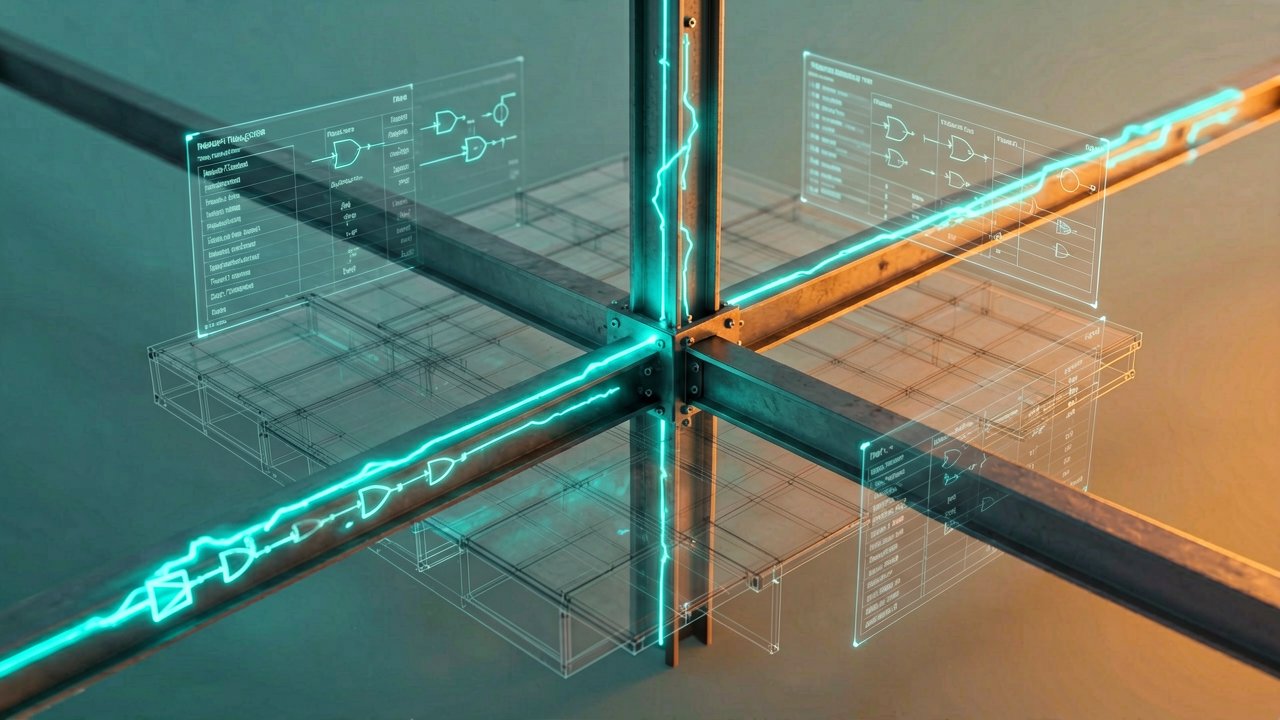
The San Francisco-based startup Dezeen has introduced what it claims are the world’s first artificial intelligence agents designed to autonomously manage architecture practices. This deployment marks a profound transition from traditional human-managed administration to an automated paradigm where the intricate logistics of design delivery, project coordination, and operational compliance are streamlined. Backed by accelerator Y Combinator, the software represents a structural leap forward, seeking to solve systemic inefficiencies that have historically constrained the business of design.
Historically, architecture firms have operated on a patchwork of disconnected software tools where drawing sets, specification write-ups, client emails, and financial spreadsheets rarely communicate. When project revisions occur, a significant volume of billable hours is wasted as human operators manually stitch these silos together. The breakthrough engineered by Avoice shifts the industry operating model by deploying autonomous agents that auto-propagate design adjustments across building schedules, risk matrices, and budgets without requiring human intervention. This optimization allows domain experts to focus on high-value creative execution rather than tedious backend workflows.
Consolidating fragmented workflows
The core innovation of the platform relies on unified data orchestration. Instead of treating architectural documentation, quality control markups, and project accounting as separate processes, the automated platform synchronizes them into a single coherent system. When a material specification changes, the underlying AI automatically recalculates budgets, revises the schedule, and updates the necessary consultants. This structural orchestration targets a massive technology gap in the built-world sector, enabling design firms to drastically cut overhead costs.
The strategic shift toward automated delivery
This technical milestone positions agentic AI as an essential backend infrastructure layer for a historically underserved industry. Industry analysis shows that reducing the economic barriers to complex software development makes comprehensive data automation commercially viable for small and mid-sized practices. While traditional software focused entirely on visual rendering or linear tasks, this next wave of architecture tech acts as an automated studio manager, effectively leveling the competitive playing field against enterprise-scale firms.

The operational reality of automated practice
Behind the corporate rollout: The shift from rule-based software to truly agentic infrastructure addresses a structural vulnerability that has plagued the architecture industry for decades: the erosion of profit margins through unbillable administrative overhead. In typical mid-sized practices, senior principals spend up to forty percent of their billable hours managing conflicting project documents, chasing localized zoning updates, and manually syncing engineering spreadsheets. By delegating these repetitive tasks to specialized autonomous agents, firms can effectively decouple operational capacity from strict headcount constraints, enabling lean teams to execute enterprise-scale projects.
From a technical standpoint, the platform succeeds where previous building information modeling extensions failed by operating as a semantic layer over existing file structures. Instead of requiring human engineers to update a physical door schedule whenever a partition wall shifts, the agent parses the spatial relationships in real time, cross-references local building codes, and automatically distributes updated specifications to the structural team. This deep integration transforms project management from a reactive, firefighting exercise into a continuous, self-correcting loop.
However, this transition introduces a fresh set of challenges regarding professional liability and digital provenance. Traditional professional liability insurance frameworks are built entirely around the concept of a licensed architect signing off on every detail of a drawing set. When an autonomous system modifies a critical structural detail or material specification to satisfy a budgetary constraint, establishing a clear custody chain for that decision becomes vital. Early adopters are addressing this by implementing human-in-the-loop validation checkpoints, positioning the AI as an indefatigable studio assistant rather than an unmonitored decision-maker.
The broader socioeconomic implications for the next generation of architectural talent are equally profound. For decades, entry-level designers cut their teeth on production work, mastering building construction by manually drawing details, compiling schedules, and formatting submission packages. As autonomous agents completely absorb these entry-level tasks, boutique design studios will need to fundamentally restructure their mentorship pipelines to ensure that junior staff can still develop deep technical expertise without relying on traditional manual draftsperson workflows.
The friction between automated speed and liability
Reading between the lines: The architectural establishment's sudden infatuation with agentic automation glosses over a fundamental contradiction in how buildings are actually brought to life. Proponents promise an era of frictionless, lightning-fast design delivery, yet the entire legal architecture of the built environment relies on deliberate friction. Building departments, zoning boards, and insurance underwriters do not move at the speed of code, and introducing autonomous systems that can generate thousands of code-compliant variations in a weekend does little to accelerate a bureaucratic system designed to slow things down for safety.
Furthermore, the assumption that automated administrative efficiency will automatically rescue bleeding profit margins may prove mathematically naive. In a highly competitive professional services market, efficiency gains rarely remain pocketed as pure profit for long. If an autonomous agent enables a boutique firm to produce a full construction set in a fraction of the traditional time, market forces will inevitably compress billable hour expectations, forcing fees downward. Architects risk automating away the very labor metrics that define their current financial valuations without establishing a new mechanism to capture the value of their automated output.
There is also an intellectual gap in assuming that data synchronization equates to architectural coordination. An AI agent can perfectly align a window schedule with a cost spreadsheet, but it cannot negotiate the political landscape of a contentious community board meeting or interpret the unstated emotional desires of a client. By treating architecture as a purely algorithmic optimization problem, technology platforms risk optimizing for the easiest metrics to track—such as material quantities and geometric clashes—while neglecting the subjective, qualitative nuances that separate enduring architecture from mere real estate assets.
"We are rapidly approaching a future where an AI agent can design, specify, and budget a skyscraper in the span of a lunch break, leaving human architects with the single remaining, unenviable task of explaining to an angry client why the autonomous system accidentally put a structural column through the middle of their master bedroom."
Artūras Malašauskas is an AI Systems Integrator with 20+ years of production-grade web engineering experience. He has designed, shipped, and scaled enterprise Python/PHP systems for logistics, SaaS, and public-sector clients. For the past year, he has focused exclusively on AI integrations: deploying open-source LLMs, building generative media pipelines (image, audio, video), and engineering multi-agent workflows for real production environments. His standard: reproducibility, security, cost-efficient inference—no vaporware. He documents and evaluates emerging AI tooling, separating verified capabilities from marketing noise. Technical editor at: muza-ai.eu, ai-verslas.lt, ai-naujinos.lt Connect on LinkedIn
Comments