Bridging the Agentic Divide: Embedded LLM and AMD Replatform Enterprise Clouds for Autonomous Workflows

At the AMD Advancing AI 2026 event, Embedded LLM introduced TokenVisor Spaces, a runtime environment designed to enable agentic AI execution directly within AMD-powered enterprise cloud environments. This partnership bridges the gap between autonomous AI agents and traditional enterprise infrastructure by allowing persistent, multi-turn digital workers to operate securely on enterprise-grade stacks. The strategy shifts focus from basic raw infrastructure provisioning to highly regulated, long-running agent execution platforms on hardware enterprises control, according to a press release on GlobeNewswire.
Historically, enterprise software integration has struggled with the short-lived, transient nature of basic large language model APIs. By decoupling the compute plane, the new architecture handles long-running x86-64 execution tasks through host CPUs while routing heavy inference demands directly to specialized accelerators. This specific setup optimizes long-context multi-turn agents and manages the critical cache economics required when digital workers interact with databases, live shells, and web automation tools over hours or days.
The initiative addresses clear enterprise guardrails including data governance, system auditing, and human-in-the-loop approvals. This transition turns raw GPU infrastructure into predictable enterprise workflows, providing the audit trails necessary for compliance in corporate IT environments.
A Hybrid Compute Architecture for Persistent Agents
Deploying persistent agents requires balancing model inference with physical system execution. While modern accelerators handle the high-throughput matrix multiplication needed for next-generation models, host processors provide the memory bandwidth and high-performance input/output essential for system commands and sandbox containment.

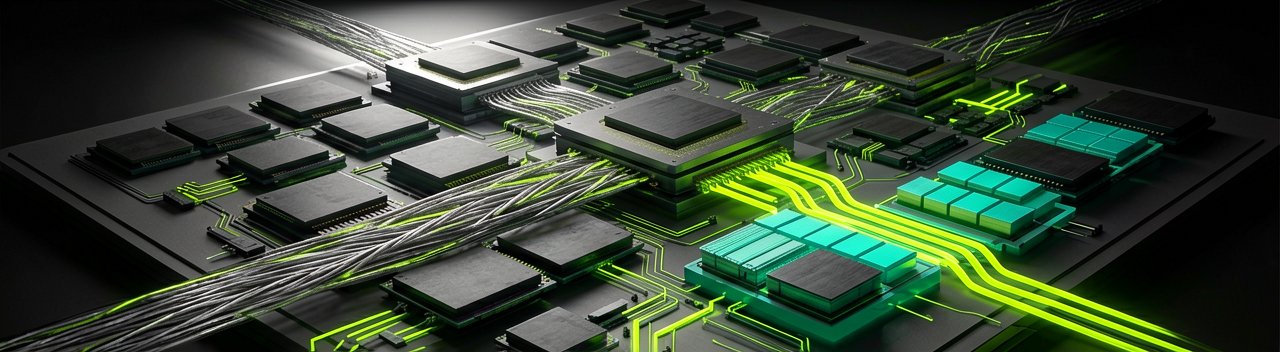
The TokenVisor Spaces architecture explicitly addresses this dual requirement by utilizing AMD EPYC processors for orchestrating host-node performance, shell tasks, and system tool execution. Simultaneously, AMD Instinct accelerators drive the underlying large-scale inference workloads. This unified compute approach enables multi-turn agents to maintain state over extended operational lifetimes without exhausting specialized high-bandwidth accelerator memory.
The Economics of Long-Context Data Movement
Operational costs for enterprise AI change drastically when transitioning from single-prompt interactions to agentic loops. Long-running software agents consistently pull historical event logs and comprehensive system context back into the model on every single turn, creating massive data overhead. If every operational step requires re-reading the entire system log from scratch, prompt-token costs become unsustainable for large-scale enterprise rollouts.
To establish viable commercial margins, infrastructure providers are moving toward advanced key-value cache reuse and platform-level storage optimizations. Collaborations with data engineering firms like VAST Data allow these agent environments to offload accumulated contexts into scalable, persistent storage layers. This strategy minimizes redundant computation, improves multi-turn execution speeds, and reduces total power consumption across cloud environments.
Enterprise Orchestration and Containerized Security
Corporate deployment mandates rigorous access controls, strict budget tracking, and real-time activity tracking before autonomous workflows can touch live production environments. Raw compute clusters do not natively support these security features, exposing networks to unauthorized code execution or runaway API costs from unmonitored agent loops.
By validating this orchestration layer on enterprise platforms like Red Hat OpenShift, organizations can leverage standard container security and hardware isolation policies. The combination of open-source container management with explicit resource limits, rate bounding, and replayable execution histories enables automated digital workers to operate under the same strict security standards as traditional enterprise software applications.
Behind the Scenes of the Silicon Execution Sandbox
What Most Reports Miss: The true bottleneck in enterprise agentic AI is not model intelligence, but the friction of execution safety. Historically, running autonomous agents meant spinning up fragile, isolated cloud containers that lacked direct access to underlying silicon optimizations. This isolated setup introduced severe latency and security risks, as agents frequently needed to execute untrusted code or interface with sensitive corporate databases. By embedding runtime sandboxes directly into the infrastructure tier, engineers can now enforce strict system-level guardrails right at the silicon interface, neutralizing the threat of runaway loops or unauthorized system calls before they propagate through the enterprise network.
This architectural shift moves the industry away from generic, centralized API calls and toward deterministic, hardware-enforced corporate compliance. Tech leaders have long voiced frustrations over the hidden costs of agentic workflows, where a single multi-turn task can trigger hundreds of recursive model queries, ballooning API bills and overwhelming traditional networking stacks. Moving the execution plane to dedicated enterprise clusters resolves this issue, giving corporate IT departments granular control over resource allocation, data residency, and real-time monitoring of automated processes.
The economics of this integration reflect a broader strategic shift among major hardware providers competing for enterprise AI dominance. As corporate clients demand greater return on investment from their infrastructure budgets, the value proposition is moving from raw training power to efficient operational execution. System architects are prioritizing platforms that optimize the entire life cycle of an autonomous worker, focusing heavily on memory bandwidth, rapid context switching, and the ability to maintain complex operational states over hours or days without degrading performance.
Ultimately, this convergence of autonomous software design and specialized cloud hardware establishes a foundation for true digital workers. Instead of acting as basic chat assistants, these systems operate as persistent background processes integrated directly into corporate software environments. By aligning container security frameworks with optimized hardware pathways, enterprises can confidently delegate high-volume administrative and analytical tasks to autonomous agents, transforming how modern corporate infrastructure functions.
Reading Between the Lines: The Cost and Complexity of Silicon Autonomy
The Hidden Friction: While the promise of running persistent, autonomous agents directly within enterprise cloud environments paints an idealistic picture of immediate productivity gains, it conveniently glosses over a compounding infrastructure tax. Industry hype implies that embedding runtime sandboxes into the infrastructure tier elegantly solves the agentic execution problem. In reality, shifting long-running, multi-turn loops to dedicated hardware creates a massive, unpredictable burden on memory caches. When digital workers continually query databases and run system tools over days, the resulting context-cache bloat can quickly degrade cluster efficiency, turning expected hardware savings into a game of resource management whack-a-mole.
Furthermore, an unaddressed operational contradiction lies at the heart of the "autonomous" enterprise movement. Organizations are rushing to deploy agentic software to eliminate human overhead, yet the extreme unpredictability of autonomous code execution demands unprecedented levels of human-in-the-loop monitoring and complex auditing systems. Enterprise IT teams, risk averse by design, are being asked to hand over critical system workflows to stochastic models. Validating these environments on platforms like Red Hat OpenShift provides a comforting layer of standard container security, but it does not fundamentally fix the logic errors or runaway behaviors inherent to autonomous agents navigating chaotic corporate data structures.
The strategic positioning of major chipmakers in this space also deserves measured skepticism. Hardware vendors are eager to market specialized architectures as holistic enterprise platforms to justify massive capital expenditures. However, stitching together a fragmented ecosystem of storage layers, container orchestrators, and custom software layers introduces significant integration complexity. Until these setups can operate out of the box without requiring specialized teams of systems engineers to constantly tune the infrastructure, the widespread adoption of native cloud agents will likely remain restricted to tech-forward enterprises with deep engineering pockets.
"We are enthusiastically constructing a world where autonomous digital workers can seamlessly automate our most tedious corporate processes, which means we are only a few firmware updates away from experiencing our very first automated, multi-million-dollar cloud billing mistake delivered at near-instantaneous silicon speeds."
Artūras Malašauskas is an AI Systems Integrator with 20+ years of production-grade web engineering experience. He has designed, shipped, and scaled enterprise Python/PHP systems for logistics, SaaS, and public-sector clients. For the past year, he has focused exclusively on AI integrations: deploying open-source LLMs, building generative media pipelines (image, audio, video), and engineering multi-agent workflows for real production environments. His standard: reproducibility, security, cost-efficient inference—no vaporware. He documents and evaluates emerging AI tooling, separating verified capabilities from marketing noise. Technical editor at: muza-ai.eu, ai-verslas.lt, ai-naujinos.lt Connect on LinkedIn
Comments