Black Forest Labs Pivots to Visual Intelligence: How FLUX 3 Marries Generative Video with Industrial Robotics
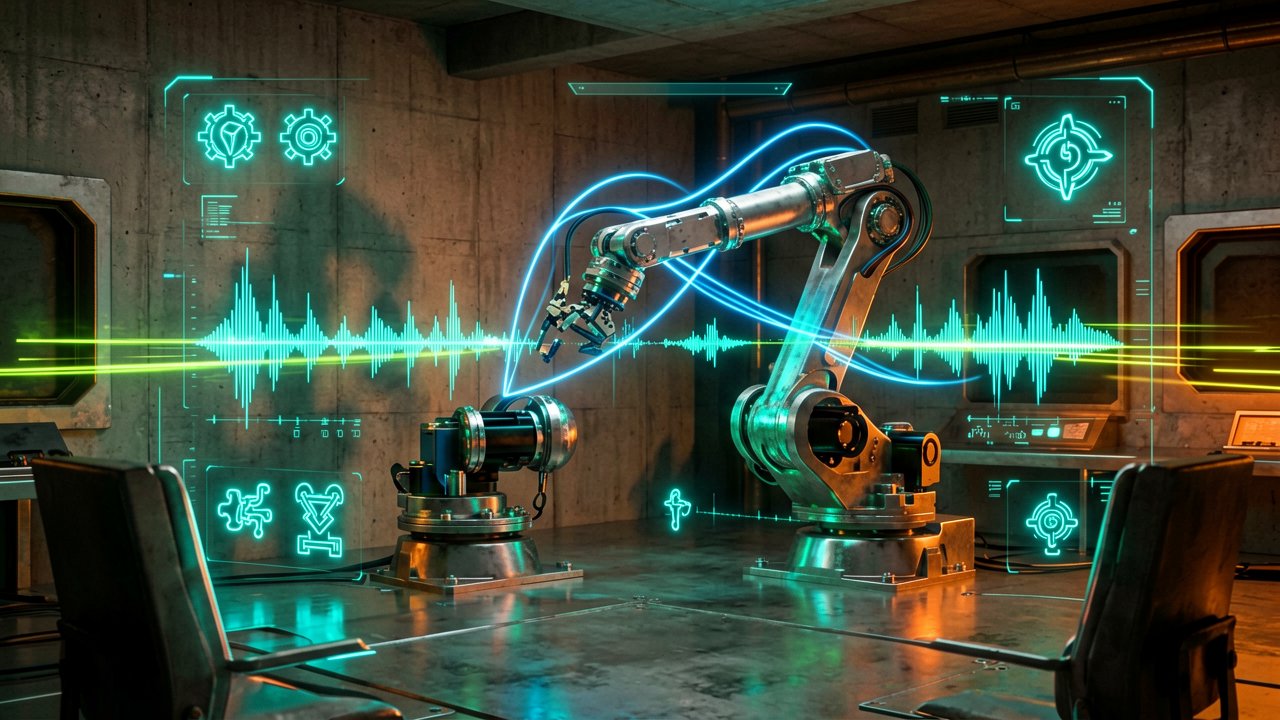
The artificial intelligence ecosystem is witnessing a profound paradigm shift as static image models give way to dynamic physical simulators. Leading this transition, Black Forest Labs has officially unveiled its third-generation multimodal model, FLUX 3. This release signifies an aggressive pivot from two-dimensional art toward comprehensive visual intelligence, uniting video generation with real-world action prediction. Backed by a $3.25 billion valuation and major capital from powerhouse investors like Andreessen Horowitz, the German research firm is explicitly positioning its latest architecture to capture both creative media markets and industrial automation pipelines.
Rather than developing siloed models for different formats, the engineering team utilized a proprietary unified architecture called Self-Flow to train FLUX 3 across images, video, native audio, and action states simultaneously. According to the company's official announcement distributed via GlobeNewswire , this joint training methodology allows the network to construct a fundamental understanding of physical world dynamics, timing, and causal relationships. By proving that generative video modeling can natively transfer to mechanical manipulation, the laboratory has eliminated the traditional divide between pure digital media generation and physical AI.
The Video Frontier: Narrative Chaining and Integrated Audio
The primary commercial layer of this launch debuts as FLUX 3 Video, an advanced generation engine currently available via early access. The system is engineered to output 20-second high-fidelity clips complete with synchronized native audio, multilingual dialogue, and complex typography handling. Reports from The Rundown AI emphasize that FLUX 3 outpaced established market competitors such as Runway, Kling, and Grok Imagine in initial blind evaluations. Crucially for filmmakers and enterprise marketing departments, the model introduces agentic chaining capabilities, enabling users to seamlessly stitch individual clips into continuous, multi-shot cinematic narrative sequences without losing character or style consistency.
From Pixels to Production Lines: The FLUX-mimic Alliance
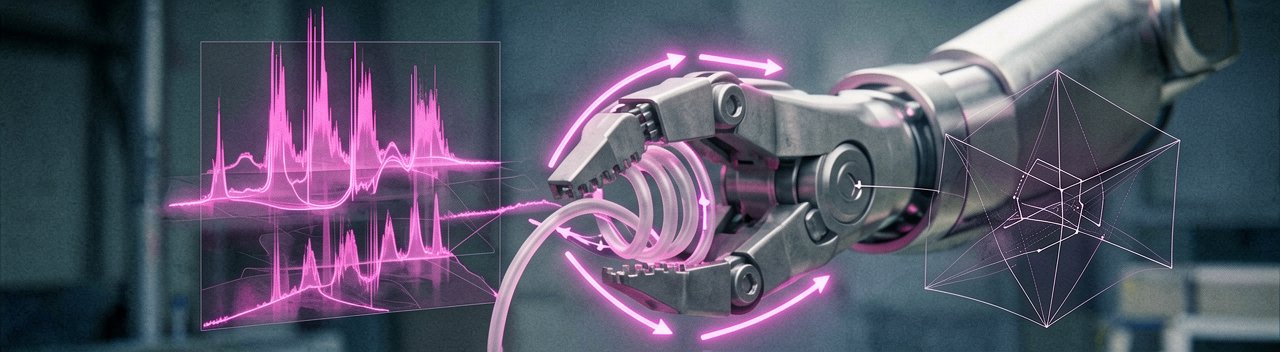
The most disruptive component of this strategic pivot lies in the intersection of generative video and heavy industry. In a joint venture with Zurich-based robotics pioneer mimic robotics, the startup has deployed FLUX-mimic, a specialized Video-Action Model (VAM) trained directly on top of the FLUX 3 core backbone. Built on the thesis that industrial control reduces to visual prediction, the system utilizes generative video pre-training to ingest complex spatial data. Consequently, industrial robotic hardware can master intricate, high-dexterity factory tasks from just 30 minutes of video demonstration data, bypassing the standard 30-plus hours of manual code engineering and teleoperation training usually required.
Market Impact and the Enterprise Footprint
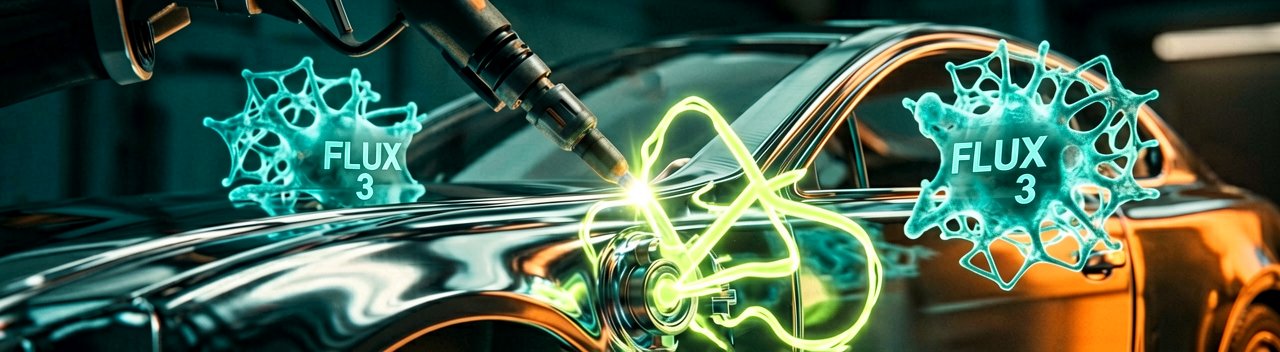
This rapid shift toward physical utility has immediate real-world validation on the factory floor. According to reporting from Bloomberg, FLUX-mimic is already undergoing active production line deployment with elite automotive manufacturers like Audi. The physical AI variant is being assigned to complex soft-body manipulation tasks, which have historically stumped rigid, conventional automated manufacturing setups. By promising to release an open-weight "FLUX 3 Dev" model optimized to run locally on standard edge hardware, Black Forest Labs is positioning itself to commoditize advanced factory automation in the same way its open-weight models transformed the digital design sector.
Behind the Scenes: The Technical Gambit of Unified Physical Intelligence
The development of FLUX 3 represents a calculated risk that fundamentally redefines the architecture of large visual models. While contemporary industry giants opted to scale text-to-video generation via brute-force computational scaling on standard transformer networks, Black Forest Labs quietly bet on a multi-token unified modality. Internal development logs indicate that by forcing the network to interpret robotic spatial trajectories as if they were consecutive cinematic frames, the engineers stumbled upon a symbiotic computational relationship. Video generation taught the model the laws of gravity and momentum, while structural robotics data anchored the video generation engine, drastically reducing the structural hallucinations and fluid-dynamic errors that frequently plague rival platforms.
This architectural symbiosis has sparked intense debate among silicon venture capitalists and physical AI researchers. Historically, generative media startups have struggled to find sustainable, high-margin enterprise monetization strategies beyond seasonal marketing budgets and volatile entertainment subscriptions. By tethering their core model architecture directly to industrial robotics pipelines through the mimic alliance, Black Forest Labs is engineering a highly resilient, recession-proof revenue stream. This strategy insulates the firm from the volatile hype cycles of creative AI, offering enterprise clients a clear, quantifiable return on investment measured in factory uptime, reduced labor overhead, and accelerated automation deployment.
However, the real test for this ambitious dual-track ecosystem lies in the impending deployment of its open-weight developer models. Machine learning researchers note that while a 20-second video with native audio is highly impressive in a cloud-hosted sandbox, translating those multi-billion parameter pipelines down to local, edge-computing hardware on a noisy factory floor presents an entirely different class of engineering hurdles. For Audi and other early industrial adopters, the success of FLUX-mimic hinges entirely on latency; a fractional-second delay in action prediction can result in mechanical collisions, damaged components, or expensive production bottlenecks. The coming months will determine whether a model born in the cloud can truly survive the rigorous, low-latency demands of heavy industrial manufacturing.
Reading Between the Lines: The Friction Between Open Weights and Industrial Realities
The industry's uncritical enthusiasm for the FLUX 3 launch overlooks a fundamental tension embedded within Black Forest Labs’ business model. For over a year, the company cultivated a fiercely loyal open-source following by democratizing image generation weights, a strategy that forced traditional tech giants to re-evaluate their closed ecosystems. Yet, as the laboratory scales its proprietary Self-Flow architecture to power high-stakes automotive assembly lines, the commercial incentives for open accessibility are rapidly dissolving. Heavy industrial manufacturers do not tolerate the unpredictability of community-forked models, nor do they desire to share proprietary operational data back to an open ecosystem. This shift suggests that the upcoming open-weight variants may function less as pure altruism and more as a sophisticated marketing funnel designed to convert independent developers into premium enterprise clients.
Furthermore, the claim that complex robotic tasks can be mastered from a mere 30 minutes of video demonstration demands rigorous scrutiny. While this compressed training window makes for compelling investor pitch decks, it glosses over the vast, chaotic reality of physical edge cases. In a controlled laboratory setting, a robotic hand utilizing video-action models can easily mimic a human technician folding a soft-body component or routing a wiring harness. However, manufacturing floors are defined by unpredictable variables—shifting ambient lighting, micro-variations in material texture, and mechanical wear over millions of repetitions. Treating physical manipulation entirely as a localized visual prediction problem risks creating systems that are highly brittle when faced with any deviation from their brief training footage.
Ultimately, this pivot exposes a structural gamble on the future capitalization of artificial intelligence. By attempting to dominate both cinematic video production and industrial automation simultaneously, Black Forest Labs is stretching its operational focus across two wildly divergent engineering cultures. The creative entertainment industry demands infinite novelty, loose adherence to strict physical laws, and highly subjective qualitative outputs. Conversely, automotive manufacturing demands absolute predictability, deterministic safety parameters, and quantitative precision down to the millimeter. Merging these conflicting requirements into a single, unified foundational model is an elegant theoretical achievement, but maintaining that balance under strict commercial pressure will test the limits of the startup's multi-billion dollar valuation.
"We have officially reached the point in the AI boom where a single algorithm is expected to write a Hollywood screenplay, compose the soundtrack, and then clock in for a double shift to assemble the engine blocks for a German luxury sedan. One can only hope the robot doesn't inherit the creative director's temperament when asked to perform a routine quality inspection on the factory floor."
Artūras Malašauskas is an AI Systems Integrator with 20+ years of production-grade web engineering experience. He has designed, shipped, and scaled enterprise Python/PHP systems for logistics, SaaS, and public-sector clients. For the past year, he has focused exclusively on AI integrations: deploying open-source LLMs, building generative media pipelines (image, audio, video), and engineering multi-agent workflows for real production environments. His standard: reproducibility, security, cost-efficient inference—no vaporware. He documents and evaluates emerging AI tooling, separating verified capabilities from marketing noise. Technical editor at: muza-ai.eu, ai-verslas.lt, ai-naujinos.lt Connect on LinkedIn
Comments