Ultrahuman Redefines Wearable Health Tracking With Its New UltraSphere Decision Engine and Emerald App Overhaul

The wearable health market is moving past simple biometric data logging. Ultrahuman has launched its major "Emerald" platform update, marking the biggest overhaul of its application since its launch. Reported by Engadget, this software update transitions the platform from displaying passive telemetry charts to offering direct, algorithmic decision-making for daily wellness routines.
This software release shows a strategic shift to reduce consumer data anxiety by prioritizing contextual, actionable insights. By replacing complex charts with immediate behavioral recommendations, Ultrahuman aims to capture a larger share of the longevity and preventative health technology sector. This transition directly challenges competitors like Oura and Whoop, who are also racing to turn sleep, recovery, and metabolic metrics into structured lifestyle changes.
The UltraSphere Decision Engine and On-Device Processing
The core of the Emerald update is the UltraSphere decision engine. Powered by the company's proprietary artificial intelligence model, Jade, UltraSphere processes biological metrics alongside environmental factors to deliver specific recommendations. For example, instead of just reporting a drop in energy, the app may suggest taking a short walk outside to utilize natural light for alertness. To ensure reliability, Ultrahuman now processes all health data natively on the smartphone, allowing users to access automated recommendations without an internet connection.
Advanced Clinical Biomarkers and Structural Enhancements
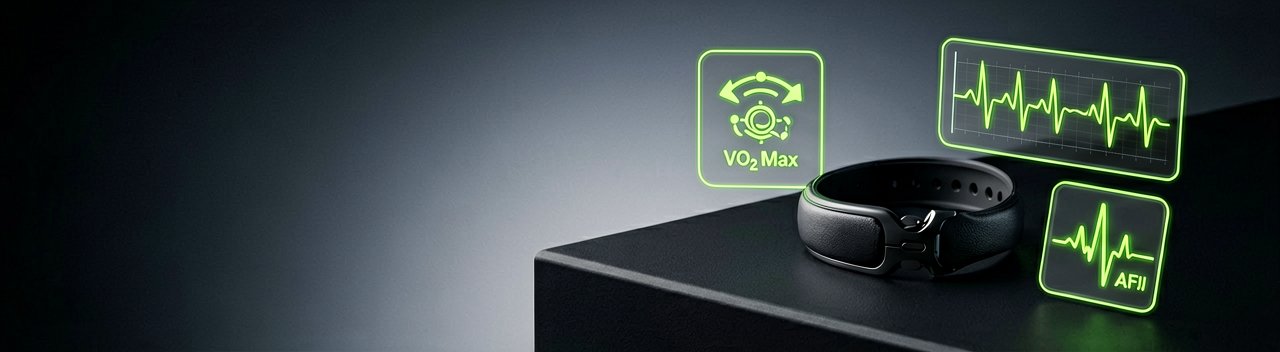
Beyond the interface redesign, the software introduces major upgrades to its underlying tracking algorithms. Detailed by Longevity Technology, Ultrahuman's updated VO₂ Max algorithm delivers metrics that perform within 5 mL/kg/min of a clinical laboratory treadmill test. Additional platform updates include a dedicated Longevity tab for monitoring biological aging markers, an optimized Sleep Screener interface, real-time live heart rate viewing, and improved Atrial Fibrillation (AFib) detection protocols.
Market Impact and Strategic Positioning
Ultrahuman's software pivot addresses a major limitation in consumer wearables: metric fatigue. Providing continuous streams of health scores can cause user anxiety without delivering clear steps for behavioral improvement. By consolidating isolated metrics into an ongoing daily narrative, Ultrahuman aims to build sustained user engagement. Furthermore, offering these algorithmic features as a free update helps Ultrahuman retain its current user base while attracting buyers who prefer to avoid monthly subscription models.
What Most Reports Miss: The Structural Shift Toward Localized Health Computing
The Emerald update represents more than a design refresh; it highlights an industry-wide pivot toward edge computing in consumer medical devices. By running the Jade AI model entirely on-device, Ultrahuman addresses two critical problems in health tech: cellular latency and cloud operating costs. Standard wearable data pipelines require transmitting biometric packets to external servers, running the analytics engine, and sending the results back to the user's phone. Moving this processing onto modern smartphone chips lets Ultrahuman deliver real-time recommendations, creating an immediate feedback loop for lifestyle choices.
This decentralized approach also reshapes user data privacy. As consumer wellness platforms face increasing scrutiny over health data ownership and third-party data tracking, local data processing builds digital security. Processing health information on-device keeps highly personal metrics—like AFib occurrences or biometric vulnerabilities—safely inside the user's phone hardware. This technical framework establishes privacy as a central product feature rather than an afterthought, allowing Ultrahuman to navigate tightening global privacy laws and build deeper trust with privacy-conscious buyers.
The upgrade to clinical-grade VO₂ Max algorithms also indicates a shift in the corporate landscape. Consumer health platforms are locked in an engineering race to match the accuracy of hospital laboratory equipment. By engineering its algorithms to perform within 5 mL/kg/min of a metabolic cart treadmill test, Ultrahuman is pushing to cross the line between casual fitness gadgets and regulated health tools. This strategy targets the growing preventative health sector, where users demand medical-grade accuracy to validate their performance training and daily wellness routines.

Ultimately, this software overhaul targets the issue of user churn in the fitness tracker market. Many users stop wearing smart rings and bands after a few months because raw health scores eventually lose their novelty. Transitioning the platform to provide active guidance—shifting from historical charts to an adaptive daily schedule—helps Ultrahuman transform the wearable from a passive data tracker into an active health assistant. The success of this strategy will depend on whether users find these automated recommendations helpful or repetitive over time, which will decide the company's long-term position in the competitive longevity technology market.
Reading Between the Lines: The Friction Between Automation and Human Biometrics
The push toward automated algorithmic decision-making relies on the assumption that users will naturally follow software instructions. Ultrahuman's decision engine assumes a direct link between digital recommendations and human behavioral changes. However, health tracking history shows that constant notifications can lead to user irritation rather than steady habit building. By replacing data charts with automated lifestyle prompts, the platform risks trading metric fatigue for notification fatigue, where users eventually ignore the device's constant suggestions to walk, rest, or adjust light exposure.
There is also a clear contradiction in the industry's rush toward medical-grade accuracy without full regulatory status. Advertising VO₂ Max metrics that closely match clinical treadmill tests positions the wearable as a serious health tool. Yet, like most fitness trackers, these features operate without official medical clearance for diagnosing conditions. This creates a legal and practical grey area, as users are encouraged to treat automated recommendations as expert wellness guidance, while the underlying software relies on safety disclaimers to limit company liability.
Additionally, running complex software like the Jade AI model entirely on-device introduces hardware performance tradeoffs. Shifting heavy computational workloads to a smartphone preserves data privacy and removes server latency, but it increases local battery usage and demands modern processing power. This technical requirement creates an unintended barrier, where the depth and responsiveness of a user's health insights depend directly on how often they upgrade their smartphone hardware, potentially leaving users with older phones behind.
Finally, keeping this major software overhaul completely free challenges long-term business sustainability. Competitors like Oura rely heavily on monthly subscription fees to fund ongoing software development and algorithm updates. By avoiding a subscription paywall, Ultrahuman must continuously sell new hardware to fund its software engineering. This model forces a fast hardware release cycle, meaning the company must regularly launch new ring models or accessories to support the infrastructure of its free software updates.
The modern wellness ecosystem promises to simplify our lives by tracking our bodies, yet it now requires an advanced on-device artificial intelligence model just to tell us when to step outside and look at the sun.
Artūras Malašauskas is an AI Systems Integrator with 20+ years of production-grade web engineering experience. He has designed, shipped, and scaled enterprise Python/PHP systems for logistics, SaaS, and public-sector clients. For the past year, he has focused exclusively on AI integrations: deploying open-source LLMs, building generative media pipelines (image, audio, video), and engineering multi-agent workflows for real production environments. His standard: reproducibility, security, cost-efficient inference—no vaporware. He documents and evaluates emerging AI tooling, separating verified capabilities from marketing noise. Technical editor at: muza-ai.eu, ai-verslas.lt, ai-naujinos.lt Connect on LinkedIn
Comments