Trump's New Power Play: Can a Voluntary Pledge Tame the AI Grid Monster?
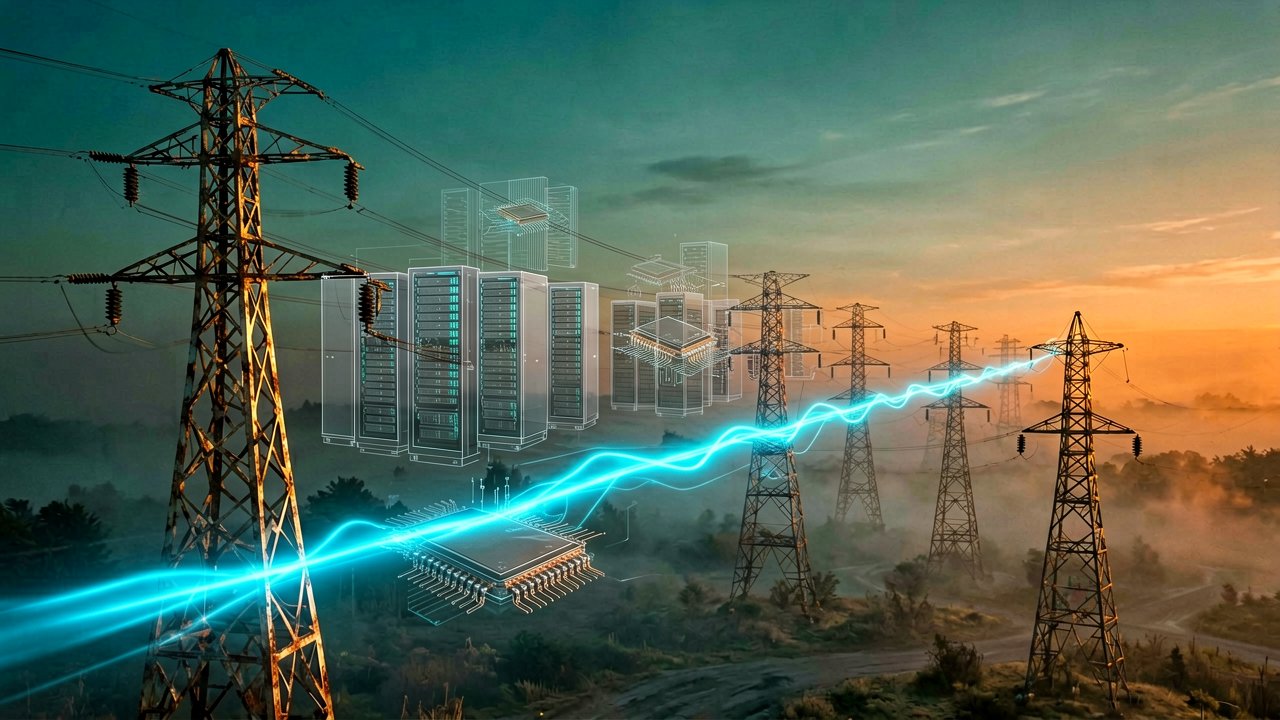
Artificial intelligence is hungry, and its appetite for electricity is already threatening to pinch the pockets of everyday consumers. To get ahead of a brewing political and economic headache, President Donald Trump expanded his administration's voluntary "Ratepayer Protection Pledge" on July 23, 2026, gathering governors and top utility executives at the Environmental Protection Agency headquarters in Washington. The goal is simple on paper: ensure the massive tech infrastructure required for the AI boom doesn't saddle residential utility bill payers with the massive costs of upgrading the nation's aging power grid.
While the White House first floated this initiative back in March with major tech giants, this latest expansion brings in a broader coalition of nearly 200 stakeholders, including utility providers, data center developers, and 23 Republican governors, according to USA Today . Signatories essentially promise to protect consumers from localized price hikes and work toward placing the financial burden of building new power plants and transmission lines directly onto the tech corporations building these data centers. Trump positioned the move as a win-win, arguing that local communities can embrace the economic windfall of AI infrastructure without getting burned by soaring electric bills.
The Friction Between Policy and Reality
But let's be real—a voluntary pledge carries zero legislative teeth. As detailed by The New York Times , energy experts remain skeptical about how much of this theater will actually translate to lower bills, given that electricity pricing is dictated by an incredibly complex web of state public utility commissions, regional transmission grid operators, and local laws. Some regions are already pushing back; New York recently instituted a temporary moratorium on massive data center builds to figure out a firmer regulatory framework. Tech companies claim they are willing to pay their fair share, but until these high-minded principles are hardcoded into utility tariff structures, everyday ratepayers will still be left watching their meters with a fair bit of anxiety.
Behind the Scenes of the Power Struggle: The real battleground isn't in Washington’s ceremonial briefing rooms; it is playing out in the arcane, hyper-local world of state public utility commissions. For decades, the formula for funding grid upgrades was predictable: when a massive factory or steel mill came to town, the utility negotiated specific tariff rates, often spreading some infrastructure modernization costs across the entire regional ratepayer base on the promise of long-term local jobs. Data centers, however, break this economic model. They require immense, unprecedented baseload power almost instantly, yet they employ remarkably few people once the construction crews pack up. This discrepancy has regulators quietly panicking behind closed doors, realizing that traditional cost-sharing frameworks are fundamentally ill-equipped for the sheer velocity of the artificial intelligence buildout.
Tech giants find themselves caught in a deeply ironic public relations squeeze. For the past decade, Microsoft, Google, and Amazon heavily marketed their commitments to 100% renewable energy, signing massive power purchase agreements for wind and solar. But AI workloads require constant, unyielding energy that weather-dependent renewables cannot provide by themselves. Consequently, tech companies are quietly begging utilities for reliable, continuous baseload power, which in the real world frequently means delaying the retirement of coal plants or burning more natural gas. The voluntary pledge allows these tech firms to signal corporate responsibility, but it does little to solve the immediate operational reality: they need massive amounts of traditional power, and they need it yesterday.
The Real-World Financial Friction
The pushback is already materializing in regions where data centers are clustering. In Virginia’s "Data Center Alley," local officials and consumer advocates are aggressively fighting utility proposals to build billions of dollars in new transmission lines, arguing that tech companies should pay 100% of those upfront costs rather than socializing the expense across residential monthly bills. Tech executives counter that if states over-regulate or demand too much upfront capital, the industry will simply migrate to more cooperative regions or international hubs, potentially eroding America's competitive edge in the global AI race. This threat of capital flight puts immense pressure on state governors, who want the prestige of hosting cutting-edge tech hubs but cannot afford the political fallout of a voter backlash over skyrocketing electric bills.
Ultimately, the Ratepayer Protection Pledge serves as a temporary political shield for an industry and an administration trying to buy time. Upgrading the American energy grid to handle the dual demands of AI data centers and broader electrification is estimated to cost hundreds of billions of dollars over the next decade. While a handshake agreement in Washington looks good on an evening news broadcast, it lacks the legal mechanism to override state-level regulatory mandates that dictate how utility companies recover their investments. Until state legislatures or federal regulators pass binding rules defining exactly where a tech company's financial responsibility ends and a citizen's obligation begins, the tension between American technological dominance and affordable household energy will continue to escalate.
Reading Between the Lines: The central fallacy of this voluntary approach is the assumption that tech giants and utility monopolies can be shamed into absorbing billions in infrastructure costs out of sheer corporate goodwill. In the heavily regulated world of American utilities, power companies operate under a guaranteed rate of return on their capital investments. When a utility builds a new substation or string of transmission towers to feed an AI cluster, state laws practically guarantee that the utility gets to recoup those costs, plus a tidy profit, from its customer base. A non-binding pledge signed in a Washington conference room cannot magically rewrite these deeply entrenched state statutes, meaning the legal default remains tilted heavily in favor of sticking the consumer with the bill.
Furthermore, the timeline of AI development stands in stark, contradictory contrast to the reality of energy infrastructure. Silicon Valley moves at lightning speed, deploying new large language models every few months and demanding gigawatt-scale data centers almost overnight. Conversely, planning, permitting, and constructing a new high-voltage transmission line in the United States routinely takes upwards of a decade due to environmental reviews and bureaucratic red tape. This massive friction means that instead of building clean, bespoke energy solutions funded entirely by tech capital, data centers are forced to plug into whatever power is immediately available on the existing grid. This immediate sucking sound inevitably drives up wholesale electricity prices for everyone in the region, regardless of who paid for the physical building.
The Illusion of a Free Lunch
There is also a glaring contradiction in the political messaging surrounding this initiative. The administration is simultaneously championing absolute American dominance in the AI race while promising that the massive, resource-intensive footprint of that dominance won't cost the average voter a single dime. Realistically, if tech companies are forced to fully internalize the astronomical costs of grid expansion, the price of computing power will surge. That burden will simply be passed down the supply chain, manifesting as higher subscription fees for software, more expensive consumer electronics, and costlier digital services. One way or another, the American consumer is going to fund the AI revolution; the only real variable is whether that charge appears on their electric bill or their credit card statement.
"We are witnessing a classic modern standoff where Silicon Valley's unstoppable force of artificial intelligence meets the immovable object of the American regulated utility grid. Everyone promises the consumer won't pay for the party, but historically speaking, when tech billionaires and power monopolies sit down to dinner, it’s rarely the folks at home who get to skip out on splitting the check."
Artūras Malašauskas is an AI Systems Integrator with 20+ years of production-grade web engineering experience. He has designed, shipped, and scaled enterprise Python/PHP systems for logistics, SaaS, and public-sector clients. For the past year, he has focused exclusively on AI integrations: deploying open-source LLMs, building generative media pipelines (image, audio, video), and engineering multi-agent workflows for real production environments. His standard: reproducibility, security, cost-efficient inference—no vaporware. He documents and evaluates emerging AI tooling, separating verified capabilities from marketing noise. Technical editor at: muza-ai.eu, ai-verslas.lt, ai-naujinos.lt Connect on LinkedIn
Comments