Pakistan Bets $20 Million on a Homegrown Robotics and AI Revolution
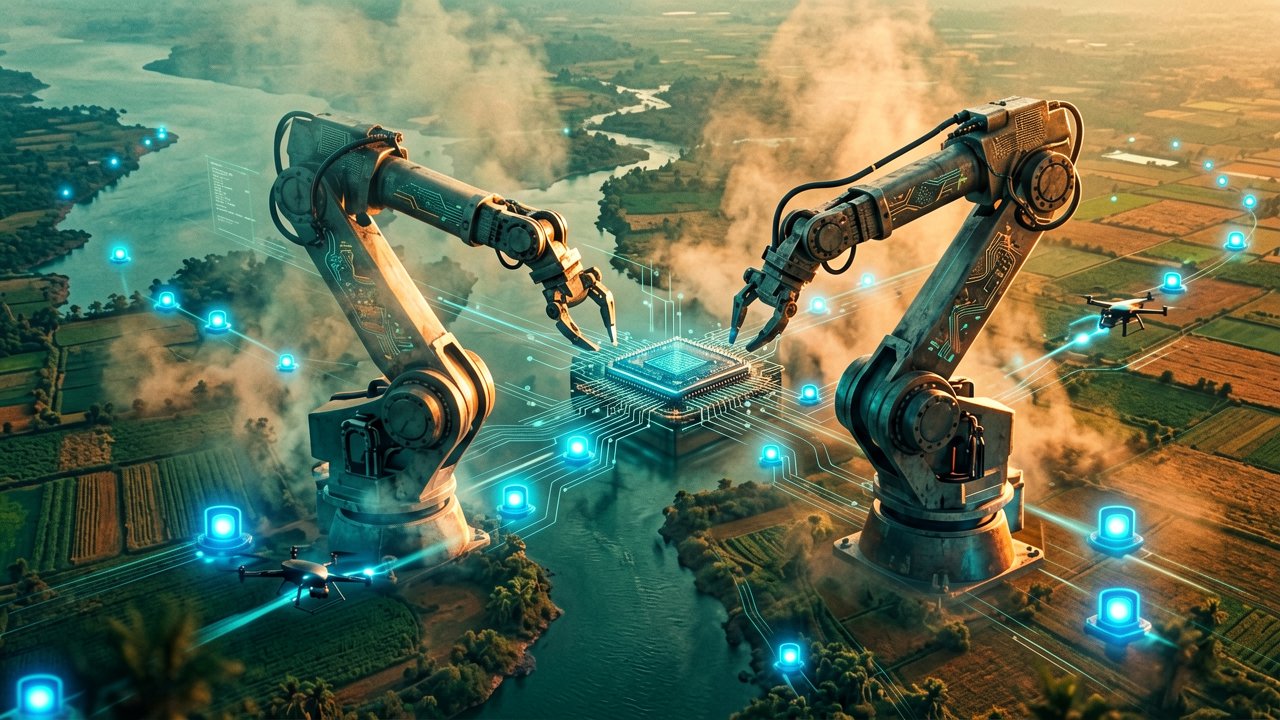
Pakistan is formally stepping into the global deep-tech arena with a serious injection of public capital. On July 22, 2026, Prime Minister Shehbaz Sharif officially unveiled a $20 million venture fund alongside a comprehensive national program designed to supercharge the country's domestic robotics and artificial intelligence sectors. The twin initiatives—revealed during the inaugural Indus Robotics and Autonomous Systems Expo in Islamabad—signify a deliberate pivot toward high-value technological sovereignty. Instead of remaining a passive consumer of foreign tech, the state is actively trying to anchor the knowledge, IP, and commercial value of automation within its own borders.
The core of this national strategy relies on a new program called "Spark and Elevate," which acts as a bridge between academic research and commercial viability. According to details shared via Business Recorder, the initiative is designed to transition lab-bound breakthroughs into globally competitive hardware and software enterprises, explicitly aiming to generate high-productivity jobs for the nation's massive youth demographic. Meanwhile, the newly established Pakistan Venture Fund will deploy its initial $20 million allocation as catalyst capital, intended to de-risk early-stage startups and draw in private venture investments into the domestic ecosystem.
Fusing Defense Milestones with Civil Modernization
What makes this rollout particularly notable is how the government plans to blend its current defense successes with broader economic applications. During his address, Sharif highlighted that local engineers have already pushed domestic drone indigenization past the 60% mark. The administration wants that technical expertise to spill over into civilian industries.
By cultivating a unified innovation ecosystem that links universities, tech hubs, and rural stakeholders, the state intends to deploy autonomous systems to solve practical, localized economic pressures. The primary civil targets include precision agriculture—where AI can optimize fertilizer use and track crop stress—and emergency disaster response. In a region routinely battered by climate-induced disruptions, developing resilient, local robotics isn't just an economic luxury; it's a structural necessity.

Behind the Scenes of the $20 Million Gamble
The multi-million dollar question looming over Islamabad’s latest tech push is whether a state-backed venture fund can truly kickstart an agile deep-tech ecosystem, or if it will simply succumb to bureaucratic inertia. Seasoned tech analysts point out that while $20 million is a historic milestone for Pakistan's public tech funding, it is a modest sum in the capital-intensive world of hardware and advanced AI training. The success of this initiative will ultimately hinge on the government's ability to use these funds as "first-loss" or catalyst capital, leveraging the initial $20 million to unlock significantly larger tranches of private equity and foreign direct investment.
Local tech founders and venture capitalists have expressed cautious optimism, noting that the "Spark and Elevate" framework addresses a long-standing structural bottleneck in the country's innovation pipeline. Historically, Pakistani universities have produced brilliant engineering talent and impressive academic prototypes, but those projects routinely stalled at graduation due to a lack of commercialization pathways and early-stage seed funding. By explicitly targeting the "valley of death"—the precarious phase between a laboratory prototype and a market-ready product—the program could finally incentivize local talent to build proprietary intellectual property at home rather than seeking opportunities abroad.
However, transitioning from software services to sophisticated robotics presents a unique set of hardware challenges that software-centric tech hubs rarely face. Industry insiders emphasize that Pakistan’s strict import controls and complex customs regulations have historically made sourcing specialized components—like advanced microcontrollers, high-precision sensors, and specialized actuators—a logistical nightmare for local builders. For the robotics program to achieve its goals, the Ministry of Information Technology and Telecommunication will need to work closely with trade authorities to establish regulatory sandboxes, effectively streamlining the hardware supply chain for approved startups.
There is also a broader geopolitical subtext to this sudden push for technological sovereignty. By aiming for a high degree of domestic indigenization, Pakistan is attempting to shield its critical infrastructure, agriculture, and defense supply chains from the whims of global trade disputes and technology sanctions. Building localized AI models trained on regional data ensures that agricultural automation and disaster response systems remain attuned to the specific environmental realities of South Asia, rather than relying on generic, Western-trained algorithms that may underperform in local contexts.

Ultimately, this initiative is a race against time to capitalize on the country's youth bulge, with over 60 percent of the population under the age of 30. If the Pakistan Venture Fund can successfully foster a dozen viable hardware companies over the next few years, it could establish a sustainable blueprint for high-tech manufacturing in the region. The true metric of success for this program will not be measured by the pomp of its initial launch event, but by the volume of domestic patents filed and the retention rate of top-tier engineering talent over the coming decade.
Reading Between the Lines of the Tech Sovereignty Narrative
The rhetoric of technological independence routinely glosses over a harsh reality: you cannot easily build a cutting-edge AI and robotics ecosystem on top of an unstable digital infrastructure. While the administration celebrates a $20 million funding injection, local developers are simultaneously grappling with erratic internet connectivity, localized network throttling, and regulatory flip-flops that have plagued Pakistan's broader tech sector over the past few years. Launching a sophisticated automation initiative while the foundational digital pipeline remains prone to arbitrary disruption creates a stark operational contradiction that no amount of venture capital can easily fix.
Furthermore, a deeper look at the capital requirements of modern AI development reveals just how far a $20 million fund must stretch. Training competitive large language models or deploying fleets of autonomous agricultural drones requires immense computing power, specialized graphical processing units, and robust data centers. Given that single AI startups in Silicon Valley or Shenzhen routinely burn through tens of millions of dollars in a single funding round just to cover cloud computing costs, the Pakistan Venture Fund will have to be extraordinarily selective, forcing local engineers to focus strictly on hyper-localized, low-overhead hardware integrations rather than moonshot foundational software.
There is also the persistent challenge of institutional bureaucracy clashing with the fast-moving culture of tech startups. State-managed venture funds globally have a mixed track record, often hindered by slow approval processes, rigid compliance metrics, and an inherent aversion to high-risk investments. If the disbursement of these funds is bogged down by traditional government auditing procedures, the very startups the program aims to accelerate may find themselves starved of capital before their products ever clear the regulatory sandboxes.
If the state can successfully insulate this fund from political volatility and align it with realistic, hardware-light applications—such as localized agronomic sensor networks or specialized industrial retrofits—it could carve out a highly resilient niche market. The coming years will reveal whether this initiative marks the genuine birth of an indigenous deep-tech corridor or simply stands as a well-intentioned, expensive monument to techno-optimism.
In the tech world, declaring a robotics revolution with twenty million dollars is a bit like bringing a pocket knife to a drone fight—it shows immense character, but everyone is mostly watching to see how you avoid getting clipped by the rotors.
Artūras Malašauskas is an AI Systems Integrator with 20+ years of production-grade web engineering experience. He has designed, shipped, and scaled enterprise Python/PHP systems for logistics, SaaS, and public-sector clients. For the past year, he has focused exclusively on AI integrations: deploying open-source LLMs, building generative media pipelines (image, audio, video), and engineering multi-agent workflows for real production environments. His standard: reproducibility, security, cost-efficient inference—no vaporware. He documents and evaluates emerging AI tooling, separating verified capabilities from marketing noise. Technical editor at: muza-ai.eu, ai-verslas.lt, ai-naujinos.lt Connect on LinkedIn
Comments