ProtoPie Bridges the Gap Between Human Design Precision and AI Vibe-Coding with Native MCP Support
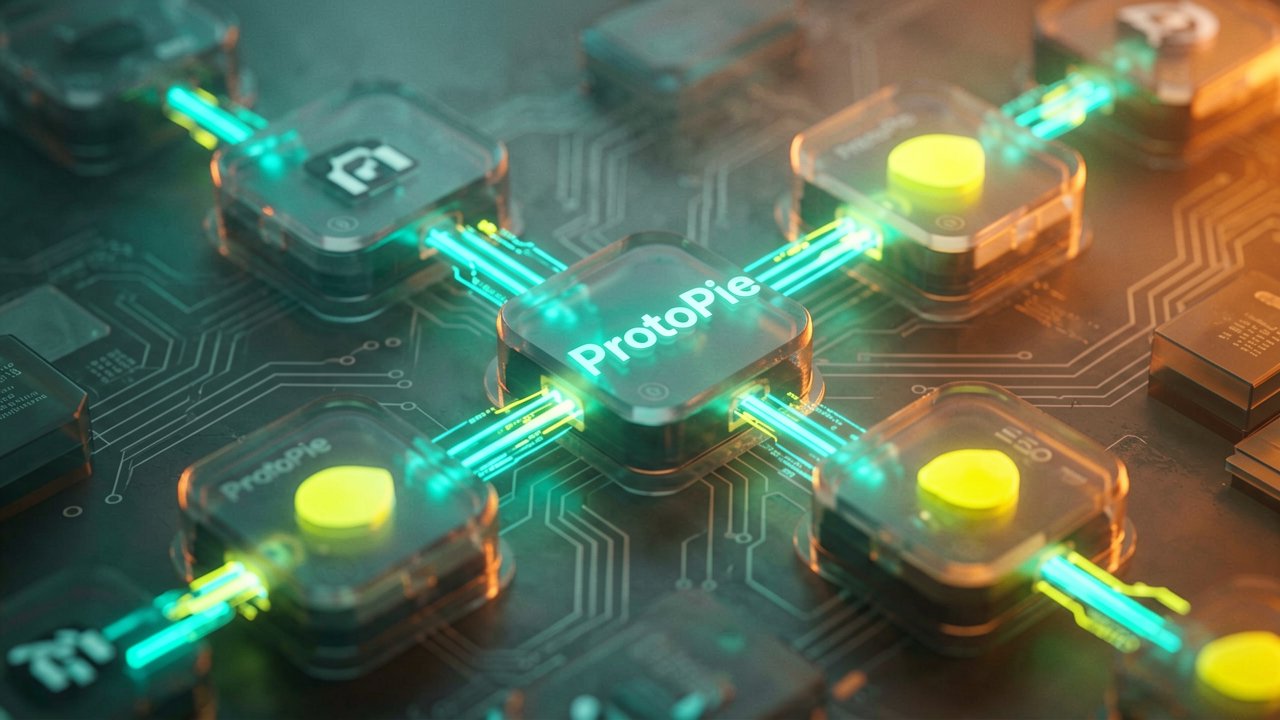
The traditional boundary separating interaction design from software engineering is rapidly dissolving under the influence of large language models. In a strategic move to reconcile deterministic design control with the velocity of generative artificial intelligence, ProtoPie has introduced native support for the Model Context Protocol (MCP), as reported by AIEthority. This architectural integration directly addresses the emerging developer phenomenon known as "vibe-coding," where software is iteratively generated via conversational natural language commands rather than manual syntax drafting.
By transforming interactive prototypes from isolated visual assets into contextual data sources for AI agents, ProtoPie allows product teams to maintain rigorous control over high-fidelity user experiences. The open-source standard, initially introduced by Anthropic to standardize how AI models communicate with external tools, serves as an infrastructural layer to prevent models from hallucinating or guessing user intent, according to documentation by Model Context Protocol. The integration enables development tools like Claude Code, Cursor, and VS Code to query live prototype logic seamlessly rather than parsing static image files or text descriptions, as detailed by Toolfarm.
The Strategic Shift in High-Fidelity Prototyping
Historically, handoff friction between design tools and integrated development environments (IDEs) resulted in visual discrepancies and lost functional intent. ProtoPie’s rollout of Studio MCP and Code MCP addresses this disconnect directly, as noted in their official release tracking by EIN Presswire. Instead of treating AI as an isolated generator, this approach establishes a two-way interface where semantic design tokens, advanced conditional logic, and physical sensor triggers are fed directly into the LLM’s context window.
This structural change transforms the role of product designers within automated developer pipelines. Instead of spending hours composing granular documentation, designers can leverage natural language to generate complex interaction variables natively within ProtoPie. The protocol ensures that automated coding assistants retain a precise understanding of the interactive application state across multiple sessions, mitigating the contextual drift that often cripples long-context vibe-coding workflows.

Market Impact on Technical Product Workflows
As software delivery timelines shrink due to generative automation, corporations are increasingly prioritizing tools that provide deterministic guardrails. Purely conversational programming environments are inherently prone to divergence from initial design specifications when operating without external context. By adopting a unified communication standard, ProtoPie establishes an authoritative anchor for engineering teams.
The native beta implementation is accessible to existing Pro and Enterprise tier subscribers at no supplemental cost, accelerating enterprise adoption among cross-functional product squads. This release marks an evolutionary transition in design tools, moving away from simple asset-generation plugins toward comprehensive, agent-ready environment connectors that treat human interaction design as foundational training data for engineering agents.
Reading Between the Lines: The Friction of Automated Precision
The industry optimism surrounding ProtoPie’s integration of the Model Context Protocol assumes that giving artificial intelligence precise design schemas will naturally lead to flawless, production-ready frontend code. This perspective overlooks a fundamental technical tension: LLMs excel at fluid, probabilistic reasoning, whereas high-fidelity interaction design relies on rigid, deterministic logic. Merging these two methodologies through a standardized API does not automatically resolve the underlying communication gap between human intent and machine translation. While the model now has access to granular trigger frequencies and easing curves, translating that raw design data into efficient, clean code remains a challenging engineering task.
A major contradiction lies in the changing role of the designer within this automated workflow. While the protocol is marketed as a tool to liberate creatives from developer handoff friction, it actually requires designers to adopt a more technical mindset. To feed an AI assistant accurate state data via MCP, the source prototype must be built with impeccable logic, explicit conditional states, and clean data bindings. In practice, designers are forced to spend less time on visual exploration and more time debugging their prototypes, acting as manual data modelers to ensure the AI does not misinterpret the design constraints.
Furthermore, relying on external context protocols introduces new vulnerabilities regarding platform lock-in and systemic dependencies. If a product team's entire code-generation pipeline relies on ProtoPie’s interpretation of design states, the organization becomes dependent on a proprietary platform to maintain its development speed. When design tools shift from generating static assets to hosting live context engines for automated developers, any minor protocol update or semantic mismatch can disrupt the entire engineering pipeline, raising long-term concerns about code reliability and architectural stability.
Ultimately, this integration highlights a broader shift where design tools are valued less for their aesthetic capabilities and more for their ability to generate structured data for machine learning models. Treating human design precision as an algorithmic constraint may save short-term engineering hours, but it risks standardizing digital interfaces into highly predictable patterns optimized for LLM consumption. As the software industry embraces automated code generation, the ultimate test for this protocol will be whether it preserves human creative nuance or simply accelerates the mass production of formulaic, AI-generated applications.
"We are rushing to automate developer handoffs so designers can spend their days debugging prototypes for AI assistants, proving that the future of software engineering isn't less work—it's just explaining our intentions to a machine twice instead of explaining them to a human engineer once."
Artūras Malašauskas is an AI Systems Integrator with 20+ years of production-grade web engineering experience. He has designed, shipped, and scaled enterprise Python/PHP systems for logistics, SaaS, and public-sector clients. For the past year, he has focused exclusively on AI integrations: deploying open-source LLMs, building generative media pipelines (image, audio, video), and engineering multi-agent workflows for real production environments. His standard: reproducibility, security, cost-efficient inference—no vaporware. He documents and evaluates emerging AI tooling, separating verified capabilities from marketing noise. Technical editor at: muza-ai.eu, ai-verslas.lt, ai-naujinos.lt Connect on LinkedIn
Comments