LS Group Targets South Korea's AI Talent Bottleneck with Bespoke Industrial Tech Training
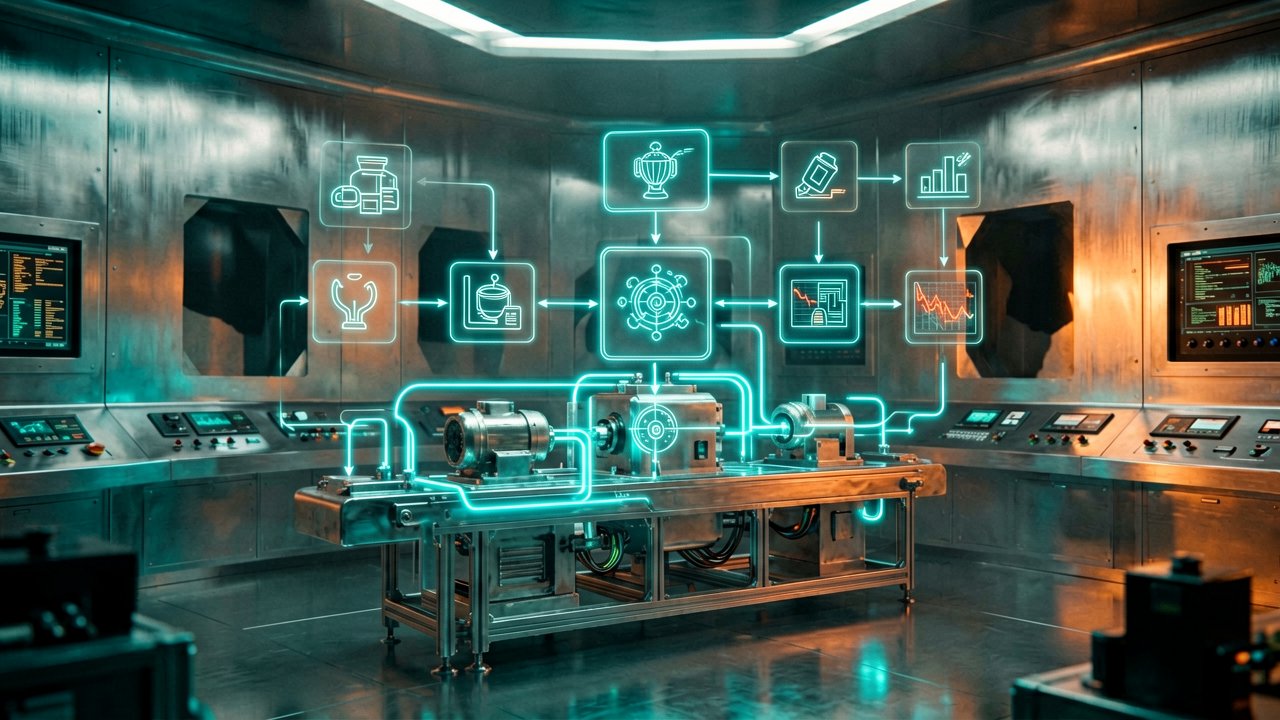
South Korean industrial conglomerate LS Group has formally launched the K-New Deal Academy, an initiative structured around the new "LS JUMP-UP Bootcamp" to train an elite cohort of 35 specialized artificial intelligence professionals. The strategic program reflects a growing consensus among East Asian conglomerates that traditional academic pipelines cannot keep pace with the immediate operational demands of industrial AI deployment. By funding and executing direct corporate instruction, LS Group aims to secure niche technical expertise tailored specifically to the infrastructure, manufacturing, and energy management sectors that define its business portfolio, as reported by the Seoul Economic Daily.
This localized educational push addresses a widening digital capabilities gap across South Korea's heavy industries, where the implementation of automation, predictive maintenance, and enterprise AI agents is routinely bottlenecked by a shortage of qualified engineers. The curriculum avoids broad theoretical computing science in favor of immediate utility, focusing on data visualization, generative AI workflows, work automation, and equipment anomaly detection. By anchoring training inside the group's dedicated educational wing, LS Mirae Won, the conglomerate creates a hyper-targeted recruitment funnel that ensures graduates possess practical familiarity with the company’s specific industrial environments.
Strategic Integration and Corporate Advantage
Unlike public upskilling ventures, the academy builds employment competitiveness directly into its design by providing participants with tours of active LS Group business sites to study manufacturing value chains. Top graduates from the 35-person group are slated to receive preferential document screening and specialized recruitment treatment when applying to positions across LS Group affiliates. This methodology bridges the gap between raw code architecture and heavy engineering, ensuring that new talent can immediately integrate predictive software into existing factory and grid infrastructures.
The Regional Shift Toward Domain-Specific AI Upskilling
The establishment of the academy highlights a broader institutional shift in South Korea, where leading industrial operators are increasingly taking talent development into their own hands to protect supply chains. As global competition for machine learning engineers intensifies, localized corporate academies allow regional conglomerates to insulate themselves from standard labor market shortages. By converting raw technical candidates into domain-expert operators, LS Group is establishing a scalable template for how legacy conglomerates can systematically future-proof their operations against rapid structural technological shifts.
Reading Between the Lines: The decision to train a hyper-targeted cohort of just 35 individuals exposes a glaring contradiction in the corporate narrative surrounding regional technological readiness. While industry press releases routinely celebrate multi-million dollar transformation plans, the incredibly small size of this academy suggests a deep institutional hesitance to scale these initiatives. Limiting the student group to fewer than four dozen candidates indicates that despite grand long-term ambitions, the industrial sector is still treating advanced automation as a contained, high-risk pilot experiment rather than an existential corporate shift.
This cautious approach reveals an underlying tension between legacy management styles and the unpredictable nature of modern machine learning workflows. Traditional manufacturing thrives on deterministic outcomes, linear supply chains, and rigid performance metrics. In stark contrast, deploying deep learning models requires a cultural tolerance for experimental failure, iterative debugging, and fluid project timelines. Training 35 specialists will undoubtedly provide immediate localized troubleshooting capabilities for key business units, but it fails to address the cultural inertia embedded across thousands of existing middle-management operators who remain skeptical of algorithmic intervention.
The Realities of the Industrial Talent War
Furthermore, offering fast-track hiring pathways and preferential application reviews assumes that top-tier technical minds actually want to build their careers in legacy manufacturing environments. South Korea's premier software engineering talent continues to gravitate heavily toward global tech platforms, dominant gaming studios, and specialized defense startups that offer massive equity incentives and flexible working environments. Expecting a small, insular boot camp to insulate an industrial conglomerate from a hyper-competitive global labor market overlooks the broader structural realities of employee retention and compensation expectations in the digital age.
Ultimately, the long-term success of this operational experiment hinges entirely on whether these newly trained professionals are granted the institutional authority to actually overhaul aging facility processes. Injecting highly specialized personnel into highly hierarchical corporate structures frequently results in gridlock, as veteran plant managers routinely favor historical precedent over predictive software recommendations. Without a sweeping top-down mandate to dismantle internal bureaucratic silos and embrace algorithmic decision-making, these elite cohorts risk becoming localized data janitors rather than the transformative architects of industrial modernization.
It turns out that teaching a computer to predict when a multi-ton manufacturing press is about to fail is significantly easier than convincing a twenty-year veteran shop foreman to trust a piece of software over his own ears.
Artūras Malašauskas is an AI Systems Integrator with 20+ years of production-grade web engineering experience. He has designed, shipped, and scaled enterprise Python/PHP systems for logistics, SaaS, and public-sector clients. For the past year, he has focused exclusively on AI integrations: deploying open-source LLMs, building generative media pipelines (image, audio, video), and engineering multi-agent workflows for real production environments. His standard: reproducibility, security, cost-efficient inference—no vaporware. He documents and evaluates emerging AI tooling, separating verified capabilities from marketing noise. Technical editor at: muza-ai.eu, ai-verslas.lt, ai-naujinos.lt Connect on LinkedIn
Comments