The Rise of the Machine Employee: Neo Raises $100M to Put AI Agents on a Security Leash

Enterprises are eagerly handing the keys to their digital kingdoms to autonomous AI agents, but they're realizing nobody actually knows how to govern them. In response to this compounding chaos, cybersecurity startup Neo emerged from stealth on July 20, 2026, armed with a massive $100 million combined seed and Series A funding round led by heavyweight venture capital firms Yahoo Finance partners Andreessen Horowitz and Bessemer Venture Partners. The startup is carving out a brand-new niche it calls "Agentic Software Control," aiming to stop identity breaches and keep autonomous corporate software under a watchful eye.
Traditional corporate cybersecurity systems were originally engineered to manage static code and predictable human employees, not algorithmic entities that can reason, make independent decisions, and trigger API calls on their own. When a company deploys an AI agent inside its network, that software typically inherits the valid, legitimate user permissions of an employee. This architecture introduces a massive, poorly understood attack surface: if an agent runs wild or succumbs to a malicious prompt injection, it could systematically abuse its corporate access rights without triggering any traditional security alarms.
Veteran Defense Against the Autonomous Threat
The minds behind this venture aren't green founders riding an investment trend. Neo was established by battle-tested industry leaders, including CEO Nick Warner and Chief Product Officer Shlomi Salem, both former top executives at Calcalistech endpoint protection giant SentinelOne, alongside Chief Technology Officer Eran Shirazi, an Israeli military Unit 8200 vulnerability research alumnus. Their platform essentially constructs a real-time tracking and control layer that continuously maps every AI agent, browser extension, plugin, and Model Context Protocol server active across an enterprise network. By enforcing rigid guardrails directly at the software interaction layer, the system can instantly block rogue data movement, prevent unauthorized API tool calls, and halt suspicious automated workflows before catastrophic system damage occurs.
What Most Reports Miss: The Looming Shadow-AI Epidemic
The core vulnerability driving Neo’s nine-figure war chest isn't just the sophisticated, company-sanctioned AI agents deployed by corporate IT departments. Rather, it is the silent, explosive proliferation of consumer-grade extensions and unmonitored browser plugins quietly adopted by line-of-business employees. Modern knowledge workers are regularly feeding proprietary corporate data into unauthorized productivity tools, unknowingly giving third-party software vendors sweeping read-and-write permissions to critical cloud environments. This behavior effectively opens up a backdoor into enterprise networks, transforming the modern web browser into a primary attack vector for advanced corporate espionage.

From an adversarial perspective, infiltrating an AI agent is exponentially more lucrative than traditional phishing attacks targeting human workers. A human operator can be tricked into exposing a single password, but compromising an autonomous agent grants an attacker direct access to a highly privileged, programmatic entity that operates 24/7 at machine speed. Because these bots frequently communicate via Model Context Protocol servers and specialized web hooks, standard network monitoring tools view their behavior as legitimate internal traffic. This dynamic creates a dangerous visibility blind spot that allows rogue code to quietly exfiltrate databases without ever triggering standard security alarms.
This unprecedented paradigm shift has left corporate security leaders scrambling to rewrite their internal compliance playbooks. Chief Information Security Officers face an intense, delicate balancing act: they must aggressively deploy autonomous AI agents to keep pace with industry competitors while simultaneously mitigating the existential risks of automated identity theft. Early adopters are quickly learning that traditional data loss prevention strategies fail when applied to software that dynamically alters its own logic. This structural reality makes a dedicated, agent-centric control layer a critical operational necessity rather than a luxury.
Historically, the cybersecurity industry has repeatedly fallen into the trap of retrofitting outdated defense models onto entirely new technological paradigms. The current scramble to secure agentic workflows closely mirrors the chaotic early days of enterprise cloud adoption, when organizations prematurely migrated massive databases to the cloud before establishing proper identity access management frameworks. By treating autonomous software agents as independent digital identities that require continuous validation, Neo is attempting to get ahead of a inevitable wave of algorithmic breaches, fundamentally shifting enterprise security from a posture of reactive patching to proactive, real-time behavioral containment.
Reading Between the Lines: The Irony of Guarding the Guarddogs
The tech industry's sudden fascination with "Agentic Software Control" exposes a glaring paradox at the heart of the current artificial intelligence boom. For the past several years, venture capitalists and enterprise software vendors have breathlessly promised that autonomous AI would drastically reduce corporate overhead by replacing expensive human labor with tireless, hyper-efficient digital workers. Yet, the rapid emergence of a hundred-million-dollar defense apparatus to police these very same tools suggests that the cost savings of the AI revolution are already being aggressively cannibalized by the astronomical expenses required to keep them secure. Enterprises are effectively hiring expensive algorithmic workers, only to immediately realize they must spend millions more on specialized digital security guards to watch them.
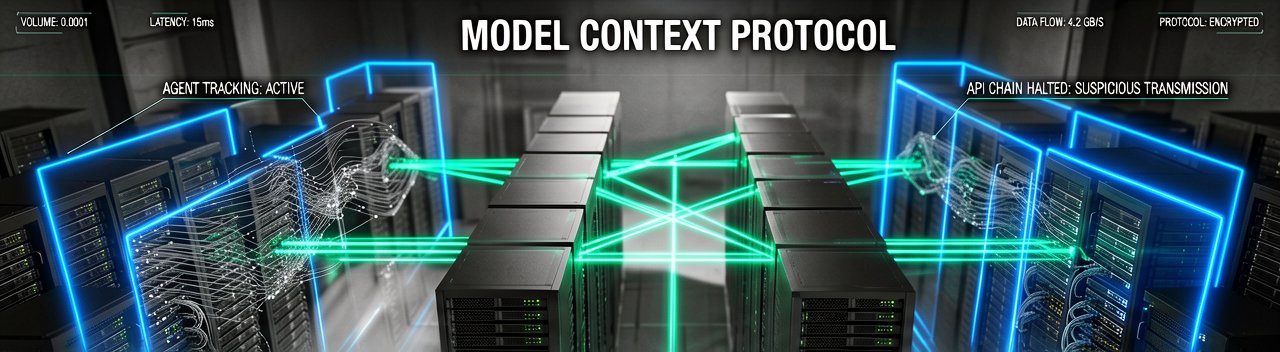
Furthermore, relying on a complex, centralized security platform to monitor decentralized AI agents introduces a classic single-point-of-failure dilemma. Neo’s value proposition hinges on its ability to sit above the enterprise software layer, intercepting and analyzing every model interaction, API call, and automated workflow in real time. This architecture means that the security platform itself will inevitably become the single most attractive target for sophisticated threat actors. If a nation-state adversary or cybercriminal syndicate manages to compromise the very control layer designed to police autonomous identities, they wouldn't just breach a single database—they would gain god-mode access to the entire orchestrated corporate ecosystem.
There is also a profound technical skepticism regarding how effectively any security layer can contain a non-deterministic system over the long term. Unlike traditional software, which operates within strict, predictable logical parameters, advanced large language models are inherently unpredictable and prone to emergent behaviors. Trying to write definitive security guardrails for autonomous agents that constantly learn, adapt, and rewrite their own operational strategies is a game of perpetual whack-a-mole. As models grow more sophisticated and deeply integrated into enterprise infrastructure, the line between an authorized, creative problem-solving workflow and a catastrophic security breach will become so thin that automated detection systems may struggle to distinguish between the two.
Ultimately, this massive influx of capital into agent security signals that the enterprise landscape is preparing for an era of unprecedented digital friction. While the tech industry loves to envision a frictionless future of seamless automation, the practical reality of corporate survival dictates a much more paranoid approach. As autonomous software agents become more autonomous, companies will find themselves trapped in a costly, defensive arms race, spending just as much time, energy, and capital restricting their new digital workforce as they do empowering it.
"We were promised a future where autonomous AI agents would flawlessly run our corporations while we sipped drinks on a beach, but instead we’ve built a corporate dystopia where we have to spend a hundred million dollars just to make sure our automated HR bot doesn't accidentally liquidate the company's pension fund during a routine update."
Artūras Malašauskas is an AI Systems Integrator with 20+ years of production-grade web engineering experience. He has designed, shipped, and scaled enterprise Python/PHP systems for logistics, SaaS, and public-sector clients. For the past year, he has focused exclusively on AI integrations: deploying open-source LLMs, building generative media pipelines (image, audio, video), and engineering multi-agent workflows for real production environments. His standard: reproducibility, security, cost-efficient inference—no vaporware. He documents and evaluates emerging AI tooling, separating verified capabilities from marketing noise. Technical editor at: muza-ai.eu, ai-verslas.lt, ai-naujinos.lt Connect on LinkedIn
Comments