The Gold Eagle Has Landed: Inside the White House Plan to Fight AI Cyber Threats

The White House officially launched the "Gold Eagle" initiative on July 14, 2026, establishing a centralized cybersecurity clearinghouse designed to combat an impending "vulnpocalypse" of automated security risks. Operating as a unified operational framework, the program coordinates defenses against the rapid surge of software flaws discovered by advanced large language models like Anthropic's Claude Mythos. It's a proactive shift away from rigid, prescriptive tech mandates, focusing instead on a voluntary collaboration network built to outpace digital adversaries before they can weaponize newly uncovered code vulnerabilities.
This massive defensive undertaking directly bridges the gap between Washington and the private sector, drawing heavy institutional backing from federal Heavyweights. The initiative functions as a joint operation involving the White House National Cyber Director, the Department of the Treasury, the Department of War, and the Cybersecurity and Infrastructure Security Agency (CISA). According to an official White House Press Release, these agencies are working hand-in-hand with open-source software communities and critical infrastructure operators—including community banks, healthcare networks, and local utilities—to build a rapid, resilient shield across vulnerable American networks.
Fleshing Out the Machine
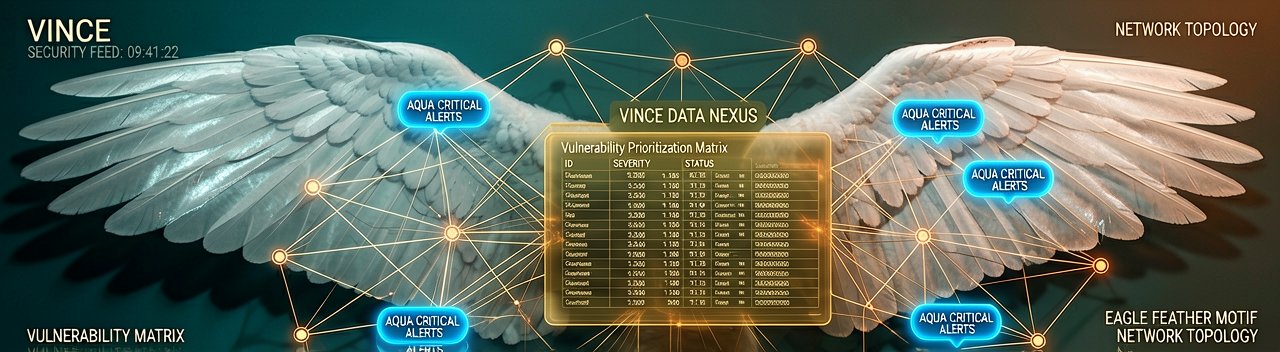
To keep this high-speed influx of security data organized, officials teamed up with the Software Engineering Institute at Carnegie Mellon University to deploy a core platform called the Vulnerability Information and Coordination Environment (VINCE). Instead of burying security teams under thousands of duplicate scans, VINCE ingests third-party threat intelligence, validates discovered bugs, and instantly prioritizes fixes where they matter most. It represents a major upgrade over existing federal tracking catalogs, which routinely lack the cross-sector prioritization metrics required to handle AI-scale code generation.
Control vs. Cooperation
While the administration emphasizes voluntary industry cooperation over harsh enforcement, the program’s operational scope hints at much tighter federal oversight regarding frontier AI systems. Reports shared by Politico point out that the system directly satisfies mandates from an executive order signed earlier in June, which establishes a framework for developers to provide prerelease access to advanced models for government security testing. Furthermore, insiders note that the clearinghouse might eventually give the White House significant leverage in dictating which commercial partners gain early access to cutting-edge AI models, muddying the waters between national security defense and market control.

Behind the Bureaucratic Shield: The Real Stakes of Gold Eagle
Beneath the Polished Press Releases: The rapid rollout of the Gold Eagle clearinghouse exposes a deeper, more systemic panic quietly brewing within the federal government. For years, cybersecurity has been a reactive game of cat-and-mouse, with human analysts manually dissecting malware and patching systems weeks or months after an exploit went live. The sudden arrival of commercial-grade artificial intelligence capable of scanning millions of lines of proprietary code in mere seconds has effectively shattered that paradigm. Washington is not just trying to fix bugs; it is scrambling to build an automated immune system before adversarial state actors can fully weaponize autonomous exploit-generation tools.
This paradigm shift has sparked intense debate among the initiative's chief architects regarding where the line between public defense and private corporate sovereignty should be drawn. Inside the halls of the Department of War and CISA, officials argue that the sheer velocity of AI-driven threats requires an unprecedented level of real-time visibility into private networks. Tech executives, conversely, remain deeply skeptical about sharing proprietary source code and sensitive internal vulnerability data with a federal repository, fearing that a single data breach at the clearinghouse could inadvertently hand their competitors—or foreign intelligence agencies—a master key to their entire software ecosystems.
The choice of Carnegie Mellon University’s VINCE platform as the technical backbone of Gold Eagle is a calculated nod to history, drawing heavily on lessons learned during the early days of internet security. In the late 1980s, the defense establishment realized that decentralized networks could not protect themselves individually, leading to the creation of the first Computer Emergency Response Teams (CERTs). By resurrecting and scaling this collaborative research model for the AI era, the administration hopes to bypass the typical bureaucratic friction that usually cripples federal tech initiatives, though critics note that coordinating with fragmented open-source software communities remains an operational nightmare.
Ultimately, the true measure of Gold Eagle’s success will not be found in the number of federal networks it secures, but in how effectively it protects the mundane, underfunded infrastructure of daily American life. While massive financial institutions possess the capital to deploy cutting-edge defensive AI models, local water treatment facilities, rural hospitals, and regional power grids are notoriously soft targets running on legacy software. If the clearinghouse cannot seamlessly translate complex, high-level AI threat intelligence into simple, actionable patches for a municipal utility worker in the Midwest, this ambitious framework risks becoming just another expensive, top-heavy Washington bureaucracy.
Reading Between the Lines: The Mirage of Automated Harmony
The Ultimate Paradox of Gold Eagle: The administration is attempting to solve a crisis generated by artificial intelligence by throwing more artificial intelligence at it. This creates a circular dependency that should give any seasoned tech strategist pause. The prevailing assumption inside Washington is that the clearinghouse can cleanly separate defensive AI capabilities from offensive ones, acting as a benevolent shield. In reality, the line between identifying a vulnerability and weaponizing it is razor-thin, meaning the exact same automated discoveries Gold Eagle intends to patch could easily be intercepted or reverse-engineered by adversaries to accelerate their own cyber strikes.
Furthermore, the reliance on voluntary cooperation from the private sector exposes a fundamental contradiction in national security strategy. The federal government is essentially asking profit-driven tech giants to hand over their crown jewels—prerelease models and proprietary vulnerability data—in exchange for vague promises of collective security. Given how fiercely these corporations guard their intellectual property and how often government databases themselves become high-value targets for foreign intelligence agencies, this forced marriage of convenience is bound to face severe resistance behind closed doors.
There is also the looming danger of systemic monoculture within the clearinghouse itself. By funneling cross-sector threat intelligence through a centralized platform like VINCE, the government risks creating a single point of failure. If the algorithmic models running Gold Eagle misclassify a critical flaw or suffer from data poisoning, the entire defensive posture of the nation’s banking, energy, and healthcare sectors could be compromised simultaneously. Relying on a centralized oracle to protect a decentralized infrastructure is an architectural mismatch that history has rarely favored.
Looking ahead, Gold Eagle will likely accelerate an algorithmic arms race where the human analyst is entirely sidelined. As autonomous defense systems square off against autonomous exploit generators, the speed of cyber warfare will compress from days to milliseconds. In this hyper-automated future, the biggest risk may not be a brilliant foreign hack, but rather a cascading system error triggered by a well-intentioned federal patch that accidentally deauthorizes critical infrastructure across half the country.
"We have officially entered an era where Uncle Sam wants to fight the machines by building a bigger machine, meaning our collective survival now relies on a federal software update never crashing during rush hour."
Artūras Malašauskas is an AI Systems Integrator with 20+ years of production-grade web engineering experience. He has designed, shipped, and scaled enterprise Python/PHP systems for logistics, SaaS, and public-sector clients. For the past year, he has focused exclusively on AI integrations: deploying open-source LLMs, building generative media pipelines (image, audio, video), and engineering multi-agent workflows for real production environments. His standard: reproducibility, security, cost-efficient inference—no vaporware. He documents and evaluates emerging AI tooling, separating verified capabilities from marketing noise. Technical editor at: muza-ai.eu, ai-verslas.lt, ai-naujinos.lt Connect on LinkedIn
Comments