IBM Redefines Enterprise AI Coding with Multi-Agent Orchestration in Bob Platform
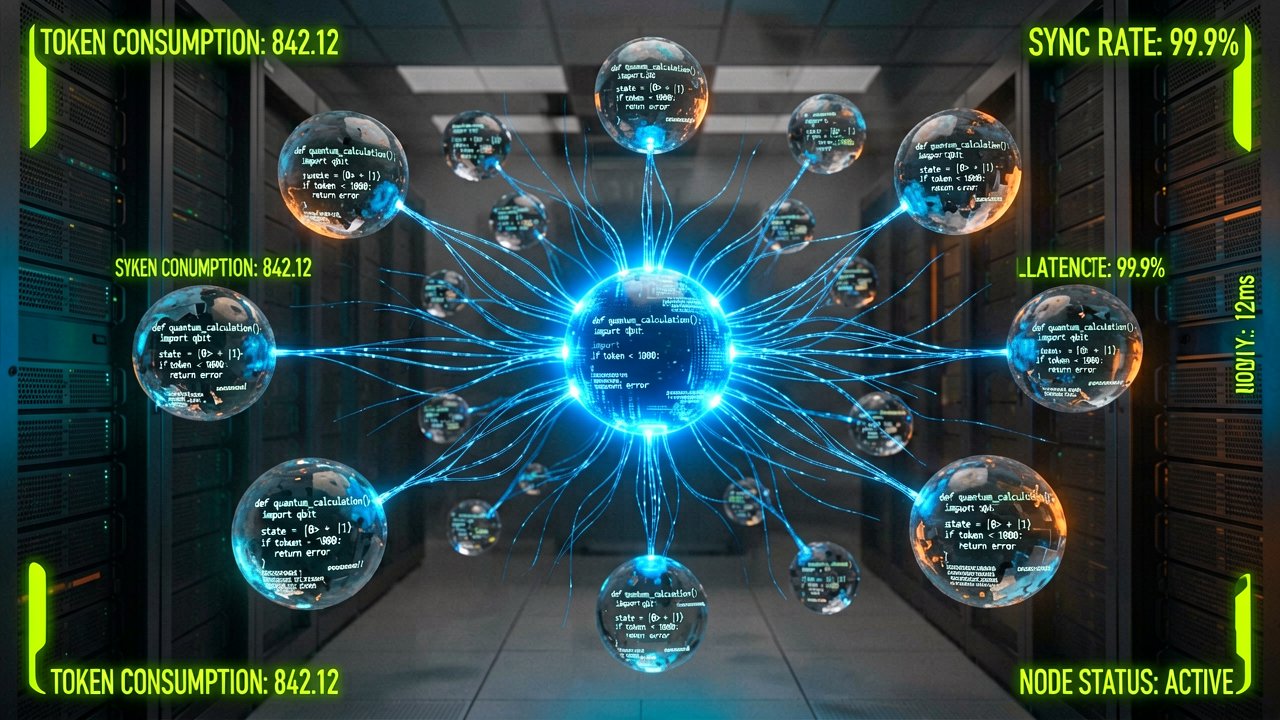
IBM has officially injected multi-agent orchestration into its Bob development platform, transforming the solution from a standard coding assistant into a fully integrated, end-to-end agentic partner. According to the official press release on the IBM Newsroom , this structural pivot targets the specific validation and review bottlenecks that emerged after companies began generating massive codebases using AI. By deploying a system of collaborative subagents that run within isolated context windows, the platform balances multiple specialized tasks simultaneously while aggressively driving down compute costs and context bloat.
This major upgrade reflects a critical shift in the competitive landscape of corporate software development. While early marketplace race conditions centered on pure foundation model benchmarks, enterprise leaders are demanding comprehensive governance, cost visibility, and native tool integration. Analysis by Yahoo Finance highlights that IBM is purposely leaning into enterprise AI orchestration over standalone model competition. To concrete this strategy, IBM introduced Bobalytics—a built-in analytics suite designed to grant CIOs real-time visibility into AI consumption, productivity gains, and spend attribution across teams.
Crucially, the expansion targets legacy technical debt, a highly lucrative domain historically dominated by Big Blue's consulting and infrastructure wings. New Premium Packages provide opinionated, pre-built workflows for complex modernization efforts across Java ecosystems, IBM i systems, and IBM Z mainframes. Early field implementation showcases the real-world utility of this coordinated approach, with consulting clients leveraging Bob to slash legacy modernization initiatives from projected nine-month timelines down to mere days.
Shifting from Code Autocomplete to Lifecycle Orchestration
The introduction of multi-agent capabilities fundamentally addresses the "integration debt" that plagues traditional DevSecOps environments. In a single-model environment, developers manually juggle prompt Engineering, model selection, and code debugging. IBM Bob changes this equation by deploying autonomous subagents that plan architectures, execute parallel tool calls, and audit output against enterprise standards before any changes reach a production-ready pull request. This structural predictability directly counters the inherent variance of standard generative AI tools.
Enterprise Control and the Mitigation of Financial Risk
Scaling generative AI in large corporate engineering teams presents a distinct financial risk due to token consumption and redundant processing cycles. IBM’s platform combats this by optimizing at the execution level rather than just the model level. Subagents process specific file reads, traces, and searches in isolated environments, shielding the core system context from inflating exponentially. Supported by model-native parallel tool calling, the orchestrator routes tasks to the most cost-effective model, allowing financial and healthcare enterprises to deploy automated engineering at scale without suffering unpredictable cloud billing spikes.
The Architectural Reality of Agentic Collaboration
Behind the DevSecOps Firewall: The transition to multi-agent infrastructure marks a fundamental departure from the linear, prompt-and-response paradigms that defined early corporate AI adoption. In traditional software engineering environments, standard code generation tools frequently stall when confronted with sprawling, interdependent code repositories. By compartmentalizing engineering workflows into discrete, specialized subagents, the platform effectively mimics an elite human engineering pod. One agent focuses entirely on structural code generation, another concurrently executes real-time security scanning, while a third validates compliance with internal corporate framework guidelines. This isolated execution model ensures that individual tasks are completed without polluting the primary context window, preventing the hallucinations and logic degradation that typically occur when a single model attempts to process massive code bases simultaneously.
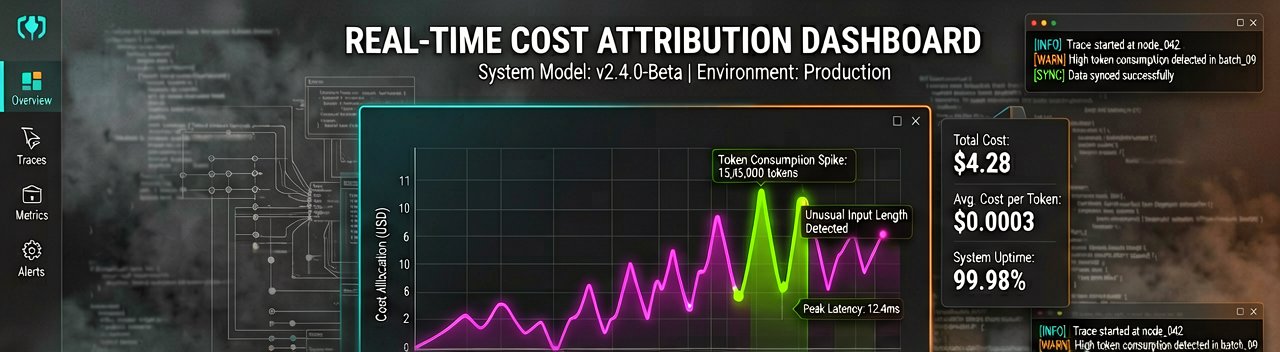
From an infrastructure perspective, this multi-agent deployment represents a direct assault on the rising compute costs associated with enterprise-scale generative AI. When a software engineer uses a standard chat interface to debug a sprawling codebase, the entire system context must be loaded, evaluated, and refreshed with every subsequent query, leading to ballooning token consumption. The orchestrator mitigates this fiscal strain by routing specific micro-tasks to smaller, finely tuned models optimized for singular actions like syntax verification or test script generation. Engineering leaders gain unprecedented granular visibility into these processes through integrated analytics dashboards, allowing them to audit exactly which models are executing specific sub-tasks and attribute those cloud expenditures back to specific business units or product pipelines.
The strategic positioning of this upgrade underscores a broader industry consolidation, where enterprise technology giants are leveraging their legacy footprints to box out nimbler AI startups. While consumer-facing coding assistants continue to battle over execution speed and model benchmarks, corporate IT buyers are prioritizing security, predictability, and deep integration with existing mainframes and middleware ecosystems. By packaging these agentic capabilities with pre-built modernization workflows for enterprise mainframes, the platform creates an immediate, pragmatic upgrade path for financial and insurance institutions looking to transition away from fragile, decades-old legacy code without absorbing the traditional operational risks of manual code modernization.
The Pragmatic Limits of Automated Engineering
Reading Between the Lines: The corporate enthusiasm surrounding autonomous multi-agent development platforms routinely glosses over a fundamental tension: the structural difference between generating code and maintaining a cohesive system architecture. While automating legacy migration and code generation promises to compress multi-month schedules into mere days, it risks introducing a new form of technical debt. When software creation becomes friction-free, engineering teams often produce an unmanageable volume of code that human developers must ultimately understand, debug, and maintain. This shifts the operational bottleneck from engineering production to human code review, as senior developers are forced to spend their time verifying thousands of machine-generated lines they did not write.
Furthermore, the economic logic of optimizing compute costs through isolated subagents depends on predictable, well-defined corporate codebases. In reality, enterprise software repositories are frequently chaotic, undocumented, and bound by decades of ad-hoc workarounds. Deploying specialized subagents into these highly customized, non-standard environments can trigger cascading logical errors, where individual agents optimize their specific micro-tasks but collectively degrade the broader system stability. This operational friction challenges the industry narrative that advanced orchestration can entirely bypass the manual, tedious labor required to deeply understand legacy architecture.
Ultimately, this agentic shift will test the traditional relationships between enterprise technology vendors and corporate buyers. By positioning software modernization as a highly automated product rather than an intensive consulting engagement, technology providers risk cannibalizing their own high-margin professional service divisions. This corporate pivot signals a broader gamble within the technology sector, betting that long-term licensing revenue from scalable AI orchestration platforms will comfortably outpace the declining billable hours of human consultants.
"We are rapidly approaching a corporate future where autonomous agents will tirelessly write millions of lines of pristine code for other autonomous agents to review, optimize, and deploy—leaving human engineers with the distinct privilege of explaining to the board why the cloud bill still went up."
Artūras Malašauskas is an AI Systems Integrator with 20+ years of production-grade web engineering experience. He has designed, shipped, and scaled enterprise Python/PHP systems for logistics, SaaS, and public-sector clients. For the past year, he has focused exclusively on AI integrations: deploying open-source LLMs, building generative media pipelines (image, audio, video), and engineering multi-agent workflows for real production environments. His standard: reproducibility, security, cost-efficient inference—no vaporware. He documents and evaluates emerging AI tooling, separating verified capabilities from marketing noise. Technical editor at: muza-ai.eu, ai-verslas.lt, ai-naujinos.lt Connect on LinkedIn
Comments