Dell Redefines Localized Enterprise Computing in India with Pro Precision Workstations and Deskside Agentic AI
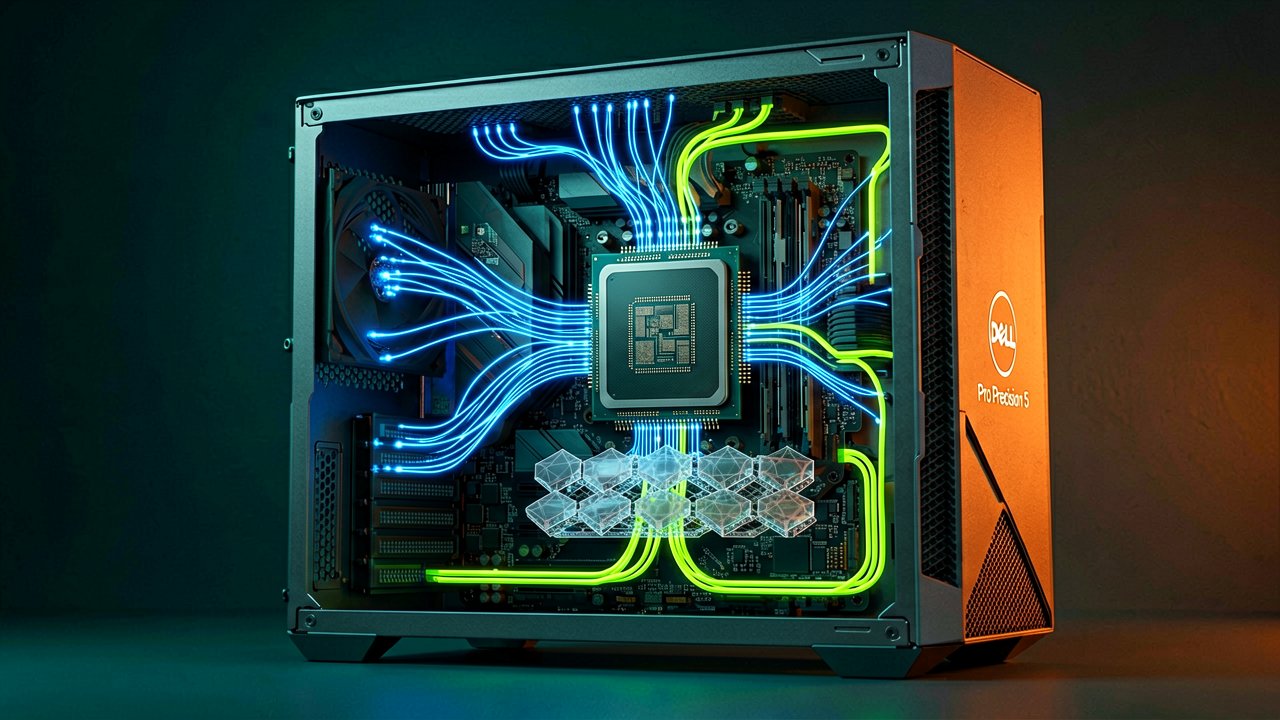
Dell Technologies has expanded its enterprise footprint in India by launching its highly anticipated VARIndia lineup of AI-ready Pro Precision mobile and tower workstations. Moving past standard chatbot utilities, this hardware deployment lands alongside the rollout of Dell Deskside Agentic AI. This architectural shift addresses an accelerating demand within India’s corporate sector for heavy hardware capable of hosting localized, autonomous machine intelligence. By ensuring multi-agent environments execute entirely on-premises, Dell effectively isolates sensitive enterprise operations from public cloud ecosystems.
The strategic deployment directly counters the escalating token expenditures and unpredictable subscription models tied to remote cloud platforms. By offering a standardized physical infrastructure that scales from mobile systems up to dense deskside rigs equipped with advanced compute architecture, Dell provides a highly predictable cost model for localized model testing, sandboxing, and workflow optimization. The localization strategy capitalizes on India’s booming IT services sector and deep developer pool, providing local software engineers and data scientists with the raw compute capability needed to train and test specialized models at their desks without facing bandwidth constraints or exposing proprietary data.
Architectural composition and hardware integration
The newly unveiled hardware family comprises the Pro Precision 5 and 7 series workstations, specifically engineered to process large data workloads and advanced rendering pipelines. These systems incorporate advanced computing options, including Intel Core Ultra Series 3 and AMD Ryzen AI 400 silicon, backed by integrated neural and graphics hardware like Intel Arc Pro or AMD Radeon PRO architectures. To sustain complex local model inferencing, these setups support up to 64GB of ultra-fast 8533 MT/s LPCAMM2 memory. This massive memory bandwidth is critical for maintaining acceptable token latency when handling dense, on-device data matrices.
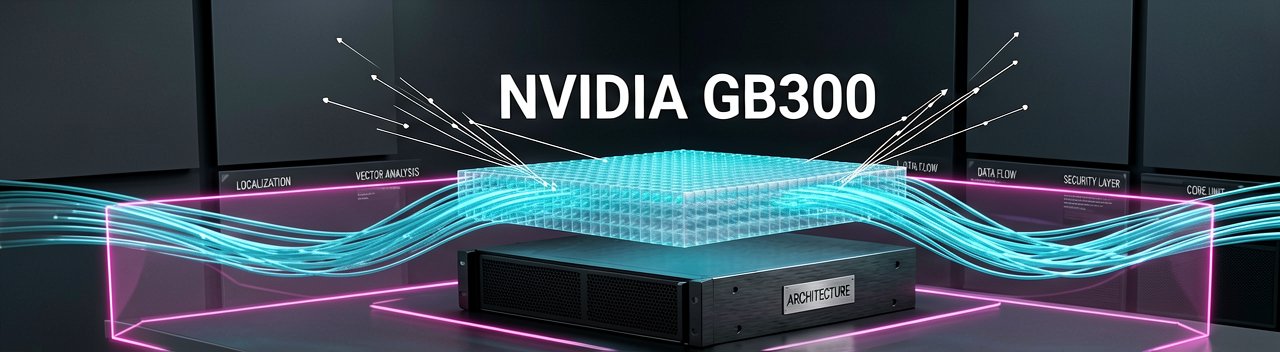
At the higher end of the spectrum, the infrastructure expands to Dell Pro Max systems featuring NVIDIA GB10 and GB300 architectures. Software integration remains a key pillar of this rollout. The platforms utilize the NVIDIA NemoClaw software stack and NVIDIA OpenShell integration to deliver a strictly sandboxed runtime. This environment allows enterprise developers to securely build, evaluate, and govern autonomous agents locally. The architecture is explicitly validated to manage workhorse language models ranging from 30 billion parameters up to massive 1 trillion parameter distributed setups when connected across the broader Dell Technologies Press Room environment.
Market implications for the Indian enterprise landscape
Dell’s push into localized deskside intelligence solves three critical pain points for Indian enterprises: data sovereignty, execution latency, and financial predictability. Industries bound by tight regulatory frameworks—such as banking, financial services, healthcare, and defense-adjacent operations—can now deploy autonomous agents without violating strict data privacy laws. Because the processing occurs strictly within the local physical chassis, corporate intellectual property is entirely protected from external leakage or third-party training cycles.
Furthermore, running agentic AI workflows locally removes the network round-trip delays characteristic of cloud microservices, driving latency down to near-zero levels. This immediate execution loop is vital for real-time code compilation assistants, isolated research processing tools, and multi-agent systems designed to continuously monitor local infrastructure. By shifting the developmental sandbox from centralized data centers directly to the engineer's desk, Dell is pioneering a decentralized framework that could shift the economic paradigm of enterprise AI deployment across the Indian subcontinent.
Behind the scenes: The localized friction and operational reality of deskside automation
While industry headlines focus on the sheer compute power of Dell's new hardware, the real battleground for this deployment is taking place within the complex compliance and infrastructure realities of Indian enterprise IT. Historically, Indian global capability centers and domestic tech giants have been tethered to hyperscaler clouds, creating a massive recurring operational expense that erodes margins during prolonged development cycles. The shift to deskside agentic computing represents an infrastructural course correction. It moves the financial burden from unpredictable operational expenditure back to predictable capital expenditure, allowing engineering teams to run iterative model testing 24 hours a day without monitoring cloud token consumption metrics.
This decentralized approach addresses a growing cultural and operational friction inside Indian engineering hubs: the bottleneck of shared centralized infrastructure. In typical enterprise setups, data scientists must queue workloads in corporate data centers or request high-tier cloud compute allocations, slowing down the development of custom AI tools. By placing dedicated multi-agent development stacks directly at an individual engineer's desk, organizations are eliminating administrative approvals and latency barriers. Early feedback from engineering leads suggests this shift reduces the time required to build and validate localized autonomous agents from weeks to days, purely by removing network dependency and resource contention.

However, shifting enterprise AI from the cloud to localized workstations introduces unique on-the-ground challenges that seasoned IT directors are scrambling to address. India's corporate office parks often face stringent thermal and power management constraints when scaling high-density hardware across massive development floors. Deploying hundreds of workstations equipped with high-performance silicon demands a complete re-evaluation of facility cooling capabilities and localized power backups. Enterprise procurement teams are finding that the transition to localized AI requires a concurrent investment in heavy-duty workspace infrastructure to prevent thermal throttling and ensure continuous operation during regional power fluctuations.
Data governance teams are also adapting to this new architecture, navigating the fine line between localized agility and corporate security protocols. While on-device execution keeps sensitive intellectual property within the physical walls of the office, it simultaneously decentralizes the perimeter that IT security forces must defend. To counter this, early adopters are relying on Dell's integrated security features and rigid software runtimes to prevent unauthorized model exportation via local physical ports. The long-term success of this localized computing push will ultimately depend on how effectively Indian enterprises can balance this newfound developer autonomy with centralized data loss prevention policies.
Reading between the lines: The paradox of decentralized enterprise autonomy
The corporate narrative surrounding deskside agentic AI presents a compelling vision of localized liberation, yet it masks a fundamental tension between engineering freedom and centralized control. While Dell pitches these workstations as tools to sever the reliance on cloud infrastructure, the reality is that no enterprise operates as an island of isolated desks. The assumption that localized hardware will entirely eliminate cloud operational expenses ignores the collaborative nature of modern software development. Localized agents must eventually sync their data, update their core models, and validate their outputs against centralized enterprise repositories, meaning the cloud is not being replaced, but rather repurposed as a high-level orchestration layer.
Furthermore, the financial argument for shifting from operational expenditure to capital expenditure carries its own economic contradictions. Silicon architectures degrade and evolve at an unprecedented pace in the AI era, with hardware generation cycles contracting to a matter of months. By locking capital into physical workstations, Indian enterprises risk anchoring themselves to fixed hardware configurations that could become obsolete long before the assets are fully depreciated. This creates a challenging calculation for chief financial officers who must weigh the immediate cost-predictability of local chassis against the rapid technological fluidity offered by cloud instances that update their underlying GPUs automatically.
There is also an ongoing operational paradox regarding developer efficiency versus administrative overhead. Giving data scientists dedicated, unthrottled compute power at their fingertips undoubtedly accelerates localized testing, but it simultaneously forces enterprise IT teams to manage a highly fragmented fleet of AI engines. Standardizing security patches, monitoring model drift, and ensuring compliance across thousands of individual physical endpoints introduces an administrative burden that could rival the complexity of the cloud environments businesses are trying to escape. If a localized autonomous agent begins generating flawed code or leaking data internally, diagnosing the failure requires auditing a physical asset rather than reviewing a centralized cloud log.
"Ultimately, the corporate rush to put supercomputing power under every engineer's desk resembles the historical cycle of IT infrastructure: we spend a decade centralizing everything into the cloud to save on maintenance, only to spend the next decade decentralizing it all back to the office floor because the bandwidth bill arrived. It seems the ultimate goal of enterprise AI sovereignty is simply ensuring that when a model hallucination inevitably breaks the codebase, it does so at the comfortable speed of local memory rather than over a congested regional network."
Artūras Malašauskas is an AI Systems Integrator with 20+ years of production-grade web engineering experience. He has designed, shipped, and scaled enterprise Python/PHP systems for logistics, SaaS, and public-sector clients. For the past year, he has focused exclusively on AI integrations: deploying open-source LLMs, building generative media pipelines (image, audio, video), and engineering multi-agent workflows for real production environments. His standard: reproducibility, security, cost-efficient inference—no vaporware. He documents and evaluates emerging AI tooling, separating verified capabilities from marketing noise. Technical editor at: muza-ai.eu, ai-verslas.lt, ai-naujinos.lt Connect on LinkedIn
Comments