Navigating the AI Job Disruption Crisis: Corporate Restructuring and Localized Economic Defense

A profound shift is rippling through the global labor market as artificial intelligence transitions from a speculative corporate capability to a primary agent of workforce displacement. Tech executives, who once characterized their systems as mere enhancements to human labor, have increasingly acknowledged that these models will fundamentally alter or eliminate entire occupational segments. Data indicates that this structural shift is already manifesting on balance sheets; automation is frequently cited as a catalyst for widespread headcount reductions as organizations reallocate resources from human payrolls to intensive capital expenditure on computational infrastructure.
This macro-economic adjustment is hitting localized manufacturing and tech hubs with particular velocity. In Michigan, fresh data reveals a stark division within the regional economy, where specialized localized demand for machine-learning capability is growing rapidly alongside a high level of job exposure. State labor analysts report that a significant percentage of the local workforce occupies positions highly susceptible to algorithmic transformation, illustrating that the disruptive reality of this technology is no longer confined to isolated technological centers.
As corporate leadership attempts to manage the narrative surrounding mass tech layoffs by attributing cuts to artificial intelligence, the long-term socioeconomic costs of displacement are becoming clearer. Researchers warn of prolonged financial scarring for affected professionals, who face depressed lifetime earnings and extended periods of underemployment. To counter these systemic shocks, public and private leaders are moving away from reactive measures in favor of structural adjustments, emphasizing aggressive regional retraining programs to protect employment stability in an automation-first economy.
The Reality of Algorithmic Displacements and Corporate Realignment
While industry leaders occasionally pivot toward optimistic public relations, the reality of corporate restructuring tells a far more disruptive story. According to recent data published by Forbes , artificial intelligence has emerged as the leading reason cited for job losses, with tens of thousands of corporate cuts directly attributed to automation and the structural pivots required to finance advanced models. This capital reallocation highlights a growing trend where human payrolls are reduced to balance the massive infrastructure budgets demanded by machine-learning hardware.
Regional Vulnerabilities and Strategic Workforce Adaptation
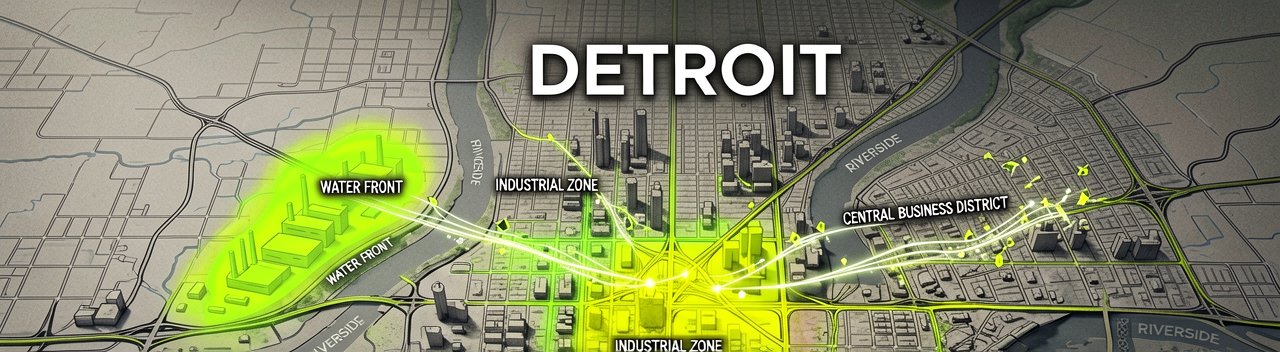
The impact of this economic pivot is acutely visible in the industrial Midwest, where regional workforces face intense pressure to adapt. A comprehensive analysis released by the Michigan Department of Labor and Economic Opportunity shows that roughly 10% of the state's workforce is currently employed in roles with exceptionally high AI exposure, particularly within administrative support and office operations. While localized tech hubs like Detroit have seen exponential surges in AI job demand, state officials note that local workers possess these technical skills at rates well below the national average, creating an urgent, critical bottleneck that requires statewide retraining initiatives to prevent massive regional underemployment.
The Long-Term Economic Scarring of the Automated Workforce
The consequences for professionals caught in this transitional phase extend far beyond immediate unemployment metrics. Market evaluations by financial institutions like CNN via institutional research underscore a severe economic scarring effect, projecting that workers displaced by technology face compressed income levels and heightened career instability that can persist for over a decade. As automated systems split the job market between highly compensated technical orchestrators and displaced administrative personnel, proactive policy intervention and structural labor reforms are becoming essential requirements to mitigate long-term social fragmentation.
Behind the Scenes of the Automation Pivot
The acceleration of workplace automation reveals a widening chasm between executive rhetoric and the material realities of the modern labor force. While corporate communications frequently frame algorithmic deployment as a tool for liberation from mundane tasks, internal strategic shifts tell a far more transactional story. Operational leaders are increasingly pressured to demonstrate immediate capital efficiency, driving a trend where human capital is systematically swapped for scalable software subscriptions. This transition is redefining corporate efficiency metrics, transforming what was once an experimental investment into a mandatory baseline for remaining competitive in compressed market landscapes.
Historically, technological revolutions have promised a net positive generation of new industries, but the speed of the current algorithmic deployment challenges this historical precedent. Workers are not merely adapting to new tools; they are competing with systems capable of learning and iterating in real-time. This compressed timeline leaves displaced professionals with minimal runway to acquire the highly specialized skills required by the newly emerging economy. The resulting friction creates an immediate pool of underemployed talent, as traditional safety nets and continuing education programs struggle to keep pace with the exponential curve of machine capabilities.

In regions like the industrial Midwest, this disruption intersects with legacy socioeconomic vulnerabilities, amplifying the anxiety felt across the manufacturing and administrative sectors. Community leaders and labor advocates note that the psychological impact of impending displacement alters consumer spending habits and local economic stability long before the actual layoffs occur. The institutional knowledge built over decades by experienced staff is frequently minimized in favor of predictive models, leading to a subtle yet pervasive loss of operational resilience within mid-sized enterprises that lack the capital to properly integrate human-machine collaboration.
The debate over future-proofing employment has shifted from a theoretical ethical discussion to a pragmatic struggle over resource distribution. Progressive organizations are exploring internal redeployment strategies, yet the scale of the transition often outpaces these localized initiatives. As corporate boards continue to prioritize infrastructure spending over human retention, the responsibility of managing the displaced workforce is falling heavily onto state agencies and educational institutions. The success of this economic transition will ultimately depend on whether regional policies can successfully incentivize corporate accountability and mandate substantive investment in the human component of the labor equation.
Reading Between the Lines of the AI Productivity Paradigm
The prevailing narrative surrounding corporate automation rests on the comfortable assumption that displaced workers will naturally migrate toward higher-value roles. This perspective intentionally overlooks a fundamental structural contradiction: the very operational tasks being automated—data synthesis, administrative coordination, and analytical drafting—historically served as the primary training grounds for entry-level professionals. By eliminating these foundational roles, enterprises are inadvertently dismantling the traditional pipeline for developing institutional expertise. This creates an unsustainable paradox where organizations aggressively search for senior technical orchestrators while simultaneously wiping out the entry-level ecosystem required to produce them.
Furthermore, the industry's focus on immediate cost reduction frequently masks a deeper, systemic risk concerning operational resilience. While replacing human personnel with algorithmic infrastructure provides an immediate boost to short-term fiscal margins, it introduces a rigid single point of failure. Unlike a diverse human workforce capable of creative problem-solving during unprecedented market disruptions, automated systems are inherently constrained by historical training data. When novel economic anomalies occur, organizations overly dependent on uniform algorithmic logic risk widespread, synchronized operational failures, exposing the superficial nature of efficiency divorced from human adaptability.
This reality forces a skeptical re-examination of the corporate pledge toward comprehensive internal upskilling. In practice, corporate retraining initiatives frequently function as superficial public relations maneuvers designed to soften the reputational blow of mass layoffs. True technical re-skilling requires substantial time and capital investments that conflict directly with the quarterly profit demands of institutional investors. Consequently, the burden of managing structural unemployment is shifting entirely onto the public sector, while the financial gains of the automation pivot remain strictly privatized within a narrowing corridor of technology providers.
Projecting these dynamics forward suggests that the primary economic hazard is not a sudden, catastrophic shortage of work, but rather a profound degradation of employment quality. As middle-tier administrative and analytical positions vanish, the labor market risks splitting into a hyper-compensated elite of system architects and a massive, precarious underclass trapped in low-wage physical services that remain too expensive to automate. Mitigating this division will require moving past optimistic industry rhetoric and acknowledging that unchecked automation serves to concentrate capital rather than democratize economic opportunity.
"We are told that artificial intelligence will gracefully free humanity from the burden of routine labor, yet the immediate corporate reward for that freedom appears to be a swift reduction in payroll and an invitation to fund the next computational cluster. It seems the grand promise of technology is that machines will finally think like executives, while the remaining workers must learn to live like machines."
Artūras Malašauskas is an AI Systems Integrator with 20+ years of production-grade web engineering experience. He has designed, shipped, and scaled enterprise Python/PHP systems for logistics, SaaS, and public-sector clients. For the past year, he has focused exclusively on AI integrations: deploying open-source LLMs, building generative media pipelines (image, audio, video), and engineering multi-agent workflows for real production environments. His standard: reproducibility, security, cost-efficient inference—no vaporware. He documents and evaluates emerging AI tooling, separating verified capabilities from marketing noise. Technical editor at: muza-ai.eu, ai-verslas.lt, ai-naujinos.lt Connect on LinkedIn
Comments