Jio’s Bold Network-Native AI Play Unveiled at Reliance AGM
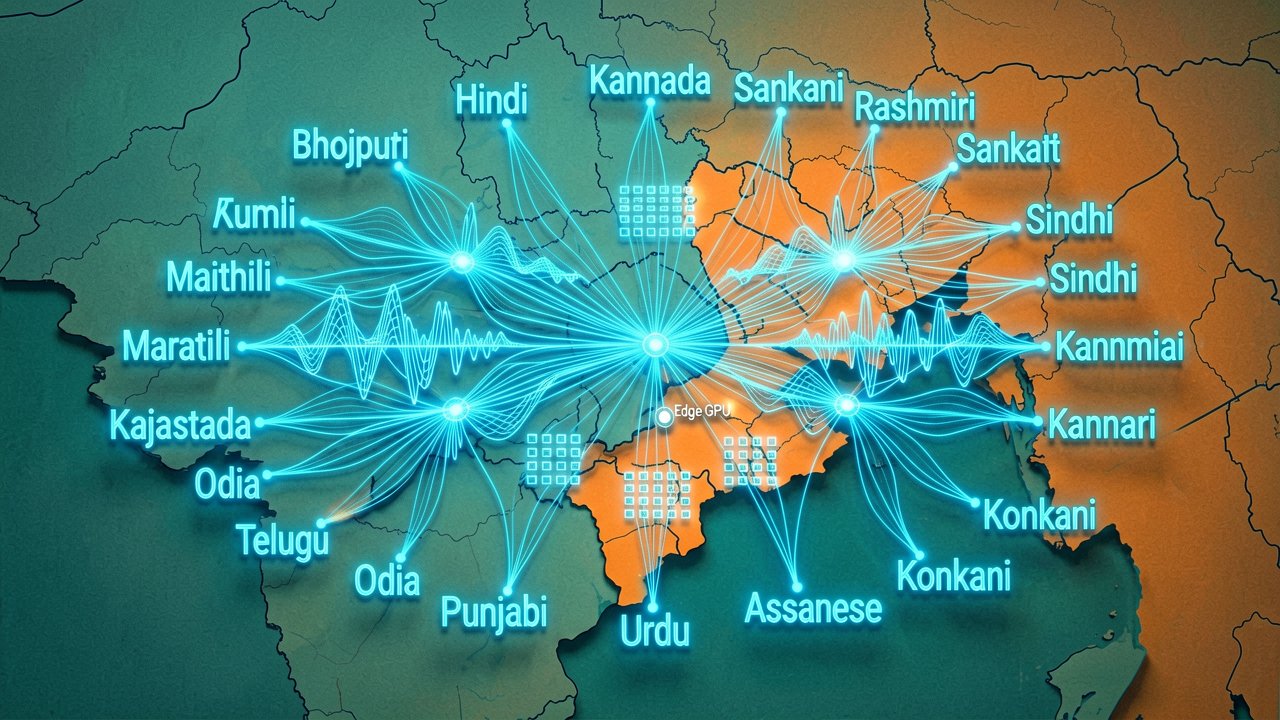
Reliance Jio is ready to flip the script on how hundreds of millions of people interact with daily technology. At the Reliance Industries 49th Annual General Meeting held on June 19, 2026, Chairman Akash Ambani showcased a major agentic AI evolution designed to inject artificial intelligence directly into the communication layer instead of burying it inside isolated standalone apps. Driven by the company's proprietary "Reliance Intelligence" framework, this massive push aims to make cutting-edge digital assistance accessible and deeply conversational for over 500 million subscribers across India.
The crown jewel of this rollout is a revamped MyJio app, transitioning from a classic, grid-based account utility into a proactive personal AI advisor and relationship manager. Users will no longer have to dig through confusing tab menus to find specific configurations. Instead, subscribers can simply state their explicit intentions in natural language—whether they are coordinating data migrations to a new city, activating an eSIM via automated self-KYC workflows, or provisioning destination-specific international roaming packages. The assistant autonomously maps out multi-step processes, handling operational friction behind the scenes while maintaining rigid security standards that require explicit customer consent before logging transactions or executing any payments.
Intelligent Networks and Sovereign Infra
Beyond the self-care application layer, the carrier introduced the Jio Call Agent, an assistant baked straight into the telecom network infrastructure. Prompted mid-conversation by saying "Hey Jio", the assistant securely enters a standard mobile call to transcribe dialogues, compile summaries, and interactively book restaurant tables or transit rides using natural speech. This entire consumer-first ecosystem operates in tandem with a broader sovereign AI infrastructure strategy being executed by Reliance in Jamnagar. Powered by local green energy, this gigawatt-scale data center facility uses a massive fleet of advanced GPUs to ensure deep localized data processing, ensuring low-latency intelligence that understands and answers fluently in 22 distinct regional Indian languages.
To learn more about the complete list of announcements and digital tools unveiled during the shareholder meeting, read the full breakdowns published on The Economic Times and reviewed by 91Mobiles.

What Most Reports Miss: This is not merely another telecom operator slapping a chat window onto a legacy account-management portal to ride a temporary venture capital trend. By deploying what engineers refer to as a "network-native" architecture, Jio is attempting something far more structurally ambitious. Most contemporary AI assistants live on a remote cloud cluster managed by a third-party technology provider, requiring users to explicitly open an application, authenticate their identity, and send structured text prompts across heavily congested external networks. Jio, by contrast, has interwoven its machine learning layers directly with its core IP Multimedia Subsystem (IMS) signaling stack, allowing generative models to intercept, understand, and act upon user requests directly from the voice dialing channel itself.
The Architecture of Low-Latency Voice Intelligence
Operating a real-time voice translation and scheduling agent inside an active telecommunications circuit introduces immense technical friction, primarily around latency budget constraints. Traditional web-based large language models can afford a two-to-three second delay while generating text tokens, but a natural telephone conversation degrades rapidly if a digital participant hesitates for more than a few hundred milliseconds. To circumvent this human-experience bottleneck, the carrier deployed specialized, quantized speech-to-text models right at the regional edge data center layer, allowing immediate transcription before the token data ever travels to a centralized core network. By reducing the physical distance data must travel, the incoming voice data can be transcribed, processed for intent, and fed into action-oriented application programming interfaces without breaking the natural rhythm of human speech.
This decentralized edge infrastructure also serves a vital geopolitical and structural objective rooted in data sovereignty. Rather than processing the sensitive conversational patterns, billing details, and daily habits of half a billion citizens on rented international cloud clusters, the architecture anchors all compute operations safely within domestic borders. Leveraging their gigawatt-scale infrastructure footprint in Jamnagar, the enterprise can run localized training pipelines on data sets that reflect the true linguistic diversity of the subcontinent. This foundational independence protects consumer privacy while insulating the domestic digital economy from external infrastructure supply shocks or sudden shifts in international cross-border data transfer regulations.
Navigating the Nuances of Regional Language Context
The true battleground for this technology lies in mastering the intricate nuances of local dialects, historical context, and the widespread phenomenon of "Hinglish"—the fluid blending of Hindi and English vocabulary within a single sentence. Standard models trained on predominantly Western internet corpora routinely fail when confronted with code-switching, local idioms, or phonetic variations across different states. To build an advisor that feels genuinely intuitive, the development teams had to curate diverse training datasets that capture natural, conversational vernacular rather than formal, literary translations. Achieving high accuracy across 22 scheduled languages ensures that a small business owner in a rural province can navigate enterprise billing tools with the exact same fluid efficiency as a corporate professional in a major metropolitan center.

For corporate stakeholders and industry watchdogs, this rollout signals an aggressive pivot from a traditional pipeline utility provider into an expansive digital platform ecosystem. Historically, telecom providers globally have struggled with monetization, watching third-party over-the-top applications capture the financial upside of data networks while carriers shouldered the heavy capital expenditures of physical infrastructure. By offering an intelligent, contextual assistant layer that cannot be easily replicated by a downloadable app, the company repositions itself as the primary gateway for digital commerce, enterprise productivity, and daily organization. The network is no longer just a passive pipe for moving data packets; it has evolved into the analytical engine that organizes and simplifies the subscriber's entire digital life.
Reading Between the Lines: The grand corporate narrative paints this rollout as a democratic triumph for digital inclusion, yet the financial mechanics underlying a network-scale AI deployment suggest a far more complicated reality. Processing billions of real-time conversational tokens, particularly across specialized multilingual voice calls, demands unprecedented quantities of compute power and electrical energy. While the promise of "free" or low-cost digital assistance aligns perfectly with Jio’s historical market-disruption playbook, the ongoing operational expenditure of running high-end graphics processing units at the network edge must eventually be accounted for. Industry analysts remain deeply skeptical that a carrier can absorb these massive computational overheads indefinitely without quietly restructuring tariff tiers or introducing premium, paywalled tiers for advanced agentic features.
The Privacy Paradox of Always-Listening Networks
Furthermore, inviting an artificial intelligence agent directly into the telecom network stack introduces a profound privacy paradox that no amount of corporate reassurance can entirely smooth over. By encouraging consumers to invoke an AI advisor mid-call via "Hey Jio," the company is effectively shifting the boundaries of traditional telecommunications privacy from a blind, encrypted utility pipe to a highly analytical, contextual surveillance environment. Even with strict customer consent frameworks in place, the temptation to mine these rich, real-time conversational data streams for targeted advertising, financial profiling, or behavioral predictive modeling is immense. The contradiction between offering a protective, localized "sovereign cloud" and building a network that explicitly listens to, transcribes, and dissects daily personal calls is an architectural tension that has yet to be fully reconciled.
There is also the significant challenge of managing user expectations when AI hallucinations move from the consequence-free arena of text chatbots into critical real-world systems. If a standalone web app misinterprets a prompt, the user simply regenerates the response; if a network-integrated assistant mishears an e-KYC prompt, messes up an international roaming package activation, or misallocates data migrations during a physical move, the financial and logistical fallout is immediate. Relying on specialized, quantized models run at regional edge nodes means sacrificing a degree of the deep contextual reasoning found in massive, centralized cloud models. This technical compromise increases the risk of functional friction, potentially overwhelming traditional customer service channels with subscribers trying to untangle automation errors.
Monetization Hurdles and Platform Lock-In
Ultimately, this aggressive technological push serves as a defensive moat disguised as a forward-looking innovation strategy. As the growth of standard mobile subscriptions inevitably plateaus, the battle shifts from acquiring new users to maximizing the average revenue per user through aggressive ecosystem lock-in. By embedding an intelligent relationship manager so deeply into the billing and communication experience, the enterprise makes it incredibly friction-heavy for a subscriber to ever consider porting their number to a competitor. Whether the average consumer actually desires a hyper-proactive AI advisor managing their daily connectivity—or if they simply want a reliable, high-speed data pipe that does not drop calls—remains an open and expensive question that the market will answer over the coming years.
Building a sovereign, green-powered AI infrastructure that converses fluently in twenty-two regional dialects is an undeniably brilliant engineering feat, provided the network can still figure out how to deliver a text verification code when you are standing in a crowded basement subway station.
Artūras Malašauskas is an AI Systems Integrator with 20+ years of production-grade web engineering experience. He has designed, shipped, and scaled enterprise Python/PHP systems for logistics, SaaS, and public-sector clients. For the past year, he has focused exclusively on AI integrations: deploying open-source LLMs, building generative media pipelines (image, audio, video), and engineering multi-agent workflows for real production environments. His standard: reproducibility, security, cost-efficient inference—no vaporware. He documents and evaluates emerging AI tooling, separating verified capabilities from marketing noise. Technical editor at: muza-ai.eu, ai-verslas.lt, ai-naujinos.lt Connect on LinkedIn
Comments