2026's Leading AI Video Platforms: A Side-by-Side Feature and Performance Breakdown
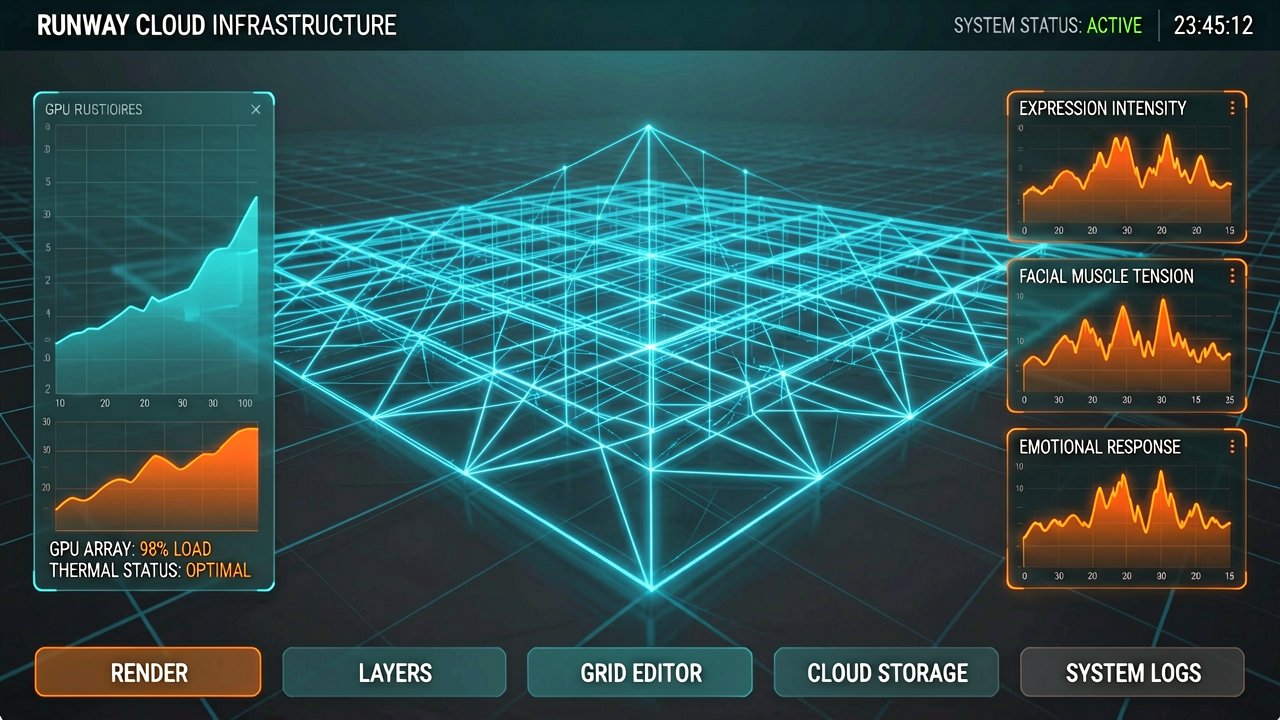
The landscape of commercial content creation has undergone a seismic shift as marketing agencies fully embrace automated production pipelines to keep pace with relentless client demands for rapid turnaround times. Following OpenAI’s surprising market pivot in April 2026—when the tech giant formally retired Sora from its primary consumer availability according to tracking by Ulaz AI—the industry quickly decentralized. Instead of a single dominant tool, agencies are now evaluating a highly competitive matrix of specialized platforms, each carving out distinct advantages in physics simulation, rendering speed, and character consistency.
The current battle for agency dominance centers on Runway, Google Veo, Kuaishou's Kling, and Luma AI, each approaching generative video from completely different structural philosophies. While some development teams focus heavily on cinematic fidelity and fine-grained camera control, others prioritize raw rendering speed and low per-second generation costs to satisfy high-volume social media campaigns. This strategic divergence means that choosing the right engine is no longer just about picking the tool with the highest resolution, but rather finding the specific workflow that aligns with an agency's technical roadmap.
The Baseline Contenders and Their Market Positioning
Runway continues to position itself as the safest and most comprehensive studio workspace for full-scale production. With its mature pipeline and advanced control mechanics like the Act-One performance architecture, it targets enterprise creators who need precise control over facial expressions and narrative continuity. On the other end of the spectrum, tools like Kling and Google's Veo 3.1 have surged in popularity among agencies requiring hyper-realistic physical simulations and complex, multi-second camera pans that maintain environmental logic without sudden structural melting.
Budget-conscious marketing teams and fast-paced social teams are simultaneously leaning on agile players like Pika and Luma AI's Ray systems. These platforms offer significantly lower cost-per-second footprints and rapid generation cycles as noted by industry analysts at DIY AI. For agencies looking to replace traditional b-roll or rapidly prototype concepts for client pitches, the immediate baseline difference comes down to a strict trade-off between the depth of editing control tools and raw, friction-free asset output.

Technical Specifications Matrix
| Platform Model | Speed / Latency | Model Size / Parameters | Hardware Requirements |
|---|---|---|---|
| Runway Gen-3 Alpha Turbo | Real-time execution; 11-15 seconds per 10-second clip | ~12 Billion Parameters (Optimized Distillation) | Cloud Infrastructure API (Requires high-bandwidth connection) |
| Google Veo 3.1 (Fast Mode) | Low latency; under 30 seconds for native 4K output | ~15B to 20B Parameters (Multimodal Audio-Video) | Google TPU v5e / v5p Clusters via Gemini API API |
| Kuaishou Kling 1.5 / 2.0 | Moderate; 2-3 minutes for deep structural physics rendering | ~14 Billion Parameters (Diffusion Transformer Architecture) | Data Center Scaled H100/A100 GPU Arrays |
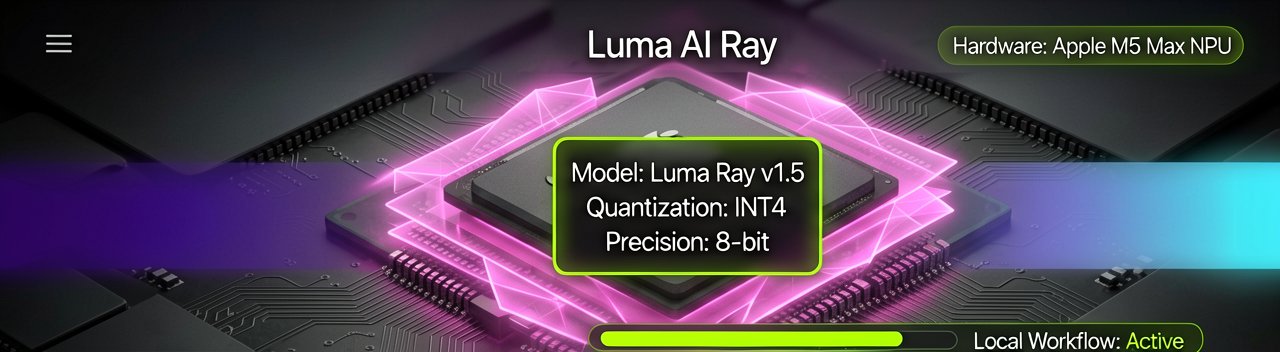
| Luma AI Ray (Local-Ready Open Variants) | Variable; heavily dependent on local hardware constraints | 7B to 13B Parameters (Scale-down quantization available) | NVIDIA RTX 4090 (24GB VRAM minimum) or Apple M5 Max NPU |
Decentralized Compute and the Infrastructure Reality
The vast differences in performance across these platforms stem directly from how each engineering team manages the crushing compute demands of diffusion transformer architectures. Runway has successfully addressed consumer-facing latency by heavily relying on model distillation techniques in its Gen-3 Alpha Turbo pipeline, which drops inference time down to a fraction of traditional rendering loops. By condensing parameter dependencies, they allow marketing agencies to cycle through rapid iterations in a live studio setting without stalling creative workflows. However, this blistering speed requires a highly optimized, enterprise-level cloud network to maintain stable stream delivery during complex, multi-shot generation tasks.
Google takes an entirely different infrastructure path by tying its latest video efforts straight into proprietary server architecture. The Google AI Studio infrastructure runs Veo 3.1 on massive Tensor Processing Unit (TPU) clusters, allowing the model to contextually pair audio and video layers natively without stacking separate processing tasks. Because the network architecture handles physical realism and high-fidelity 4K scaling on specialized, internal silicon, creators get professional-grade output within a remarkably low latency window. This setup bypasses traditional graphics hardware bottlenecks completely, but it keeps the workflow strictly locked behind ecosystem APIs.
Meanwhile, platforms operating on massive global scales like Kuaishou's Kling model lean on dense, brute-force data center arrays to manage complex physical interactions. Kling’s dedication to keeping real-world physics intact—preventing objects from clipping or losing structural logic during intricate camera pans—demands immense cross-GPU coordination across NVIDIA A100 or H100 stacks. While the resulting visual consistency is top-tier for narrative agencies, the trade-off is higher rendering latency, making it less ideal for on-the-fly social media production where minutes matter.
The biggest technical evolution in 2026 is the rapid rise of local-ready models like Luma AI's adaptable frameworks, which are designed to shift rendering away from costly third-party servers. Thanks to recent hardware breakthroughs in localized processing units, creators are no longer entirely dependent on cloud subscriptions to run dense generative models. High-end consumer hardware, such as workstation graphics units with deep memory pools or laptops packed with advanced Neural Processing Units, can now handle quantized variants locally. This hybrid approach gives agencies ultimate control over data privacy and long-term operating costs, altering how studio tech stacks are built from the ground up.
Editorial Pros & Cons
| Platform Model | Operational Advantages (Pros) | Operational Disadvantages (Cons) |
|---|---|---|
| Runway Gen-3 Alpha Turbo | Blistering generation speeds; world-class character expression matching via Act-One; highly intuitive multi-camera controls. | Premium subscription tiers can become cost-prohibitive for high-volume agencies; minor visual degradation in complex background details during ultra-fast generations. |
| Google Veo 3.1 | Flawless multi-modal audio integration; natively outputs high-fidelity 4K texturing; tight cohesion between prompt text and final video. | Strictly locked into the Google Cloud API ecosystem; aggressive safety filters can occasionally trigger false positives on stylized or avant-garde marketing concepts. |
| Kuaishou Kling 1.5 / 2.0 | Unmatched adherence to real-world physics; excellent handling of complex human-object interactions; superior temporal consistency over longer clips. | Noticeable rendering latency during peak server hours; interface can feel fragmented for western enterprise marketing workflows. |
| Luma AI Ray | Flexible deployment with highly capable local open-weight options; zero recurring cloud costs when run locally; excellent data privacy controls. | Demands heavy localized hardware investment; requires technical expertise to optimize local quantization settings without sacrificing fidelity. |
Navigating the Creative Trade-offs
Reading Between the Lines: The sheer variety in the 2026 AI video landscape proves that the era of the one-size-fits-all creative engine is officially over. For marketing agencies running tight, multi-platform social media campaigns, Runway's Turbo model presents an almost unbeatable proposition for rapid-fire asset creation. The ability to lock down a character's facial performance through Act-One saves hours of digital puppetry. However, relying entirely on a single closed ecosystem leaves agencies vulnerable to sudden pricing changes and server outages during critical client review cycles.
Deploying Google’s Veo 3.1 requires a fundamental acceptance of the corporate velvet rope. The native audio synthesis is arguably the most sophisticated on the market, generating atmospheric soundscapes that match the visual pacing with eerie accuracy. This eliminates a massive bottleneck in the post-production pipeline. Yet, the platform’s strict compliance frameworks mean creative directors frequently find themselves negotiating with overly cautious content moderation systems, turning what should be a simple concept iteration into a frustrating exercise in prompt rewriting.
For high-end cinematic work where physical interaction cannot be faked, Kling stands as a monument to computational patience. Watching a digital subject pour a glass of water without the liquid turning into a surrealist blob or the glass clipping through the hand is a testament to Kuaishou's physics modeling. The operational friction lies squarely in the clock. In an industry where clients expect immediate revisions, waiting several minutes for a single shot can stall the momentum of a live editing session, forcing agencies to restrict Kling's use to specialized, high-budget hero assets.
The dark horse remains the localized route championed by Luma AI's adaptable frameworks. By moving the heavy lifting onto local silicon, agencies are regaining the digital sovereignty they lost during the early cloud boom. It is a liberating workflow that completely sidesteps unpredictable rendering fees and data security anxieties. The cold reality, however, is that this shift transforms creative studios into miniature data centers, forcing agencies to balance their creative payroll against the steep hardware costs of maintaining top-tier, local processing rigs.
"We wanted tools that could completely automate the human creative spark for pennies on the dollar, but instead, we ended up with brilliant, hyper-specialized digital artists that each require their own specific IT departments, custom power grids, and distinct emotional management strategies just to deliver a clean ten-second clip of a cat riding a bicycle."
Artūras Malašauskas is an AI Systems Integrator with 20+ years of production-grade web engineering experience. He has designed, shipped, and scaled enterprise Python/PHP systems for logistics, SaaS, and public-sector clients. For the past year, he has focused exclusively on AI integrations: deploying open-source LLMs, building generative media pipelines (image, audio, video), and engineering multi-agent workflows for real production environments. His standard: reproducibility, security, cost-efficient inference—no vaporware. He documents and evaluates emerging AI tooling, separating verified capabilities from marketing noise. Technical editor at: muza-ai.eu, ai-verslas.lt, ai-naujinos.lt Connect on LinkedIn
Comments