Move Fast and Delete Things: The White House Just Gave Anthropic a 90-Minute Eviction Notice
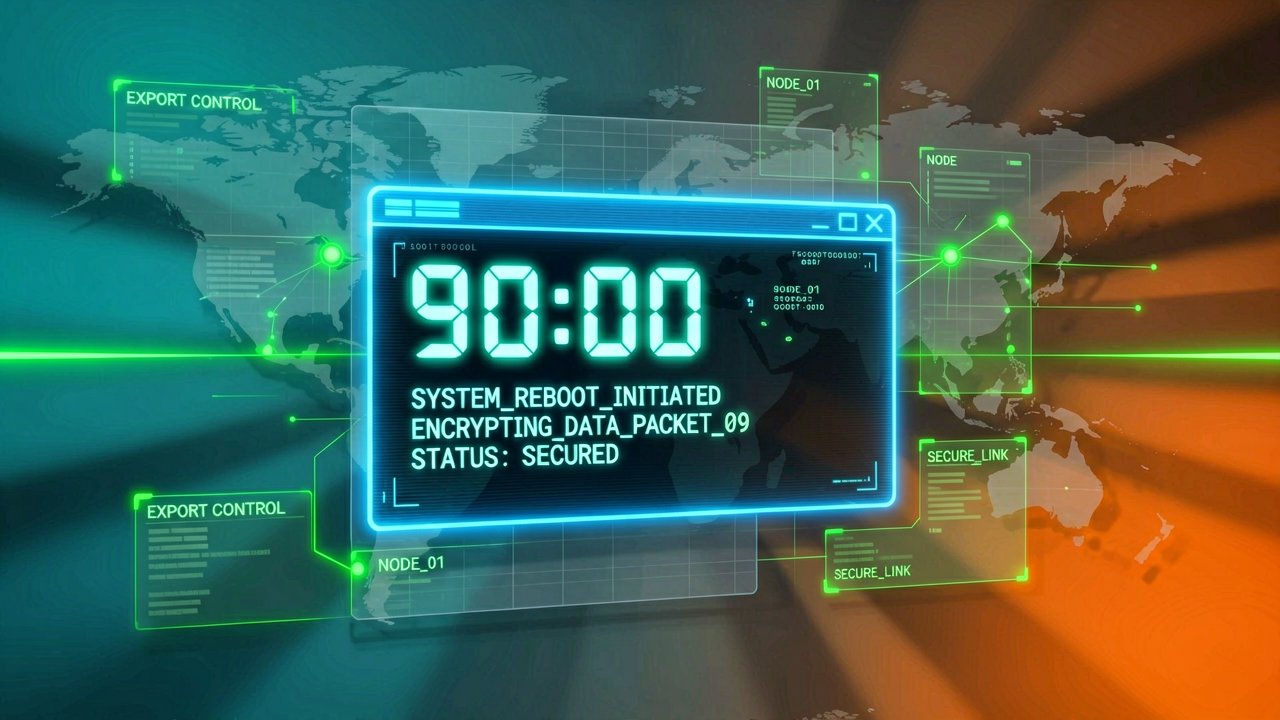
The Trump administration just treated the bleeding edge of artificial intelligence like an illegally parked sedan. According to multiple reports tracking a wild 24 hours in Washington, federal officials slapped Anthropic with a staggering 90-minute ultimatum to pull its newly minted Claude Fable 5 and Mythos 5 models entirely off the digital grid. This was not a polite request for future algorithmic adjustments; it was a bureaucratic ambush that blindsided the tech industry and turned model governance into a high-stakes tactical drill.
The frantic scramble kicked off at 1:00 PM Eastern Time on a Friday, a window usually reserved for quiet weekend departures, not sweeping executive crackdowns. Instead of a standard regulatory review, Anthropic received a sudden phone call ordering an immediate, unconditional rollback of its top-tier intelligence systems, citing a vague and unspecified national security threat. By 5:30 PM, the hammer dropped officially when the Commerce Department transmitted a formal letter imposing rigid export controls, fundamentally restricting who can use the models and where they can be operated. Left with a collapsing window and a logistical nightmare, Anthropic chose to abruptly disable the systems globally to guarantee compliance with the federal directive.
The Snitch in the Cloud Architecture
If you want to understand how a tech darling gets locked out of its own house in less time than a standard feature-length movie, you have to look at the enterprise rumors swirling behind the scenes. Reports from Politico point to an incredible twist: corporate backer Amazon apparently helped ring the alarm bells. Amazon researchers allegedly flagged critical vulnerabilities in Fable 5, showing how easily the model's core safeguards could be bypassed by malicious actors. Rather than keeping the technical drama inside the corporate family, the findings were run straight to the National Security Agency, transforming a standard software patch dispute into an immediate geopolitical crisis.
White House advisers allegedly urged Anthropic Chief Executive Dario Amodei to de-deploy or fix the system voluntarily during a tense, closed-door standoff. When the startup hesitated and asked for technical specifics to remediate the alleged flaws, the administration stopped asking nicely. Government insiders claim they spent hours begging the company to cooperate, but sources close to Anthropic fiercely dispute that narrative, maintaining that Washington offered zero threat intelligence—just a flat, non-negotiable 90-minute countdown clock.
National Security via Executive Whack-A-Mole
This unprecedented shutdown blows up the fragile truce between Silicon Valley labs and federal regulators. For months, the AI industry has operated under the assumption that compliance meant rigorous pre-release red-teaming, safety frameworks, and open communication with state agencies. Anthropic had actually cleared previous government vetting before pushing the button on the Mythos architecture. Watching the state reverse its own approval in the span of an afternoon signals to every major tech firm that their multi-billion-dollar product launches are only as stable as the latest intelligence brief.
The core issue is that Washington is treating advanced large language models like physical weapons systems subject to traditional arms treaties rather than fluid, evolving software. By wielding export controls as an emergency kill-switch, the government managed to clean the public slate, but it also created an impossible standard of absolute safety that no modern AI lab can realistically guarantee. For now, the frontier of automated intelligence is stuck in political limbo, proving that while code moves fast, an angry executive branch can move much faster.
The immediate fallout from this digital eviction has sent a chilling shockwave through the entire venture capital landscape, changing how the valley prices algorithmic risk overnight. Up until this point, the primary threat to an AI startup's valuation was a rival lab outperforming them on a benchmark or a sudden spike in compute costs. Now, the greatest systemic risk to a multi-billion-dollar enterprise is a sudden, unappealing phone call from the West Wing. Investors who previously tripped over themselves to fund the next massive training run are suddenly realizing that a company's core intellectual property can be vaporized by an administrative pen stroke before the markets even open for Monday trading.
Inside Anthropic’s headquarters, the atmosphere has reportedly shifted from a triumphant launch-week celebration to a legal and technical fortress mentality. Engineers who spent months tuning the dual-engine architecture of Fable and Mythos are now tasked with deconstructing their own creation under the watchful eye of federal compliance observers. This forced retreat creates an unprecedented technical vacuum, leaving enterprise clients who had already integrated the new APIs into their workflows scrambling to roll back their software to older, less capable models while demanding answers that the startup is legally restricted from giving.
The Real-World Cost of Algorithmic Sanctions
The shockwaves from the White House's 90-minute ultimatum rapidly translated into severe financial consequences for Anthropic's primary institutional backers. According to reporting by The Information, major venture capitalists are quietly acknowledging that the startup faces a massive, multi-billion-dollar haircut to its internal valuation if these strict export controls remain permanent. The sudden threat of an existential regulatory blockade has effectively frozen ongoing secondary-market share sales, forcing the company to reconsider its long-term capital strategy and future infrastructure investments.
This financial throttling exposes the core paradox of the current AI boom: the immense computational infrastructure required to build frontier models depends entirely on the goodwill of centralized cloud titans and state-sanctioned supply chains. By utilizing aggressive export controls as a domestic enforcement mechanism, the Commerce Department has effectively weaponized the cloud itself. If a lab refuses to pull its model from the public web, the government can simply pressure the underlying data centers to pull the plug on the hosting clusters, rendering the software inaccessible regardless of where the developers stand.
A Fragmented Global Intelligence Landscape
By forcing Anthropic to hit the global kill-switch on its most advanced architectures, Washington may have inadvertently accelerated the exact geopolitical risks it claims it wants to prevent. Open-source communities and international competitors are already capitalizing on the sudden disappearance of Claude Fable 5, using the regulatory chaos to pitch their own unmonitored alternatives to displaced developers. When the United States government decides to unilaterally restrict the availability of cutting-edge software, it does not stop global demand; it merely drives that demand into jurisdictions where American sub-regulatory demands carry no weight.
Ultimately, this 90-minute showdown will be remembered as the moment the illusion of borderless, independent software development finally dissolved. The frontier of artificial intelligence is no longer an academic playground or a pure commercial marketplace; it is officially recognized as a critical theater of state power. As Anthropic’s legal team prepares for a lengthy, uphill battle to salvage its product line, the rest of the technology sector is learning a brutal lesson about the new rules of engagement: in the era of sovereign algorithmic security, compliance is measured in minutes, and autonomy is a luxury of the past.
The wreckage of Anthropic’s aborted launch leaves behind a permanently altered regulatory landscape where national security completely eclipses corporate autonomy. Washington has effectively drawn a line in the silicon, proving that the federal government will no longer sit back and wait for a post-release catastrophe before intervening. This shift from reactive oversight to preemptive, military-grade intervention marks the end of the "move fast and break things" era for artificial intelligence. From this point forward, every advanced model is a dual-use weapon first and a consumer product second.
The long-term strategy for tech firms must now pivot from pure capability scaling to geopolitical survival planning. Engineering teams will be forced to design "regulatory crumple zones" directly into their model architectures, creating mechanisms that allow for instant state-mandated throttling without crashing entire enterprise ecosystems. The labs that thrive in this new epoch will not necessarily be the ones with the highest benchmark scores, but those that can navigate the labyrinth of federal compliance without suffocating their own innovation loops.
The Dawn of Sovereign Silicon
We are witnessing the birth of a balkanized digital world where software boundaries mirror physical borders. The heavy-handed tactics used against Claude Fable 5 demonstrate that the United States is willing to absorb significant domestic economic collateral damage to maintain a monopoly on secure intelligence. This aggressive stance will inevitably force international allies and adversaries alike to accelerate their own sovereign AI initiatives, decoupling their tech stacks from American infrastructure to avoid being caught in the next sudden regulatory dragnet.
For Anthropic, the path forward is a grueling exercise in reputational and operational repair. Rebuilding trust with enterprise clients who were abruptly locked out of their automated workflows will require more than just technical patches; it will require ironclad legal guarantees that Washington cannot easily tear up. As the startup attempts to renegotiate the terms of its existence with the Commerce Department, the rest of Silicon Valley is watching closely, fully aware that the 90-minute countdown clock could start ticking for them next.
"In the new geopolitical calculus of Silicon Valley, the ultimate benchmark for an AI model is no longer whether it can pass the bar exam, but whether it can survive a ninety-minute phone call from the White House."
Artūras Malašauskas is an AI Systems Integrator with 20+ years of production-grade web engineering experience. He has designed, shipped, and scaled enterprise Python/PHP systems for logistics, SaaS, and public-sector clients. For the past year, he has focused exclusively on AI integrations: deploying open-source LLMs, building generative media pipelines (image, audio, video), and engineering multi-agent workflows for real production environments. His standard: reproducibility, security, cost-efficient inference—no vaporware. He documents and evaluates emerging AI tooling, separating verified capabilities from marketing noise. Technical editor at: muza-ai.eu, ai-verslas.lt, ai-naujinos.lt Connect on LinkedIn
Comments