Architecting Lara’s Return: Behind the Scenes of Unreal Engine 5 and Generative Tech
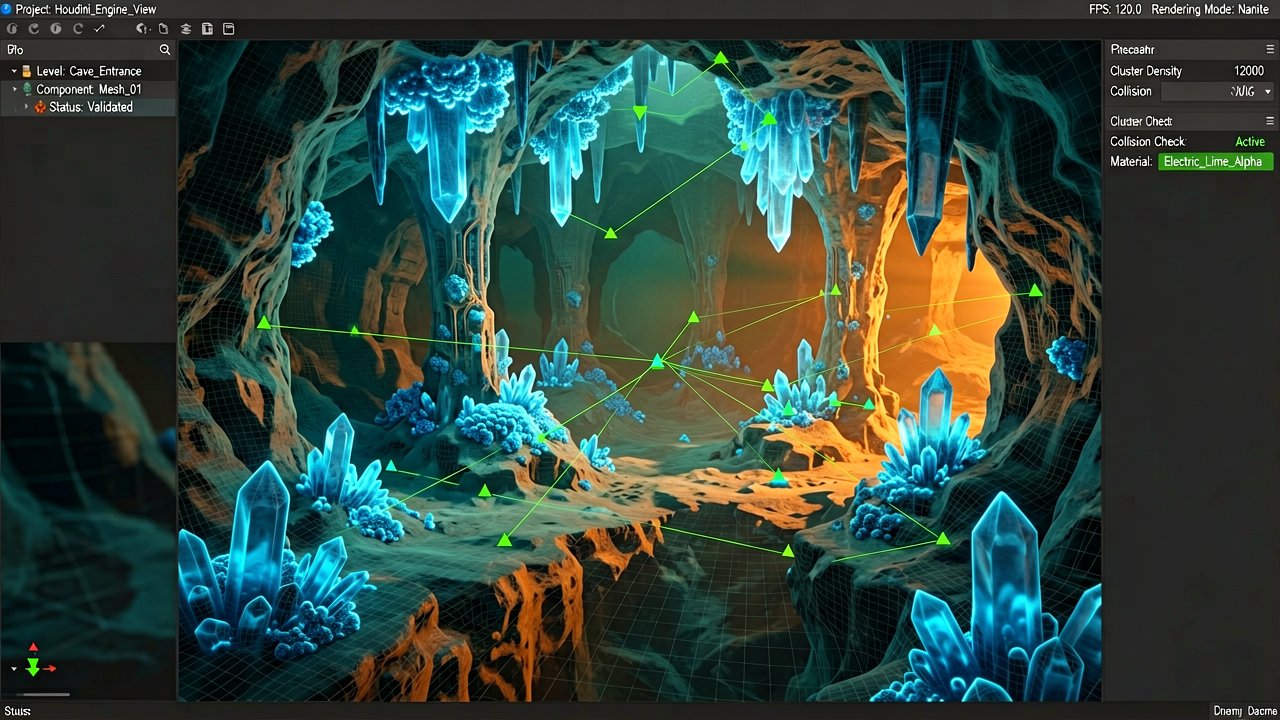
Crystal Dynamics is shaking things up for Lara Croft's next outing, and it is sparking quite a conversation across the industry. The studio's upcoming remake, Tomb Raider: Legacy of Atlantis, relies on Unreal Engine 5 to rebuild the 1996 classic from the ground up, but the real talking point is tucked away in the game's Steam page disclosures. The developers are openly utilizing generative AI tools during production, leveraging the emerging tech to streamline the massive task of building intricate, highly dynamic historical environments. While the mention of AI in AAA game development often triggers immediate pushback, the studio is framing this implementation as an architectural stepping stone rather than a human replacement.
According to statements gathered by Game Informer, these algorithmic tools serve as an advanced springboard during the early concept and gray-boxing phases. Instead of letting software construct the final geometry of ancient ruins, the pipeline uses AI to rapidly iterate on environmental layouts and test how spatial geometry handles complex character traversal. Experience director Jeff Adams noted that the technology essentially helps the development team "get the right answers faster" when mapping out massive levels. Once the underlying layout proof-of-concept is validated, human designers step in to completely replace or heavily refine the assets, ensuring the aesthetic meets the developer's traditional creative standards.
Balancing Engine Innovation and Performance Targets
This hybrid approach directly impacts how the game utilizes Unreal Engine 5's heaviest systems, specifically its dynamic global illumination framework, Lumen, and virtualized geometry pipeline, Nanite. By using automated tools to rough out the initial structural logic of a tomb, technical artists can predict how light will bounce across complex caverns before spending months polishing individual pillars. It keeps the production nimble, which is crucial when targeting consistent performance metrics like a smooth 60 frames per second on current-generation consoles. Because raw, unoptimized AI geometry is notoriously resource-heavy and poorly adapted for real-time rendering, the mandatory human cleanup phase is what actually transforms these rough layout blocks into optimized, game-ready assets capable of running complex physics and dynamic lighting routines smoothly.
The operational logic behind the shift also connects back to broader corporate strategies. As reported by Wccftech, Embracer Group has actively pushed for integrating generative workflows to drive studio efficiency across its portfolio. By reducing the time layout artists spend blocking out basic placeholder props, the pipeline aims to minimize standard development bottlenecks. The real test of this workflow efficiency won't arrive until players get their hands on the finished product on February 12, 2027, where the seamless blend of procedural architectural assistance and narrative-driven environmental design will face ultimate scrutiny on the screen.
Deep-Dive Engineering Architecture: Procedural Foundations and Runtime Logic
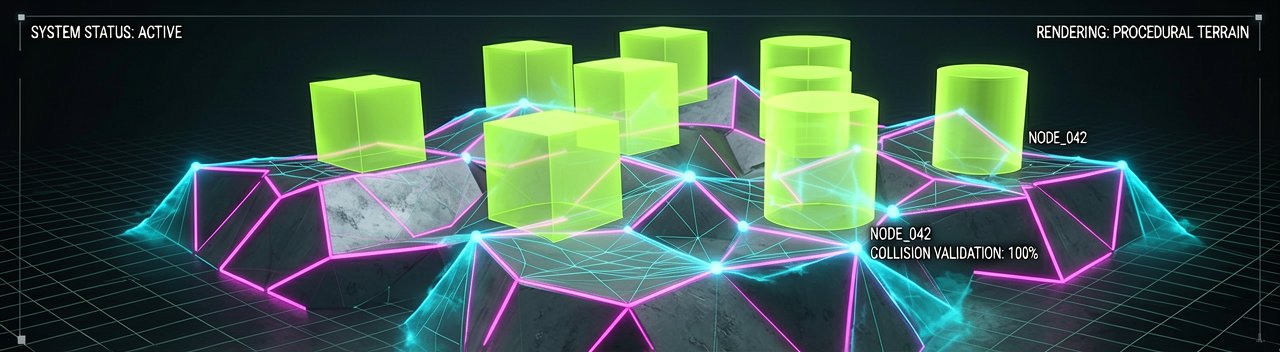
Behind the Scenes: The architectural marriage between Unreal Engine 5's core rendering pipeline and generative asset generation relies heavily on structured data pipelines that feed directly into the engine's build toolchain. Rather than treating generative tech as an isolated asset library, Crystal Dynamics engineered an automated parsing layer within the editor that translates initial procedural topology maps into discrete, semantically tagged meshes. This structural pipeline acts as an intelligent intermediary. It reads the heightmaps and spatial bounds generated by early-stage algorithmic layouts, automatically instantiating human-authored Nanite fallback clusters to prevent the engine from choking on unoptimized polygon soup during early playtests.
From a systems engineering perspective, the primary bottleneck in any procedurally assisted environment design is the degradation of spatial occlusion data. To circumvent this, the studio's pipeline utilizes custom Houdini Engine pipelines linked directly to Unreal's world partition system. The framework analyzes generated geometry for line-of-sight visibility, injecting custom visibility culling volumes along the player's anticipated traversal paths before the scene ever encounters the runtime engine. This proactive calculation dramatically reduces the computational load on the CPU, ensuring that the occlusion culling threads are not overwhelmed trying to evaluate poorly structured geometric layouts on the fly.
The technical integration deepens when analyzing how Lara's complex locomotion system interacts with these algorithmically assisted layouts. Unreal Engine 5's Motion Warping and Distance Matching systems require absolute precision regarding ledge geometry, surface friction, and grab-point alignment. To prevent character clipping and broken animation states, the generation tool runs automated collision validation scripts during the asset compilation phase. These scripts automatically flag irregular polygons, forcing the layout engine to snap asset edges to strict grid metrics that match the physical constraints of Lara’s movement set, completely removing human error from the initial micro-collision alignment phase.
At the data stream level, the engine manages these vast environments by prioritizing asset streaming based on proximity and structural dependencies within the World Partition grid. The custom streaming logic groups assets generated by the procedural pipeline into distinct memory pools, decoupled from the core narrative logic scripts. This decoupling ensures that even if a complex, algorithmically generated cavern structure requires heavy asset streaming from the SSD, the game's core loop, event triggers, and high-priority audio threads face zero frame pacing interruptions or micro-stutters during heavy streaming transitions.
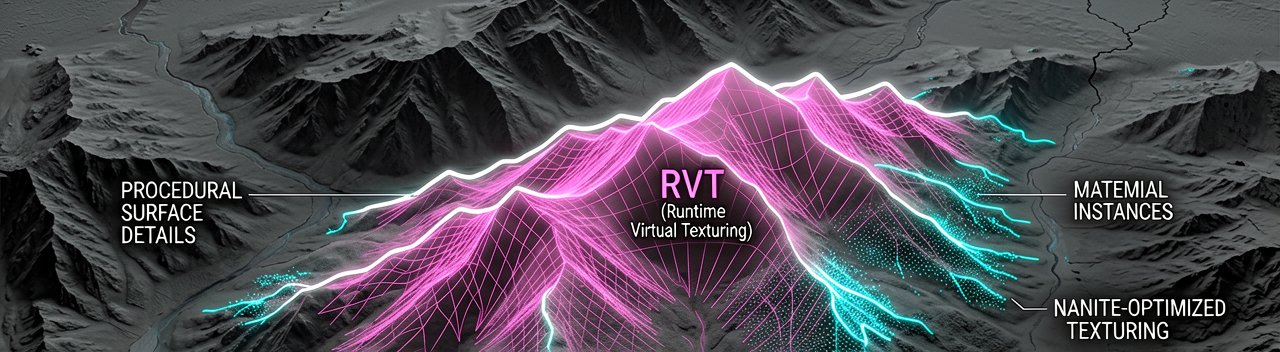
Finally, the rendering workload is tightly optimized to maintain the strict 60 fps target through custom virtual texture stacks and strict Material Instance management. Generative layouts often suffer from asset duplication and unique material bloat, which can easily tank performance via massive draw call overhead. The engineering team solved this by implementing a unified master material architecture that utilizes runtime virtual texturing (RVT). The engine dynamically blends distinct procedural surface details directly onto the landscape texture maps at runtime, drastically lowering the total material pass count and keeping the global illumination calculations for Lumen predictable, uniform, and lightning fast.
Skepticism in the Code: The Hidden Costs of Algorithmic Automation
Reading Between the Lines: The corporate narrative surrounding the development of Tomb Raider: Legacy of Atlantis frames generative AI as a frictionless multiplier of human creativity, yet this utopic vision ignores the messy realities of software engineering. Studios eagerly boast about "getting answers faster" during the initial gray-boxing phase, but they rarely quantify the technical debt accumulated when cleaning up those answers. When a generative tool drafts a complex subterranean layout, it operates on statistical probability rather than spatial intuition. This fundamental disconnect forces human designers to spend critical development cycles untangling non-euclidean geometry, fixing broken collision meshes, and fixing invisible seams that break player immersion.
There is also a glaring contradiction in using unoptimized algorithmic topology alongside a highly specialized framework like Unreal Engine 5. Systems like Nanite and Lumen are built on predictability; they thrive when assets adhere to strict vertex budgets, logical micro-occlusion layouts, and optimized material instancing. Flooding early-stage pipelines with machine-generated meshes often creates an illusion of progress while actually shifting the labor bottleneck further down the production pipeline. Instead of building environments with intentional performance profiles from day one, technical artists must retroactively audit, rebuild, and optimize millions of errant polygons just to hit their target frame times.
Projecting this trend outward reveals a deeper, more systemic risk for the future of AAA game design. If major publishers normalize a reliance on procedural generation tools for world layouts, the industry risks entering an era of aesthetic homogenization. Machine learning models are inherently backward-looking, trained entirely on historical datasets and existing design tropes. By embedding these algorithms at the absolute foundation of the level design process, developers risk creating expansive, sprawling worlds that feel mathematically perfect yet entirely devoid of the quirky, hand-crafted intentionality that made classic adventure games memorable in the first place.
Furthermore, the economic justification of "driving studio efficiency" rarely translates into a more stable working environment or a more polished final product. Historically, automation in game production does not shorten development cycles; it merely expands the scope of the project, forcing smaller teams to manage increasingly bloated virtual environments. While Crystal Dynamics may successfully navigate these hurdles by strictly enforcing a mandatory human cleanup phase, the broader industry pipeline is highly vulnerable to cost-cutting executives who view the technology as a shortcut to bypass human labor entirely, inevitably leading to buggy, unoptimized day-one releases.
"We are told that teaching machines to build our ancient ruins will finally free human artists to focus on true creativity, provided those artists don't mind spending their entire careers acting as digital janitors who mop up the erratic vertex choices of an over-eager algorithm."
Artūras Malašauskas is an AI Systems Integrator with 20+ years of production-grade web engineering experience. He has designed, shipped, and scaled enterprise Python/PHP systems for logistics, SaaS, and public-sector clients. For the past year, he has focused exclusively on AI integrations: deploying open-source LLMs, building generative media pipelines (image, audio, video), and engineering multi-agent workflows for real production environments. His standard: reproducibility, security, cost-efficient inference—no vaporware. He documents and evaluates emerging AI tooling, separating verified capabilities from marketing noise. Technical editor at: muza-ai.eu, ai-verslas.lt, ai-naujinos.lt Connect on LinkedIn
Comments