How Stability AI's Open-Weights Gamble Is Securing the Future of Ethical Synthesized Music
The generative AI music landscape has long looked like a legal demolition derby. While major corporate players face a mountain of copyright lawsuits for indiscriminately scraping the history of human sound, a more sustainable blueprint is quietly taking root. By combining fully licensed training data with an open-weights release strategy, Stability AI is fundamentally rewriting the playbook for how creators interact with machine learning tools. It is a pragmatic compromise that moves the industry past the ethically fraught era of unauthorized data harvesting while keeping the technology accessible to independent developers.
For a long time, the tech sector operated under the assumption that asking for forgiveness was cheaper than asking for permission. That reckless approach backfired, triggering existential pushback from musicians, record labels, and legacy publishers. Instead of doubling down on legal gray areas, the launch of the Stability AI Stable Audio 3.0 family signals a deliberate pivot toward legal safety. Trained on fully vetted, legitimate datasets from partners like AudioSparx, these models offer creators genuine commercial peace of mind. It turns out that respecting intellectual property does not mean compromising on technical capability.
Breaking the Proprietary Stronghold
What makes this strategy genuinely disruptive is the decision to keep the weights open. In an ecosystem where competitors lock their best synthesis engines behind restrictive cloud APIs, releasing model weights directly to platforms like Hugging Face changes the game entirely. Independent producers and sound designers can download, scrutinize, and modify the underlying technology to fit their precise workflows. This level of transparency builds a layer of trust that closed-source alternatives simply cannot match.
The Power of Local Fine-Tuning
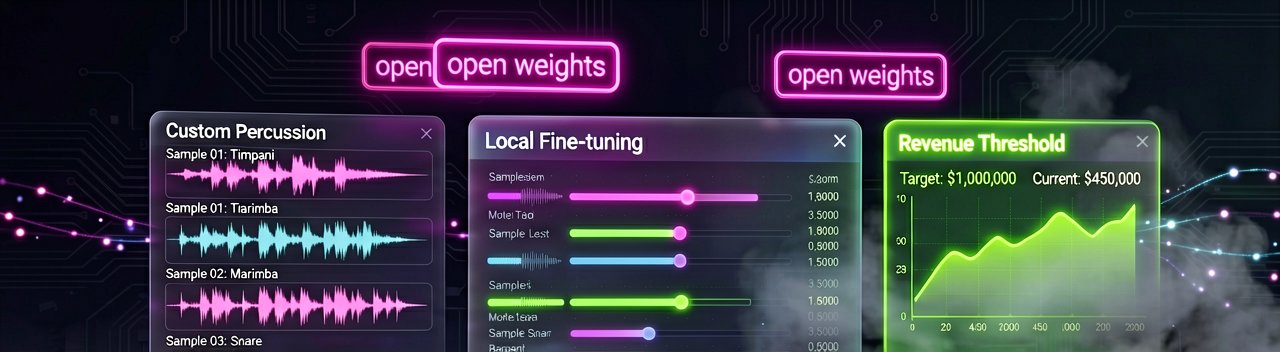
Ethical data sourcing matters very little if a tool remains locked inside a corporate sandbox. By offering accessible parameter sizes optimized for consumer hardware, creators can fine-tune these models locally using their own personal audio libraries. A percussionist can train a custom layer entirely on their own recorded breaks without worrying about corporate data leaks or unauthorized sampling. It shifts the AI narrative from an algorithmic threat that replaces human musicians to an customizable extension of a creator's personal studio instrument setup.
A Commercial Framework That Works
Furthermore, the business model underlying this open architecture addresses the economic anxieties of the creative community. The framework allows smaller developers and artists earning under a specific revenue threshold to commercialize their generated audio freely. By establishing clear guardrails where massive enterprises pay for commercial indemnity, the system creates a sustainable pipeline that funds future licensed training initiatives. This dual approach proves that ethical data compliance and open-source innovation do not have to be mutually exclusive concepts.
Beyond the Soundbites: The Architecture of Trust
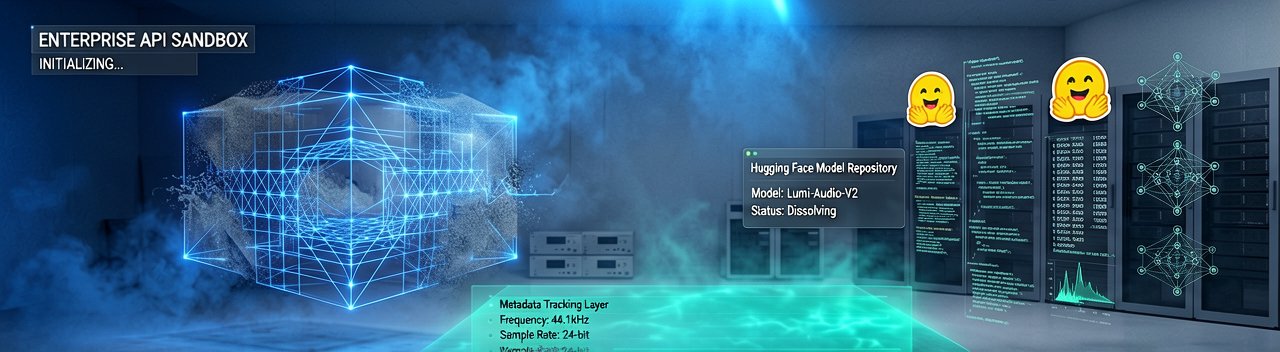
What Most Reports Miss: The true genius of this shifting paradigm lies not in the raw audio output, but in the metadata tracking that happens long before a single note is synthesized. In traditional music distribution, rights management is already a chaotic web of publishers, performing rights organizations, and mechanical licenses. Trying to superimpose an opaque, scraped AI model onto this fragile ecosystem was always bound to trigger a legal immune response. By working directly with structured B2B audio libraries, developers are essentially building a clean, trackable supply chain for algorithmic training. This preemptive compliance creates a reliable foundation that legacy media companies can actually interface with safely.
This technical shift has radically altered the internal calculus for venture capitalists and enterprise buyers who were previously terrified of copyright infringement liability. When a production house or video game studio adopts a generative tool, they require absolute legal indemnity. Closed-source tech giants have attempted to solve this by offering to foot the legal bills for their corporate clients, but that remains a reactive, expensive plaster. The licensed data and open-weights combination provides a proactive alternative, assuring corporate legal teams that the code running on their local servers is inherently clean from inception.
However, the transition has not been entirely seamless, exposing a fascinating ideological rift within the developer community itself. Purists in the open-source movement argue that restricting commercial usage based on corporate revenue thresholds dilutes the foundational ethos of free software. Conversely, artist advocacy groups remain deeply skeptical of any tool that automates sound generation, regardless of how ethically the training data was scraped. Bridging this cultural divide requires more than just clean datasets; it requires AI developers to continuously prove that these tools expand the economic pie for human musicians rather than just cannibalization.
Looking back at the history of digital music, this moment mirrors the chaotic transition from unregulated peer-to-peer file sharing to the established streaming ecosystems of the early 2010s. Just as Apple and Spotify eventually legitimized digital audio by building infrastructure that rights holders could trust, the current push for licensed training models is taming the wild west of generative AI. The survival of the independent music ecosystem depends entirely on these compliance frameworks evolving into standardized, industry-wide protocols that fairly compensate the human artists behind the training data.
The Friction of True Decentralization
Reading Between the Lines: The romanticized narrative of open-weights democratization frequently glisses over a harsh economic reality: computational asymmetry. While handing the architectural keys to the public allows independent developers to audit code on Hugging Face, the capacity to meaningfully retrain or radically alter these sprawling models still requires prohibitive capital investment. A bedroom producer might fine-tune a minor stylistic layer on a consumer GPU, but the foundational architecture remains firmly dictated by centralized tech entities. True democratization is effectively bottlenecked by the staggering price of specialized hardware, turning "openness" into a highly curated form of corporate philanthropy.
Furthermore, this ethical framework introduces an awkward paradox regarding the future preservation of niche musical cultures. When an AI developer relies strictly on formalized B2B audio catalogs, they are inherently restricted to a homogenized pool of corporate-approved sounds, corporate loops, and highly sterilized studio session files. This sanitized approach inadvertently locks out the avant-garde, the hyper-localized folk traditions, and the gritty, unauthorized sampling cultures that historically drove musical innovation from the underground. By prioritizing absolute legal sterility, the industry risks creating an echo chamber of incredibly polite, copyright-safe background music that lacks any real cultural teeth.
There is also a palpable tension in relying on revenue-based tiering to protect independent artists while courting enterprise cash. History shows that when open platforms scale, the pressure to appease institutional investors inevitably triggers a tightening of licensing terms. Today's generous free tier for indie creators can easily morph into tomorrow's mandatory subscription barrier once market dominance is secured. For the creative community to genuinely embrace this ecosystem, these open-weight terms must be locked into immutable legal covenants, rather than remaining subject to the shifting whims of silicon valley boardrooms.
"Ultimately, the music industry seems to have discovered that the easiest way to stop worrying about the robots stealing our jobs is to ensure the robots only play completely licensed, thoroughly indemnified elevator music."
Artūras Malašauskas is an AI Systems Integrator with 20+ years of production-grade web engineering experience. He has designed, shipped, and scaled enterprise Python/PHP systems for logistics, SaaS, and public-sector clients. For the past year, he has focused exclusively on AI integrations: deploying open-source LLMs, building generative media pipelines (image, audio, video), and engineering multi-agent workflows for real production environments. His standard: reproducibility, security, cost-efficient inference—no vaporware. He documents and evaluates emerging AI tooling, separating verified capabilities from marketing noise. Technical editor at: muza-ai.eu, ai-verslas.lt, ai-naujinos.lt Connect on LinkedIn
Comments