Stability AI Drops Stable Audio 3.0: Six-Minute Tracks and a Massive Open-Weights Push
Stability AI has spent the last couple of years dodging legal landmines while quietly refining its tech, and its latest drop feels like a genuine turning point for generative music. According to a fresh report from TechCrunch , the company just unveiled Stable Audio 3.0, a brand-new family of models capable of spitting out full, professional-grade tracks stretching past the six-minute mark. That's a massive leap forward from previous iterations, which often felt like glorified loop generators. By keeping the underlying musical structure and melodic phrasing coherent across such a long runtime, this release addresses one of the biggest complaints about AI-generated audio: it usually gets amnesiac after ninety seconds.
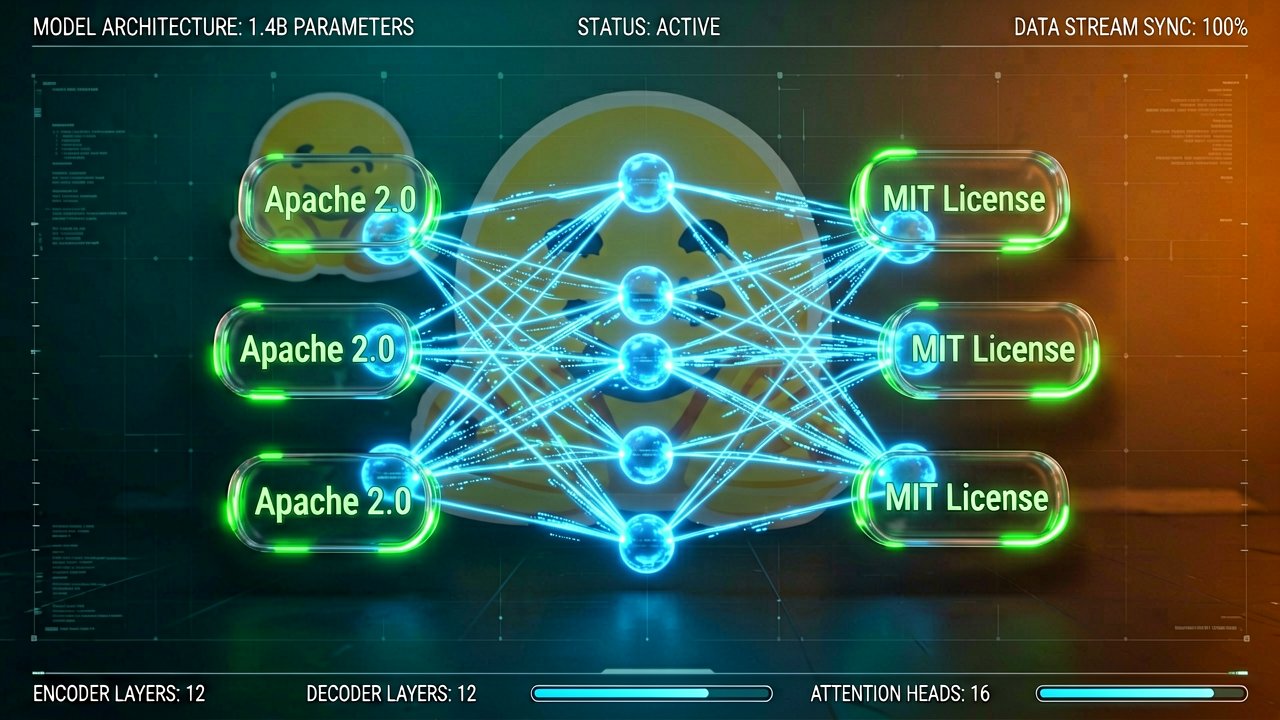
What makes this rollout particularly interesting is Stability's commitment to the open-source ethos that made its early image models famous. The company is releasing three of the four models in the suite with open weights, letting independent developers download and tweak them on Hugging Face. The open suite includes a nimble 459-million-parameter "Small SFX" model for generating foley on consumer hardware, a standard "Small" music model capped at two minutes, and a beefier 1.4-billion-parameter "Medium" model that can craft the full 6-minute-and-20-second compositions on a standard desktop. For heavy-duty enterprise apps, a 2.7-billion-parameter "Large" model is tucked safely behind an API wall.
A Strategy Built on Legal Safe Havens
Generating nice-sounding synth loops is one thing, but avoiding multi-million dollar lawsuits from the major record labels is a totally different ballgame. As reported by Billboard, Stability AI has been actively partnering with industry giants like Universal Music Group and Warner Music Group to co-develop next-generation professional music creation tools. Consequently, the company emphasizes that Stable Audio 3.0 was trained exclusively on a fully licensed dataset. This is a massive defensive maneuver aimed at keeping the platform commercially safe for professional producers, separating them from rivals currently bogged down in bitter legal fights over copyright infringement.
The business model is equally pragmatic. Independent creators and researchers can use the open-weights models freely under the Stability AI Community License, which allows for full commercial distribution of the generated tracks. However, if a business brings in over $1 million in revenue, they will need to upgrade to a paid enterprise tier. To steer this new commercial push, the company has also hired Ethan Kaplan, the former chief digital officer at Universal Audio, to lead its professional music business segment. It is a clear sign that Stability isn't just looking to build cool tech demos—it wants a permanent piece of the modern recording studio workflow.

Behind the Scenes: The Invisible Pivot from Disruption to Collaboration
For years, the foundational relationship between the technology sector and the music industry followed a predictable, adversarial script. Tech companies would aggressively ingest copyrighted catalogs under the loose banner of "fair use," while legacy record labels responded with high-stakes litigation designed to protect their intellectual property. The arrival of Stable Audio 3.0 represents a clean break from this toxic dynamic, signaling a new era of mutually assured commercial survival. Stability AI is no longer trying to disrupt the traditional music industry from the outside; instead, the company is positioning its architectural updates as infrastructure built explicitly to protect the industry's existing financial hierarchies.
This shift in corporate philosophy is deeply embedded in the dataset selected to train the 3.0 ecosystem. By limiting training inputs strictly to fully cleared, explicitly licensed tracks, Stability AI has essentially neutralized the primary legal arguments that have plagued its competitors. Professional artists and recording studios can utilize these generation tools without the lingering fear that their final masters will be hit with future copyright strikes or distribution takedowns. This strategic discipline transforms the model from a legally volatile novelty into an enterprise-ready studio asset that compliance departments can enthusiastically clear for immediate commercial deployment.
The appointment of industry veteran Ethan Kaplan to steer this new segment is a calculated, tactical move aimed at bridging two historically distrustful worlds. Kaplan’s extensive background at major labels provides Stability AI with the cultural vocabulary and industry relationships required to pitch these tools directly to traditional gatekeepers. Rather than marketing AI as an algorithmic replacement for human composers, the company is reframing the technology as a highly sophisticated assistant. This approach successfully reframes the conversation, focusing on workflow automation, rapid prototyping, and the elimination of creative friction during the early stages of song composition.
From an architectural standpoint, the decision to release these models with open weights is a deliberate countermove against closed-ecosystem tech giants. By democratizing access to the underlying weights of the 1.4-billion-parameter model, Stability is effectively outsourcing its research and development to the global open-source community. Independent software developers and bedroom producers are already building custom fine-tunes and specialized interfaces that the core Stability team could never have built alone. This collaborative ecosystem ensures that the platform remains highly adaptable, evolving in lockstep with the diverse, unpredictable demands of modern music creators worldwide.
Reading Between the Lines: The Frictionless Illusion of Ethical Synthesis
The glossy marketing narrative surrounding Stable Audio 3.0 paints an idyllic picture of a sanitized, legally ironclad sandbox for modern music production. By touting a dataset completely cleansed of copyright violations and proudly waving partnerships with corporate music giants, Stability AI wants the world to believe it has successfully solved the ethical conundrum of generative audio. Yet, scratch just beneath the surface of this corporate truce, and a glaring paradox emerges. The very essence of the open-weights model family relies on decentralized tinkering, a reality that completely contradicts the tightly controlled licensing parameters demanded by legacy record labels.
When independent developers download the 1.4-billion-parameter "Medium" model weights to their local hard drives, they gain the unilateral power to implement Low-Rank Adaptations (LoRAs) trained on whatever unlicensed audio they choose. A bedroom producer can easily fine-tune this theoretically ethical model on a private library of copyrighted pop vocals or signature drum breaks, effectively weaponizing the underlying architecture against the very industry partners who helped validate it. This creates a fascinating structural loophole where Stability AI secures corporate goodwill for providing a clean foundation, while entirely washing its hands of how that foundation is inevitably modified in the wild.
Furthermore, the push toward six-minute, on-device generation reveals a deeper commercial anxiety within the generative media landscape. As cloud computing overhead continues to eat into AI profit margins, forcing the heavy lifting onto a user’s local CPU and GPU is less of a consumer-friendly feature and more of a financial necessity. While a six-minute track sounds impressive on paper, it remains to be seen whether a desktop-grade chip can maintain actual artistic intentionality over that length, or if it will simply produce highly coherent, endlessly repetitive background drone. By offloading both the compute costs and the eventual ethical liabilities to the edge, the company is playing a brilliant, high-stakes game of distraction.
"Stability AI's masterstroke is convincing the music industry that a licensed model is a safe model, conveniently ignoring the fact that once you give the public the source code, they are going to do exactly what musicians have always done: sample everything they aren't supposed to."
Artūras Malašauskas is an AI Systems Integrator with 20+ years of production-grade web engineering experience. He has designed, shipped, and scaled enterprise Python/PHP systems for logistics, SaaS, and public-sector clients. For the past year, he has focused exclusively on AI integrations: deploying open-source LLMs, building generative media pipelines (image, audio, video), and engineering multi-agent workflows for real production environments. His standard: reproducibility, security, cost-efficient inference—no vaporware. He documents and evaluates emerging AI tooling, separating verified capabilities from marketing noise. Technical editor at: muza-ai.eu, ai-verslas.lt, ai-naujinos.lt Connect on LinkedIn
Comments