Apple’s AI Pivot: When Intelligence Meets Accessibility
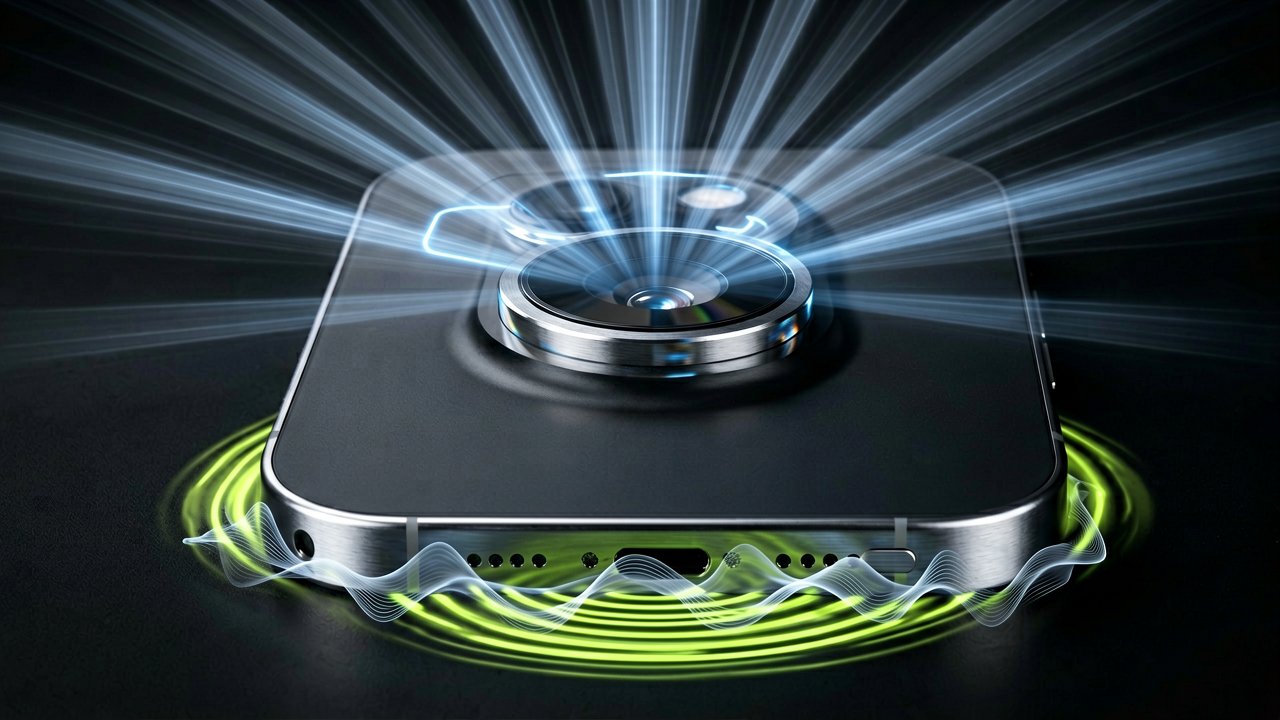
Apple has long treated accessibility as a core tenet rather than a compliance checkbox, and its latest sweep of updates proves that "Apple Intelligence" isn't just about polishing emails or generating emojis. By weaving generative AI into the very fabric of its assistive tools, the company is bridging the gap between simply using a device and truly interacting with the world. Whether it's turning the iPad into an extension of one's gaze or using on-device machine learning to narrate a complex environment, these updates aren't just incremental—they’re transformative for users who have traditionally been left in the digital cold.
The headline act here is the deeper integration of Apple Intelligence within stalwarts like VoiceOver and Magnifier. We’re moving past simple object labeling; the new Image Explorer can now parse the fine print of a scanned utility bill or describe the specific layout of a personal record with uncanny precision. It’s the kind of high-stakes utility that makes the "AI" moniker feel earned. Meanwhile, the arrival of natural language for Voice Control means users no longer have to memorize rigid command strings or grid numbers. Instead, you can simply "say what you see," telling your iPhone to "tap the purple folder" or "zoom in on the restaurant guide" as if you were speaking to a sighted assistant.
Visionary Control and Haptic Harmony
Beyond the software smarts, Apple is pushing the envelope on how we physically interface with glass and silicon. Eye Tracking, which recently made the jump to iPhone and iPad, allows users with limited mobility to navigate their entire OS using nothing but their pupils. It’s a seamless setup that relies on the front-facing camera and local machine learning to keep data private—a classic Apple move. For those in the deaf or hard-of-hearing community, Music Haptics is a standout, using the Taptic Engine to translate audio into a symphony of vibrations and taps. It’s a clever way to ensure that the emotional resonance of a track isn’t lost just because the audio can't be heard.
The Vision Pro Frontier
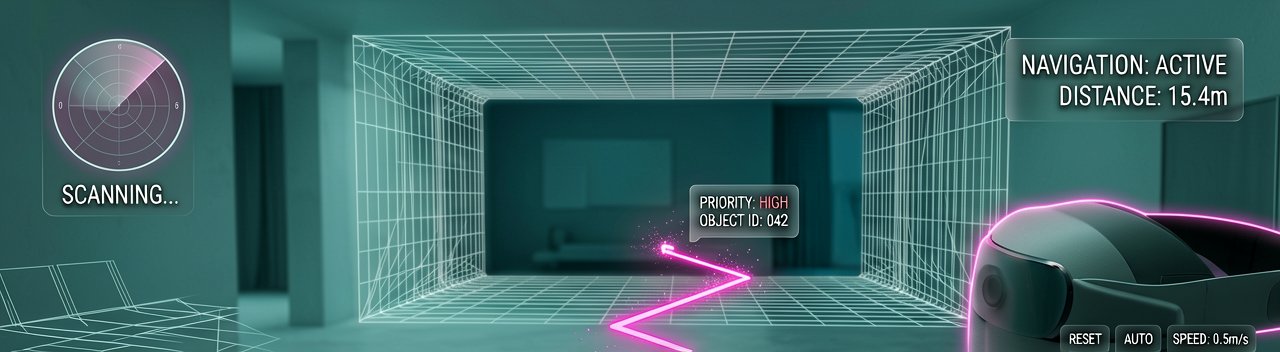
The most futuristic application of these tech leaps might actually be found on the Apple Vision Pro. The headset now supports eye-controlled wheelchair navigation for compatible drive systems, a feature that feels plucked straight out of sci-fi. By combining the spatial awareness of visionOS with the precision of eye tracking, Apple is essentially turning a piece of entertainment hardware into a mobility lifeline. Additionally, the new systemwide generated subtitles ensure that even personal videos or social media clips without native captions are no longer a silent barrier, providing real-time transcriptions that live entirely on-device to protect user privacy as noted by TechCrunch.
The Socio-Technical Shift: Why This Matters Beyond the Keynote
What Most Reports Miss: The true brilliance of Apple’s latest accessibility push isn't found in the "cool factor" of eye tracking, but in the quiet democratization of high-end assistive technology. For decades, specialized eye-gaze hardware cost thousands of dollars and required bulky external peripherals. By baking this functionality directly into the existing Neural Engine of an off-the-shelf iPad, Apple has effectively obliterated the financial and social barrier to entry for millions of users with motor impairments. It’s a move from "specialized equipment" to "universal design" that forces the rest of the industry to rethink the baseline of what a consumer device should do.
Historically, Apple has viewed accessibility as a "human right," a philosophy championed by early engineers who saw the computer as a bicycle for the mind. This latest pivot toward Apple Intelligence feels like the fulfillment of that decades-old promise. While the tech world bickers over whether AI will replace writers or artists, these features highlight a more noble application: using generative models to synthesize the visual world for those who cannot see it. When a Vision Pro user can navigate a wheelchair through a crowded room using only their eyes, the conversation shifts from silicon benchmarks to genuine human agency.
Industry insiders have noted that the on-device nature of these updates is a calculated jab at competitors who rely on the cloud. By keeping the processing for Eye Tracking and Music Haptics local, Apple ensures that a user’s most intimate data—where they are looking or what they are listening to—never leaves the device. This privacy-first stance is particularly vital for the disability community, which has long been wary of how their biometric data might be harvested or used to determine insurance premiums and medical eligibility. It turns a technical constraint into a powerful trust-building asset.
The feedback from early testers and advocacy groups suggests that the "Music Haptics" feature is doing more than just vibrating to a beat; it is creating a shared cultural language. For a person who is Deaf, being able to feel the specific "texture" of a bass line or the staccato of a drum solo allows them to participate in the zeitgeist of a new album release in real-time with their hearing peers. This isn't just about utility; it’s about inclusion. It acknowledges that the human experience is multifaceted and that technology’s highest calling is to ensure no one is relegated to the sidelines of culture.
Furthermore, the integration of Apple Intelligence into Voice Control signals a move toward "Intent-Based Computing." Instead of forcing the user to adapt to the machine’s rigid syntax, the machine is finally learning to understand the user’s messy, natural patterns of speech. This reduces the cognitive load for individuals with neurodivergent conditions or cognitive disabilities who may find traditional navigation menus overwhelming. By allowing the software to "fill in the blanks" of a command, Apple is making the interface invisible, which has always been the ultimate goal of expert UI design.
As we look toward the future, these developments set a grueling pace for the rest of the Silicon Valley elite. We are seeing a shift where accessibility is no longer an afterthought or a "Pro" feature reserved for the few. It is becoming the primary testing ground for the most advanced AI models Apple has ever built. When the stakes are as high as a person's independence, the tech cannot afford to hallucinate. This rigorous environment is likely where we will see the most robust versions of Apple’s intelligence emerge, eventually trickling down to benefit every single user, regardless of their physical abilities.
The Friction Between Innovation and Implementation
Reading Between the Lines: While the promotional reels paint a seamless picture of AI-driven empowerment, the pragmatic reality of deploying Apple Intelligence for accessibility is fraught with technical hurdles. The sheer computational tax of running real-time eye tracking and sophisticated image narration on-device is immense, likely necessitating the latest silicon to function effectively. This creates a subtle but undeniable "hardware tax" on accessibility. For a community often facing higher costs of living and lower employment rates, the requirement to own a flagship iPhone or a high-end iPad to access these "human rights" tools introduces a new kind of digital divide, even as the old ones are being bridged.
There is also a fascinating contradiction in Apple’s reliance on generative AI within a safety-critical context. The company has built its reputation on precision and "it just works" reliability, yet generative models are inherently probabilistic—they guess. When Image Explorer describes a medication bottle or a flight of stairs, the margin for error isn't just a minor UI glitch; it’s a potential safety hazard. Apple’s challenge will be managing the "hallucination" problem that plagues current LLMs. If the system incorrectly identifies a navigation obstacle or misinterprets a natural language command during a critical task, the trust Apple has spent decades building with the accessibility community could evaporate overnight.
Furthermore, the move toward "Music Haptics" and "Eye Tracking" on consumer hardware raises questions about the future of the specialized assistive technology market. While Apple’s entry into this space is a win for affordability and mainstreaming, it risks suffocating smaller, niche companies that provide highly customized, life-sustaining hardware. There is a delicate balance between a tech giant offering a "good enough" universal solution and the loss of specialized expertise that handles the most complex 1% of cases. We are watching the industry consolidate under the umbrella of big-box silicon, which is great for the masses but potentially limiting for those with the most specific, non-standard needs.
The long-term implication of these updates is that accessibility is becoming the "stress test" for the general utility of AI. If Apple can prove that its intelligence models can handle the rigorous, high-stakes demands of a user with limited mobility or vision, then convincing a standard user that AI can help them write a better email is trivial. In this light, the disability community is effectively acting as the vanguard for the next generation of computing. However, we must remain skeptical of the "altruism" narrative; these features also serve to lock users deeper into the Apple ecosystem, making the cost of switching to a competitor not just a matter of losing apps, but losing one’s primary interface with the physical world.
Ultimately, the success of these features will be measured not by the applause at a keynote, but by their performance in the messy, unoptimized environments of daily life. Sunlight glare on a camera, background noise during a Voice Control session, or the simple fatigue of eye muscles after hours of navigation are variables that laboratory testing often fails to capture. Apple is betting that its vertical integration—controlling everything from the chip to the software—is enough to overcome these physical realities. It’s an ambitious gamble that positions the iPhone not just as a tool, but as a prosthetic for the modern age.
Apple is finally giving us a future where your iPad knows where you’re looking before you do, which is either the pinnacle of human-centric design or the world's most sophisticated way to make sure you never accidentally ignore a notification again.
Artūras Malašauskas is an AI Systems Integrator with 20+ years of production-grade web engineering experience. He has designed, shipped, and scaled enterprise Python/PHP systems for logistics, SaaS, and public-sector clients. For the past year, he has focused exclusively on AI integrations: deploying open-source LLMs, building generative media pipelines (image, audio, video), and engineering multi-agent workflows for real production environments. His standard: reproducibility, security, cost-efficient inference—no vaporware. He documents and evaluates emerging AI tooling, separating verified capabilities from marketing noise. Technical editor at: muza-ai.eu, ai-verslas.lt, ai-naujinos.lt Connect on LinkedIn
Comments