The Human Guardrail: Airia Adds a Verification Layer to the Enterprise AI Pipeline
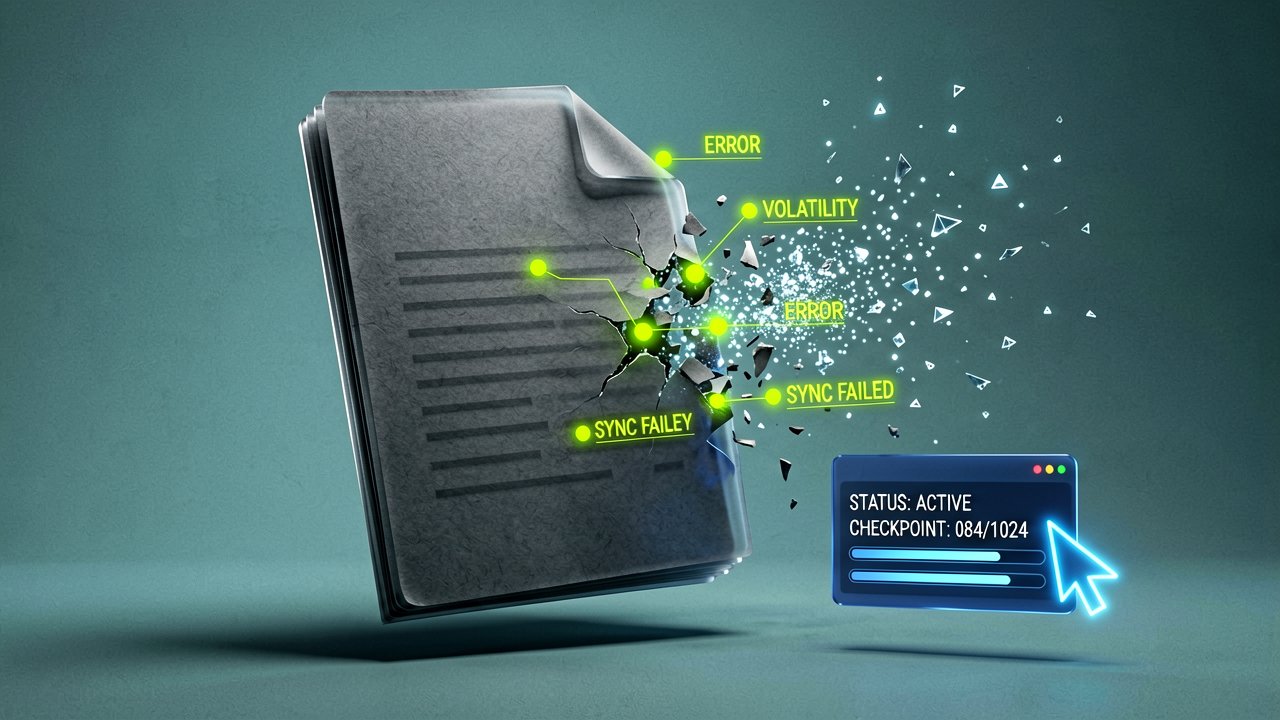
In the frantic gold rush of enterprise AI, we’ve spent the last two years obsessed with "the how"—how fast can it read, how much can it process, and how many manual hours can we delete from the balance sheet? But for anyone operating in the high-stakes world of deeds, mortgages, or insurance claims, the "how" has always been haunted by a much scarier "what if." Specifically: what if the AI is confidently, catastrophically wrong? As reported by GlobeNewswire , Airia is stepping into that gap with the launch of its "Form Review Step," a feature that basically admits that while AI is brilliant, it still needs a human handler to keep it out of trouble.
The move is a savvy bit of realism from an industry that often overpromises. Airia, which has been positioning itself as the go-to orchestration and governance layer for corporate AI, is essentially offering a "trust but verify" button for document extraction. Instead of letting an LLM blindly dump data into a CRM or a compliance database, the Form Review Step pauses the workflow. It forces a human into the loop, presenting a split-screen view where a reviewer can eyeball the original document against the AI’s homework. It’s the digital equivalent of a senior partner double-checking an intern’s filing—essential, boring, and until now, surprisingly hard to automate smoothly.
Closing the Governance Gap
Why does this matter? Because in regulated industries, "oops" isn't a valid legal defense. Whether it’s a mortgage application or a complex vendor contract, the data being extracted often triggers money movements or legal obligations. According to Dealroom, this new feature is specifically designed to satisfy the audit trails that regulators actually care about. It’s not just about fixing a typo; it’s about capturing who fixed it, when they did it, and why. For legal teams, that’s the difference between a streamlined workflow and a compliance nightmare.
The tech itself is built for speed, which is a nice touch. The side-by-side interface is designed to kill the "tab-switching fatigue" that usually plagues document review. If the AI misses a field or hallucinates a date, the reviewer just types over it and hits approve. It also includes "custom action buttons"—think "Escalate to Legal" or "Reject"—that route the document without breaking the entire automation chain. It’s a recognition that not every document is a simple pass/fail; some are just plain weird and need a specialist's eyes, as noted by Yahoo Finance.
The End of Shadow AI Guesswork?
What’s perhaps most interesting here is the "zero configuration" claim. Airia says these forms automatically sync to the underlying AI model schemas. In plain English: you don’t have to spend weeks mapping fields every time you update your extraction model. For IT leaders who are already drowning in the technical debt of "Shadow AI"—tools adopted by departments without central oversight—this kind of baked-in governance is a godsend. It’s about building AI that doesn't just work, but stays within the guardrails, a mission Airia has championed since its founding in 2024, as highlighted by Business Insider.
Ultimately, Airia’s Form Review Step feels like a sign that the enterprise AI market is maturing. We’re moving past the novelty of "look what the bot can do" and into the much more difficult territory of "how do we actually rely on this at scale?" By making human accountability a standard feature rather than an afterthought, Airia isn't just selling extraction—they're selling peace of mind. And in today’s regulatory climate, that might be the most valuable product they have.
The Reality Check Behind the Prompt: While the tech world remains intoxicated by the allure of "lights-out" automation, Airia’s pivot toward human-centric verification acknowledges a gritty truth that most Silicon Valley pitch decks gloss over: the edge case is the rule, not the exception. In the wild, documents aren't pristine PDFs; they are coffee-stained faxes, handwritten scribbles on napkins, and multi-page contracts where the critical clause is buried in a footnote. For a bank or an insurance carrier, a 95% accuracy rate sounds impressive until you realize that the remaining 5% represents thousands of potential lawsuits or millions in misallocated capital.
This isn't just about catching errors; it’s about the psychological shift required for enterprise-wide AI adoption. Stakeholders in "old guard" industries—think logistics, healthcare, and law—have historically been the loudest skeptics of black-box AI. By embedding a dedicated Form Review Step, Airia is essentially giving these departments a "manual override." It’s a tactical olive branch to the subject matter experts who fear being replaced by a machine that doesn't understand the nuance of a specific regional regulation or a non-standard industry term.
The Hidden Cost of the "Hallucination Tax"
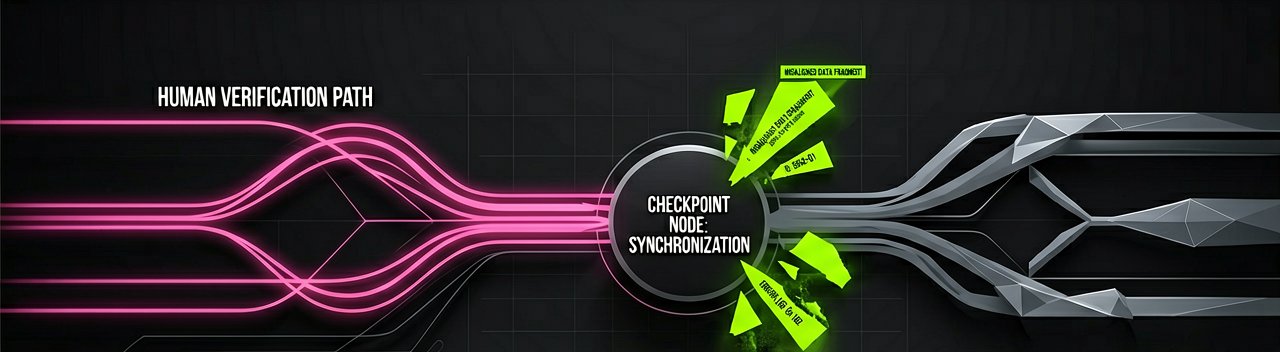
Historically, the "hallucination tax" was paid in manual labor after the fact—employees spent their Fridays cleaning up the mess the AI made on Monday. Airia is attempting to flip that script by making the cleanup part of the production line. By centralizing the review process, they are creating a feedback loop that does more than just fix a single form; it creates a data set of human corrections that can, theoretically, be used to fine-tune future models. It’s a play for long-term data integrity that a dry press release rarely manages to capture, yet it’s exactly what a CTO looks for when evaluating the total cost of ownership.
Furthermore, the "zero configuration" aspect of this rollout is a direct response to the integration fatigue currently paralyzing many IT departments. We’ve moved past the era where companies are willing to hire a fleet of consultants to spend six months "training" a tool. The modern enterprise wants a plug-and-play governance layer that respects existing permissions and security protocols. Airia’s ability to sync these review forms with underlying schemas suggests they are listening to the frustrations of developers who are tired of building custom UI for every new AI experiment.
A Shift in the AI Power Balance
There is also a broader industry narrative at play here regarding the role of the "human in the loop" (HITL). For years, HITL was seen as a temporary crutch—a bridge to be burned once the algorithms got "smart enough." But as we see with this launch, the human is being rebranded as the "verifier-in-chief." This shift elevates the human role from data entry clerk to quality assurance lead, focusing their energy on high-value exceptions rather than rote transcription. It’s a subtle but vital distinction that seasoned industry watchers recognize as the only sustainable way to scale generative AI.
Ultimately, the success of Airia’s new feature will be measured not by how many documents it processes, but by how much it reduces the "anxiety of the unknown" for the people signing the checks. In an era where AI can do almost anything, the most valuable thing it can do is prove that it did exactly what it was told. By putting the human eyes back on the page—side-by-side with the digital ones—Airia is betting that the future of tech isn't fully autonomous; it's collaborative, transparent, and, above all, verifiable.
Reading Between the Lines: The marketing narrative surrounding "human-verified AI" is often painted as a harmonious partnership, but let’s be honest: it’s also an admission of defeat for the dream of pure automation. By institutionalizing the Form Review Step, Airia is essentially conceding that the "last mile" of AI accuracy remains a stubborn, expensive bottleneck. While this feature provides a necessary safety net, it introduces a paradoxical friction. The whole point of deploying LLMs for document extraction was to eliminate the human speed bump; now, we are building high-tech infrastructure specifically to put that speed bump back in place, albeit in a prettier interface.
There is also a lurking contradiction in the "efficiency" pitch. Airia claims this will streamline workflows, but adding a mandatory human checkpoint creates a new kind of logistical gravity. For an enterprise processing tens of thousands of forms daily, the "Form Review Step" could easily become the new "Email Inbox"—a mounting pile of digital chores that requires a dedicated headcount to manage. If the AI’s confidence scores are too low, the human review layer doesn't just support the workflow; it becomes the workflow, effectively turning a cutting-edge AI platform into a very expensive data entry tool with a split-screen view.
The Skeptic’s Path to Scalability
We must also question the longevity of the "zero configuration" promise. In the messy ecosystem of corporate IT, "zero configuration" usually comes with an asterisk. As schemas evolve and enterprises try to daisy-chain multiple AI models together, the complexity of maintaining a unified review interface grows exponentially. If Airia can truly maintain a seamless sync between volatile LLM outputs and rigid database schemas without constant manual tweaking, they’ve solved a problem that has plagued middleware for decades. If not, the Form Review Step might eventually feel like just another piece of "brittle" software that breaks the moment a developer updates an API.
Furthermore, there is a risk of "reviewer fatigue" leading to a false sense of security. When a human is asked to verify thousands of nearly identical documents where the AI is right 98% of the time, the brain naturally goes onto autopilot. We’ve seen this in other industries—from autopilot systems in cars to security screenings—where the human "loop" becomes a rubber stamp. Airia’s challenge won't just be the technical integration, but ensuring that the human element remains an active guardian rather than a passive observer who clicks "Approve" just to clear the queue before 5:00 PM.
Projecting forward, this move might signal a balkanization of the AI market. On one side, we will have the "pure play" automators chasing the 100% autonomous unicorn; on the other, pragmatists like Airia who are betting that the enterprise is willing to pay a premium for a "cancel" button. It’s a measured bet that accountability is more marketable than raw speed. In the long run, the winners won't necessarily be the ones with the smartest models, but the ones who make the inevitable hallucinations of those models someone else’s manageable problem.
The ultimate test for Airia will be whether this feature remains a permanent fixture or a transitional tool. If AI continues to improve at its current clip, will the Form Review Step eventually become a vestigial organ? Or is the complexity of human language and legal nuance so vast that we will still be "double-checking the bot" a decade from now? For now, Airia is banking on the latter, positioning itself as the adult in the room while the rest of the industry is still playing with digital fire.
"It turns out the 'Great AI Takeover' looks less like a sci-fi rebellion and more like a never-ending game of 'Spot the Difference' between a PDF and a text box—proving once again that no matter how advanced the silicon gets, there’s no substitute for a caffeinated human with a suspicious nature and a deadline."
Artūras Malašauskas is an AI Systems Integrator with 20+ years of production-grade web engineering experience. He has designed, shipped, and scaled enterprise Python/PHP systems for logistics, SaaS, and public-sector clients. For the past year, he has focused exclusively on AI integrations: deploying open-source LLMs, building generative media pipelines (image, audio, video), and engineering multi-agent workflows for real production environments. His standard: reproducibility, security, cost-efficient inference—no vaporware. He documents and evaluates emerging AI tooling, separating verified capabilities from marketing noise. Technical editor at: muza-ai.eu, ai-verslas.lt, ai-naujinos.lt Connect on LinkedIn
Comments