Measuring Influence in the Age of Zero-Click Search: Microsoft Clarity’s AI Citation Dashboard
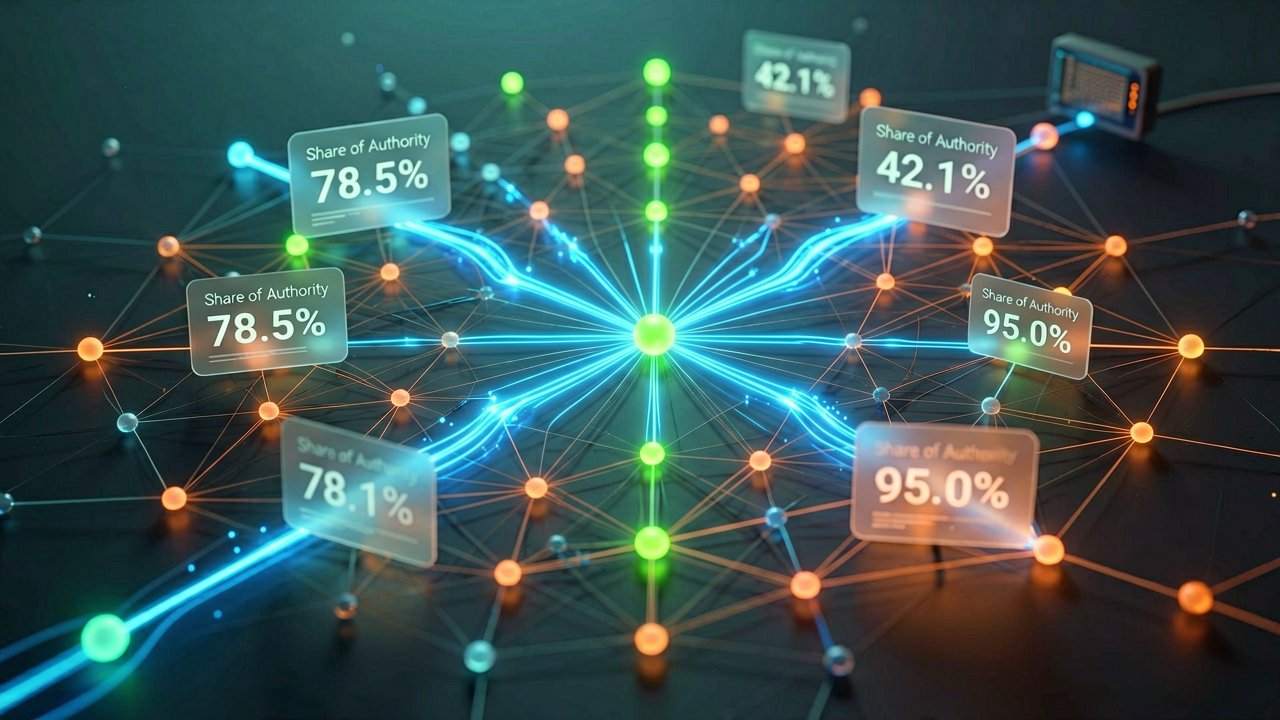
For years, the SEO industry has been obsessed with the "click." If a user didn’t land on your page, the visit didn’t happen, and your content might as well have been invisible. But as generative AI begins to summarize the web into neat, conversational snippets, that old logic is crumbling. To help publishers find their footing in this new "zero-click" reality, Microsoft has officially moved its Citations dashboard into general availability within Microsoft Clarity.
This isn't just another minor update to a heatmapping tool. It’s a fundamental shift in how we measure "influence" online. Instead of just counting how many people clicked a blue link, Clarity now tracks how often your content serves as the "grounding" source for AI-generated answers. Think of it as a credit roll for the LLM era; you can finally see exactly which of your pages are being used to train or inform the responses users see in Microsoft Copilot and Bing AI summaries.
Cracking the "Black Box" of AI Referrals
The new dashboard is designed to illuminate what has largely been a black box for digital marketers. According to Microsoft Learn , the tool focuses on three heavy-hitting metrics: Page Citations, Share of Authority, and AI Referral Traffic. The "Share of Authority" metric is particularly spicy—it tells you what percentage of total citations you're capturing compared to your competitors for the same set of queries. It’s the closest thing we have to a leaderboard for the generative web.
What makes this release timely is the growing anxiety among publishers that AI is "cannibalizing" their traffic. Microsoft’s counter-argument, baked right into this tool, is that being cited *is* the new SEO. As reported by SMBtech, these metrics capture a layer of influence that occurs before a user even decides to visit a site. If your content is consistently the primary source for an AI's skincare advice or financial tips, your brand stays top-of-mind even if the user never hits your "Buy Now" button during that specific session.

Setting it up is surprisingly straightforward, provided you’re already in the Microsoft ecosystem. You’ll need to connect your Clarity project to Bing Webmaster Tools or Google Search Console for domain verification. Once the pipes are connected, the data starts flowing, showing you the exact grounding queries that triggered your citations. It’s a goldmine for anyone trying to figure out which topics are actually resonating with the algorithms.
Looking ahead, Microsoft isn't stopping at raw counts. They’ve already teased "Topic Insights," a feature that will group queries into intent-driven themes. This should help teams move beyond the "what" and start answering the "why." While we’re still in the early days of Generative Engine Optimization (GEO), tools like this suggest that the future of the web isn't necessarily about fewer visitors—it’s about a different kind of visibility entirely.
The Invisible Infrastructure of Influence: While the marketing world obsesses over the interface of Copilot, what most reports miss is the underlying struggle for "grounding" data that this tool finally monetizes—at least in terms of attention. For the last decade, publishers treated Google as a discovery engine; today, they are realizing that in the age of LLMs, they are actually acting as a massive, unpaid research department. Microsoft Clarity’s new dashboard is essentially a peace offering in this tense relationship, giving creators a way to prove their value to stakeholders even when the direct click-through rate looks abysmal.
Veteran SEOs will remember the "Scraper Wars" of the early 2010s, where sites fought to keep their content from being lifted without credit. This is that same battle, just wearing a more sophisticated, AI-branded suit. By offering "Share of Authority" metrics, Microsoft is effectively gamifying the training data pipeline. They are betting that if publishers can see their content "winning" in the AI summary box, they will be less likely to block the crawlers that feed those very models. It’s a brilliant, if slightly cynical, move to keep the ecosystem open while the fundamental mechanics of search change forever.
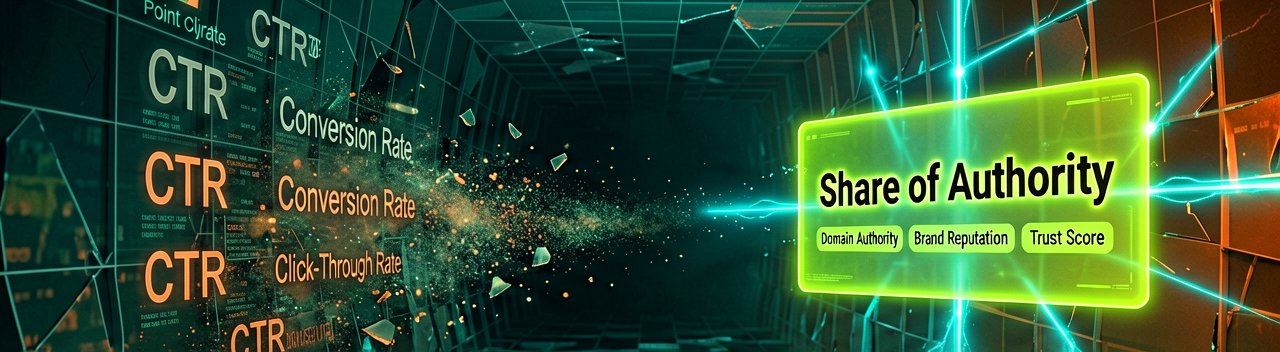
The Rise of the "Synthetic Impression"
Historically, an "impression" meant a human eye saw a link on a screen. In this new paradigm, we are seeing the birth of the "Synthetic Impression"—where a brand’s expertise is synthesized into an AI’s logic. According to Microsoft Clarity’s official breakdown, the goal is to show how often a site serves as the factual backbone for an answer. For a brand, this is the ultimate validation of thought leadership; for a publisher, it’s a terrifying shift toward becoming a mere footnote in a larger conversation.
Industry insiders have noted that this move puts Google on the defensive. While Google has its own Search Console data for SGE (Search Generative Experience), it hasn't yet packaged it with the same "competitor vs. you" flair that Clarity is now offering through its integrated dashboards. By leveraging data from both Bing Webmaster Tools and Google Search Console, Microsoft is positioning Clarity as the "Switzerland" of AI analytics—a neutral ground where you can see how you’re performing across the entire generative landscape.
The real "deep dive" value here, however, lies in the query-level data. Most analytics tools tell you what people *typed*; Clarity is trying to tell you what the AI *thought* was important about your response. As reported by SMBtech, the upcoming Topic Insights will likely reveal "content gaps" that are invisible to traditional keyword tools. We are moving toward a world where you don't write for the user first, or the algorithm first, but for the "Citation Engine" that sits between them. It’s a subtle shift, but for those who know how to read the data, it’s the difference between being a primary source and being digital noise.
The Illusion of Transparency: For all the fanfare surrounding "AI visibility," there is a glaring contradiction at the heart of Microsoft’s new dashboard: it is a tool designed to measure the very ecosystem that is making traditional web publishing unsustainable. Microsoft is essentially providing a high-tech ruler to measure how quickly the floor is being pulled out from under the feet of content creators. While the Citations dashboard offers data, it doesn't offer a paycheck. Tracking a "Share of Authority" is a hollow victory if the authority doesn't convert into a sustainable business model, leading many to wonder if this is an analytical breakthrough or merely a palliative for the slow death of the click.
Skepticism is also warranted regarding the "neutrality" of these metrics. By defining what constitutes a "citation," Microsoft sets the rules of the game. If the algorithm decides that a five-word snippet is a citation, but that snippet satisfies the user's curiosity entirely, the publisher has effectively "won" the metric while "losing" the reader. We are entering an era of "ghost traffic," where a brand’s intellectual property is consumed in a vacuum. As noted by Search Engine Land, the tool highlights grounding queries, but it cannot force an AI to prioritize a link over a summary. It is a scoreboard for a game where the referee is also your biggest competitor.
The GEO Arms Race and the Quality Paradox
There is also the risk of a "race to the bottom" in content quality. If publishers begin optimizing specifically for "Citations" rather than human engagement—a practice already being dubbed Generative Engine Optimization (GEO)—the web risks becoming even more homogenized. We may see a glut of "fact-dense" but "soul-poor" writing designed to be easily parsed by Microsoft's citation engine. When we optimize for the extract, we often lose the nuance, and Microsoft’s new metrics might inadvertently incentivize the creation of content that is perfect for AI ingestion but utterly boring for actual people.
Ultimately, the long-term implication is a shift from the "Open Web" to the "Model Web." If your success is defined by how well you feed a chatbot, you are no longer a destination; you are a data provider. Microsoft Clarity’s tool is undoubtedly the best window we have into this new world, but we should be careful not to mistake the view for the destination. The data is real, the citations are accurate, but the value remains speculative. For now, publishers are being asked to trade their hard-earned traffic for a seat at the table and a very fancy spreadsheet.
"We’ve officially reached the era where you can be the most cited expert on the internet and still not be able to afford a cup of coffee from your ad revenue. At least now, thanks to Clarity, you can see exactly which AI is drinking your milkshake."
Artūras Malašauskas is an AI Systems Integrator with 20+ years of production-grade web engineering experience. He has designed, shipped, and scaled enterprise Python/PHP systems for logistics, SaaS, and public-sector clients. For the past year, he has focused exclusively on AI integrations: deploying open-source LLMs, building generative media pipelines (image, audio, video), and engineering multi-agent workflows for real production environments. His standard: reproducibility, security, cost-efficient inference—no vaporware. He documents and evaluates emerging AI tooling, separating verified capabilities from marketing noise. Technical editor at: muza-ai.eu, ai-verslas.lt, ai-naujinos.lt Connect on LinkedIn
Comments