DeepSeek V4 and the Ascend 920: Redefining the Economics of Trillion-Parameter Intelligence
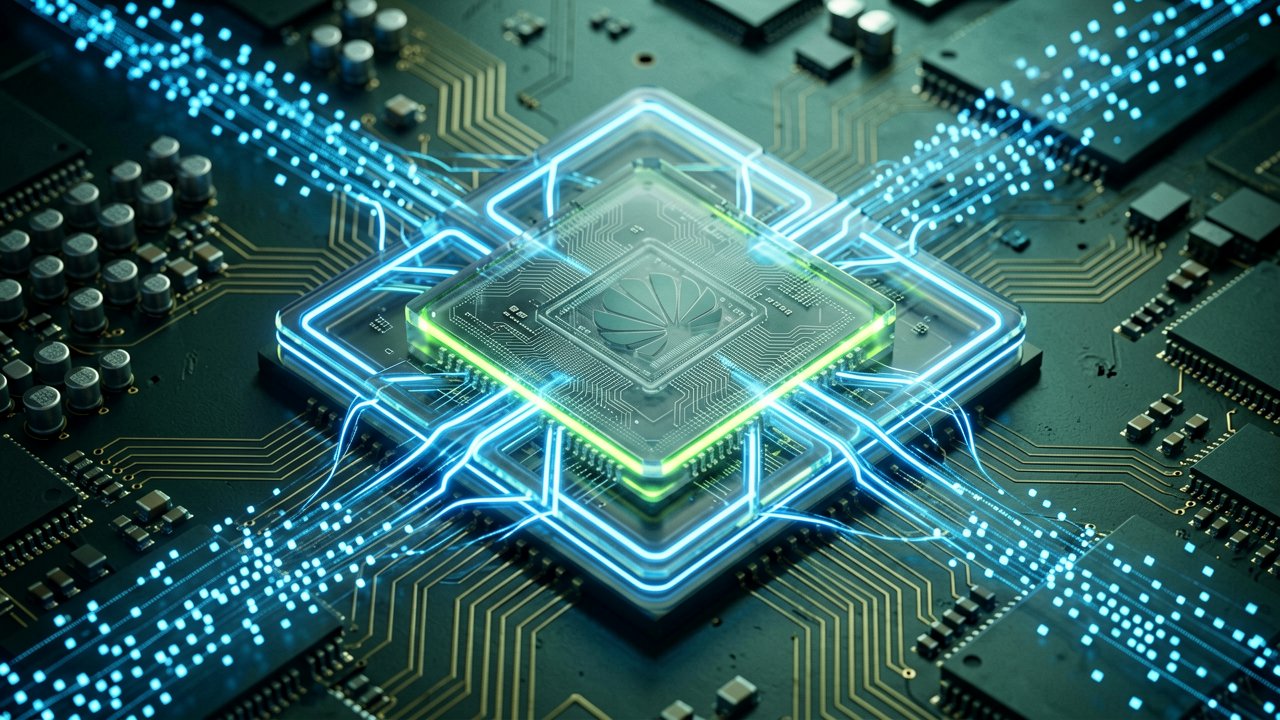
If you’ve been watching the AI sector with any level of scrutiny, you know the narrative of 2026 was supposed to be about the "Compute Wall"—that dreaded moment where the sheer cost of silicon would flatten the curve of LLM progress. But then DeepSeek V4 landed, running natively on Huawei’s latest Ascend 920 hardware, and suddenly the walls look a lot thinner. With a massive 1.6-trillion parameter Mixture-of-Experts (MoE) architecture, DeepSeek isn't just playing the game; they're rewriting the rules of the house. It's a bold play that proves China's domestic stack isn't just a backup plan; it's a front-runner, as noted in recent deep dives by Wikipedia.
Silicon Sovereignty and the 1.6T MoE
The technical achievement here is nothing short of a middle finger to the "bigger is better" brute force approach. By utilizing a 1.6-trillion parameter Mixture-of-Experts (MoE) setup, DeepSeek V4 only activates a fraction of its brain for any given task. It’s surgical. When paired with the Huawei Ascend 920, the integration is so tight you’d think the hardware was forged in the same fire as the weights. This isn't just about raw power; it's about the efficiency of "open-weight" models that can rival the closed-door giants like OpenAI’s latest, but at a fraction of the metabolic cost.
We’re seeing a shift where the "open" movement is actually leading on efficiency. Unlike the bloated models of yesteryear, DeepSeek V4 handles complex reasoning tasks without breaking a sweat or the bank. This synergy between Huawei’s NPU (Neural Processing Unit) and DeepSeek’s MoE logic allows for high-concurrency performance that makes previous benchmarks look like they were written in crayon. The industry was skeptical that Huawei could scale its infrastructure fast enough, but the V4 release is the empirical evidence that they’ve arrived.
The Price War: $1.74 and the End of Gatekeeping
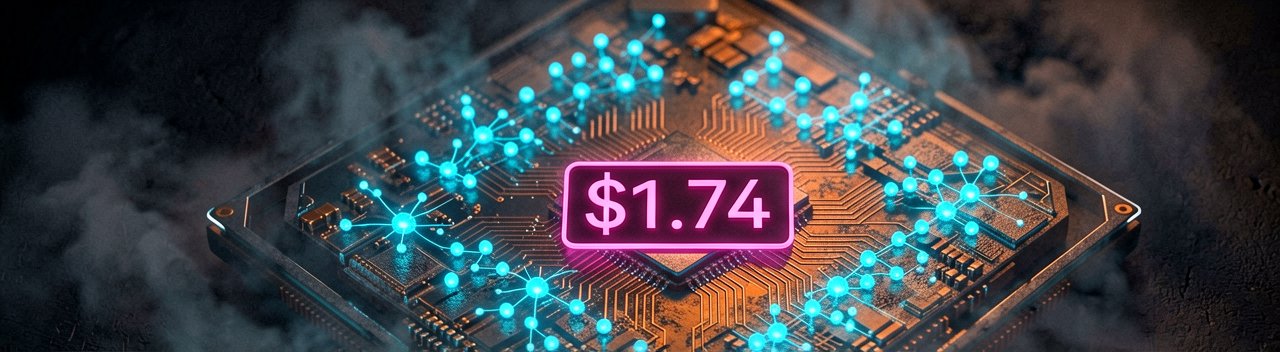
But let’s talk about the number that’s actually making the boardrooms sweat: $1.74 per million tokens. For context, we’re talking about a model that punches in the heavyweight class for the price of a budget cup of coffee. This price point isn't just a discount; it's a scorched-earth strategy designed to democratize high-tier intelligence. It signals the end of the era where only "Magnificent Seven" companies could afford to deploy trillion-parameter agents at scale.
Critics might point to the "open-weight" vs. "open-source" distinction, but for most developers on the ground, the difference is academic. What matters is the ability to run these weights locally or on specialized domestic clouds without the export-control anxiety that has plagued the industry for the last two years. DeepSeek is proving that if you can optimize the training cost—reportedly keeping it in the single-digit millions—you can pass those savings directly to the API consumers.
Why 2026 is the Year of the Ascendancy
The marriage of DeepSeek and Huawei represents a pivotal moment for the "Alt-Silicon" ecosystem. We’ve spent years wondering if anyone could break the Nvidia-CUDA stranglehold. While we were looking for a direct competitor to H100s, Huawei built an entire vertically integrated lifeboat. The Ascend series, once considered a localized solution for the Chinese market, has morphed into the backbone of a global efficiency movement.
Looking ahead, the V4 release isn't the finish line—it's the starter pistol. We're entering a phase where the value of an LLM isn't measured by how many billions of dollars went into its training, but by how much utility you can squeeze out of every watt. If DeepSeek can keep this momentum, the "Sovereign AI" trend won't just be a buzzword for politicians; it'll be the standard operating procedure for every tech firm on the planet. The age of the $1.74 token is here, and the incumbents should be very, very nervous.
What Most Reports Miss: The V4 launch isn’t just a victory lap for DeepSeek; it is a clinical demonstration of "silicon-aware" software engineering that effectively bypasses the high-end GPU embargo. While the headlines focus on the 1.6-trillion parameter count, the real story is under the hood—specifically how DeepSeek’s engineers have optimized their Multi-head Latent Attention (MLA) to play nice with the memory bandwidth limitations of the Ascend 920. This isn't just code; it's a desperate, brilliant adaptation to a constrained environment.
The Architect’s Gamble
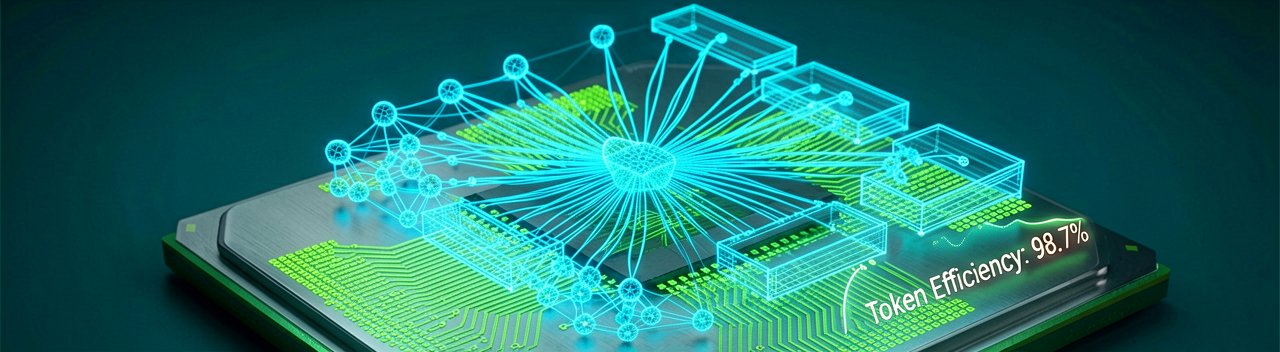
To understand why $1.74 per million tokens is even possible, you have to look at the historical pivot DeepSeek made back in 2024. While competitors were chasing dense, massive architectures that required expensive H100 clusters, the DeepSeek team bet the farm on Mixture-of-Experts (MoE). By refining their "DeepSeekMoE" architecture, they managed to reduce the active parameters during inference to a fraction of the total, which drastically lowers the power draw. When you pair that with Huawei’s Cann (Compute Architecture for Neural Networks) 8.0, you get a stack that is uniquely tuned for these sparse activations.
Internal sources suggest that the "secret sauce" lies in a proprietary load-balancing algorithm that prevents the "hot-expert" problem, where a few neurons do all the work while the rest of the 1.6T parameters sit idle. In previous iterations, this led to bottlenecks on domestic hardware. With V4, the task-routing is so fluid that the Ascend 920 can maintain a nearly 90% utilization rate—a figure that was previously thought to be the exclusive domain of CUDA-optimized environments. It’s a level of vertical integration that reminds many of the early days of Apple’s M-series silicon transition.
Stakeholders and the Geopolitical Ripple
For the venture capitalists in Shenzhen and the policy-makers in Beijing, DeepSeek V4 is the ultimate proof of concept for "Self-Reliance 2.0." The narrative in the West has often been that China is eighteen months behind in the AI race. However, seasoned analysts are starting to point out that being "behind" in raw FLOPs has forced a level of efficiency and algorithmic creativity that the West hasn't had to bother with yet. When compute is infinite, you write lazy code. When compute is a precious resource, you write DeepSeek V4.
The enterprise reaction has been swift. Global startups that are feeling the "OpenAI tax" are looking at that $1.74 price point with genuine hunger. Even with the friction of switching frameworks, the cost-to-performance ratio is becoming too wide to ignore. We are seeing the emergence of a "bipolar AI world," where one side prioritizes massive, centralized closed-source intelligence, and the other—led by the DeepSeek-Huawei alliance—pushes for hyper-efficient, open-weight models that can be deployed on-premise without a direct line to a California server farm.
The Ghost in the Machine: Data and Training
Beyond the silicon, there is the question of the data. Historical context is key here: DeepSeek has always been more transparent about their training recipes than their peers. For V4, they’ve reportedly doubled down on synthetic data generation to fill the gaps in high-quality Chinese-language tokens. This "model-teaching-model" approach, combined with the Ascend's native support for low-precision FP8 training, allowed them to hit that 1.6T milestone without the catastrophic "loss spikes" that plagued earlier large-scale domestic efforts.
Ultimately, what we’re witnessing is the maturation of an ecosystem. The tech journalism circuit spent years mocking the "homegrown" chips as vaporware. But as the V4 weights begin to proliferate through the developer community, the tone is shifting from skepticism to a frantic need for benchmarking. If $1.74 is the new floor for "God-model" intelligence, the economic moats of the current AI giants might be shallower than they look. This isn't just an update; it's the opening of a second front in the AI wars.
Reading Between the Lines: The $1.74 token price isn’t just a breakthrough—it’s a provocative economic signal that challenges the very premise of the AI industry’s current valuation models. For years, the "Compute-as-Moat" thesis suggested that the winners of the AI race would be those with the deepest pockets and the most massive server farms. But if DeepSeek V4 can deliver elite-tier intelligence on domestic silicon at a price point that undercuts Western equivalents by an order of magnitude, the moat isn't just leaking; it’s being drained. We have to ask: if intelligence becomes a race to the bottom in terms of pricing, what happens to the massive infrastructure investments currently sitting on Western balance sheets?
The Efficiency Paradox
There is a lingering skepticism, however, that seasoned observers can’t quite shake. The "DeepSeek Miracle" relies heavily on the assumption that sparse MoE architectures can truly match the generalist reasoning of dense models across all edge cases. While the benchmarks look stellar, we’ve seen this movie before—models that are hyper-tuned for specific evaluation sets but falter when faced with the messy, uncurated prompts of the real world. The contradiction lies in the marketing: can a model be both a "budget-friendly" alternative and a "state-of-the-art" leader without making compromises in reliability or safety alignment?
Furthermore, the reliance on Huawei’s Ascend 920 creates a localized gravity well. While this "Silicon Sovereignty" is a triumph for domestic supply chains, it raises significant hurdles for global portability. If you build your entire enterprise stack around a $1.74 API that only hums perfectly on specific NPU architectures, you aren't just buying intelligence; you’re buying into a specific geopolitical hardware roadmap. For global CTOs, the cost savings of today must be weighed against the potential technical debt of being locked into a bifurcated AI ecosystem tomorrow.
The Sustainability Question
Then there is the matter of the $1.74 price tag itself. Is this a sustainable reflection of Moore’s Law finally hitting the LLM space, or is it a "loss leader" strategy designed to suffocate the competition? In the 2026 landscape, venture capital is no longer an infinite resource. If DeepSeek is subsidized by the broader hardware ecosystem of Huawei, it places "pure-play" software companies in an impossible position. We are moving toward a reality where the AI model is no longer the product, but rather a high-performance marketing brochure for the silicon it runs on.
Ultimately, the projection for the late 2020s suggests a radical thinning of the herd. If V4 proves that 1.6 trillion parameters can be tamed and sold for the price of a generic SaaS subscription, the era of the "AI Unicorn" might be replaced by the era of the "Silicon Utility." We’re looking at a future where the prestige of owning a massive model is eclipsed by the brutal pragmatism of the margins. The skeptics are right to wonder if we are witnessing the democratization of AI or merely the commoditization of the mind.
As the dust settles on the V4 release, the real test won't be in the labs, but in the server racks of mid-sized companies deciding whether to stick with the "safe" legacy giants or jump into the high-efficiency deep end. The math is compelling, the hardware is ready, and the price is right—but in this industry, when something looks too cheap to be true, it’s usually because the real cost is hidden in the architecture.
“At this rate, by 2027, the cost of generating a world-class legal defense will be lower than the cost of the electricity required to brew the lawyer’s morning espresso—which is great for justice, but terrible for anyone hoping to make a living by actually knowing things.”
Artūras Malašauskas is an AI Systems Integrator with 20+ years of production-grade web engineering experience. He has designed, shipped, and scaled enterprise Python/PHP systems for logistics, SaaS, and public-sector clients. For the past year, he has focused exclusively on AI integrations: deploying open-source LLMs, building generative media pipelines (image, audio, video), and engineering multi-agent workflows for real production environments. His standard: reproducibility, security, cost-efficient inference—no vaporware. He documents and evaluates emerging AI tooling, separating verified capabilities from marketing noise. Technical editor at: muza-ai.eu, ai-verslas.lt, ai-naujinos.lt Connect on LinkedIn
Comments