The Socratic Engine: OpenAI and Khan Academy’s Quest to Scale the Human Brain
The Classroom Evolution: Not Your Average Tutor
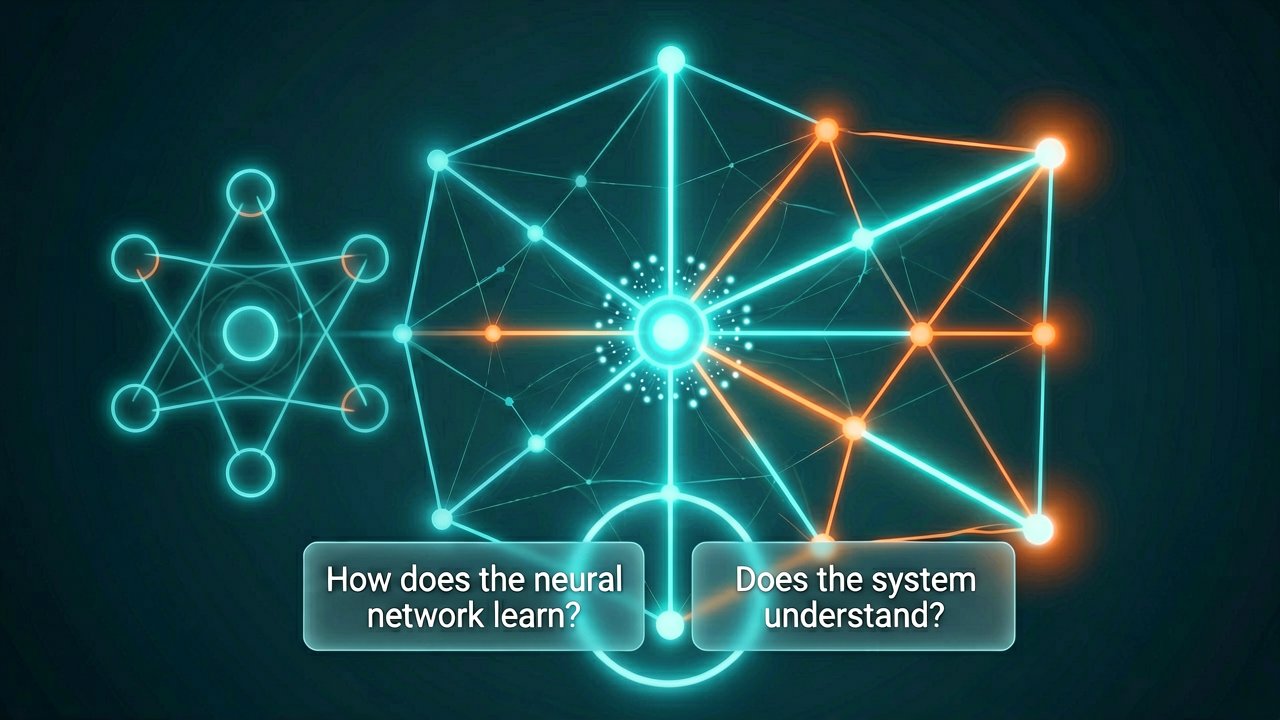
OpenAI and Khan Academy recently unveiled Khanmigo, an AI-powered teaching assistant designed to revolutionize how students interact with educational content. Unlike standard chatbots that simply spit out answers, Khanmigo is engineered to guide students through the learning process using Socratic methods. As detailed by Khan Academy, the goal is to provide every student with a personalized tutor that understands their unique hurdles without doing the heavy lifting for them.
Safety First in the Generative Era
One of the biggest hurdles for AI in education is safety and accuracy. OpenAI and Khan Academy have integrated rigorous guardrails to ensure the AI remains a constructive force. According to a report by OpenAI, the system includes a moderation layer that flags inappropriate content and alerts teachers if a student’s interactions become concerning. This proactive safety measure addresses the primary anxiety parents and educators have about letting LLMs into the classroom.
The "Answer-First" Trap
A major takeaway from this collaboration is the shift away from the "answer-first" culture. Many AI tools are seen as shortcut engines, but Khanmigo is programmed to be "stubborn." As noted by The Verge, if a student asks for the answer to a math problem, the chatbot will pivot, asking the student to explain their first step instead. This reinforces the pedagogical value of struggle and discovery over rote memorization.
Scaling Personalized Mentorship
For decades, the "2 Sigma Problem"—the idea that students tutored one-on-one perform significantly better than those in a classroom—seemed unsolvable due to cost. However, this partnership suggests that AI might finally bridge that gap. MIT Technology Review highlights that by leveraging GPT-4, Khan Academy can offer high-quality mentorship at a fraction of the cost of human tutoring, potentially leveling the playing field for underfunded school districts.
The Teacher’s New Co-Pilot
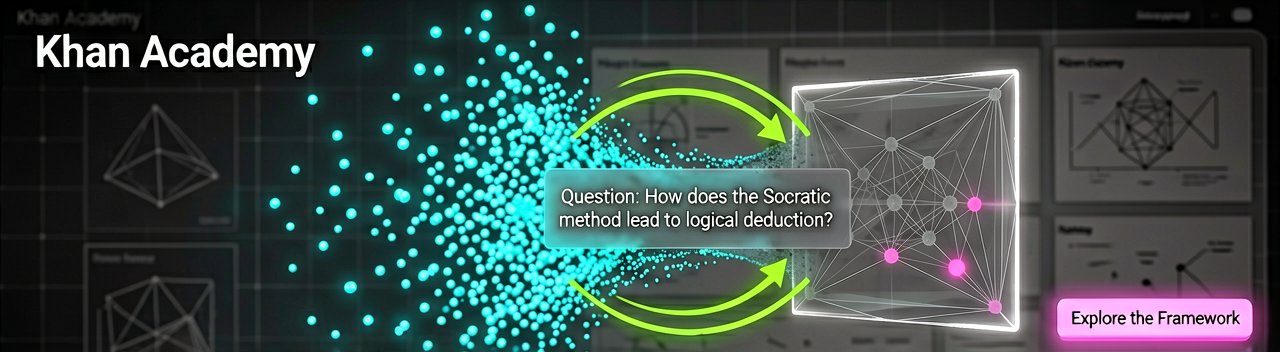
It’s not just about the kids; teachers are also getting a massive productivity boost. The tool helps educators draft lesson plans, create rubrics, and track student progress in real-time. This "co-pilot" approach, as explored by The New York Times, aims to reduce the administrative burden on teachers, allowing them to focus more on emotional support and nuanced classroom management that AI cannot replicate.
What We Can Learn: The Future is Hybrid
The ultimate lesson from the OpenAI and Khan Academy venture is that AI works best when it mimics human pedagogy rather than replacing it. It proves that with the right data and ethical constraints, generative AI can move beyond being a "hallucination machine" and become a precise educational tool. The success of this rollout will likely serve as the blueprint for how other industries integrate AI—prioritizing process over output and safety over speed.
The Architects of Engagement: A Silicon Valley Symbiosis
The Backstory: The partnership between OpenAI and Khan Academy wasn't a sudden corporate handshake; it was a deeply integrated R&D mission that began long before the public launch of GPT-4. As revealed by OpenAI, Khan Academy was one of the few organizations granted early access to the GPT-4 model to pressure-test its capabilities in a high-stakes educational environment. This "inner circle" status allowed Sal Khan’s team to spend months fine-tuning the model's behavior, moving it away from a standard completion engine toward a sophisticated Socratic guide that refuses to give away answers.
From Hedge Fund to Digital Frontier
Khan Academy’s journey into AI is the latest chapter for a nonprofit that started in 2008 with a simple mission: providing a free, world-class education for anyone, anywhere. Founded by Sal Khan, a former hedge fund analyst, the organization has grown from a series of YouTube math tutorials into a global powerhouse. According to Microsoft, the nonprofit's collaboration has recently expanded even further, partnering with Microsoft to utilize Azure OpenAI Service to make "Khanmigo for Teachers" free for all K-12 educators in the United States.
Solving the Financial Equation of AI
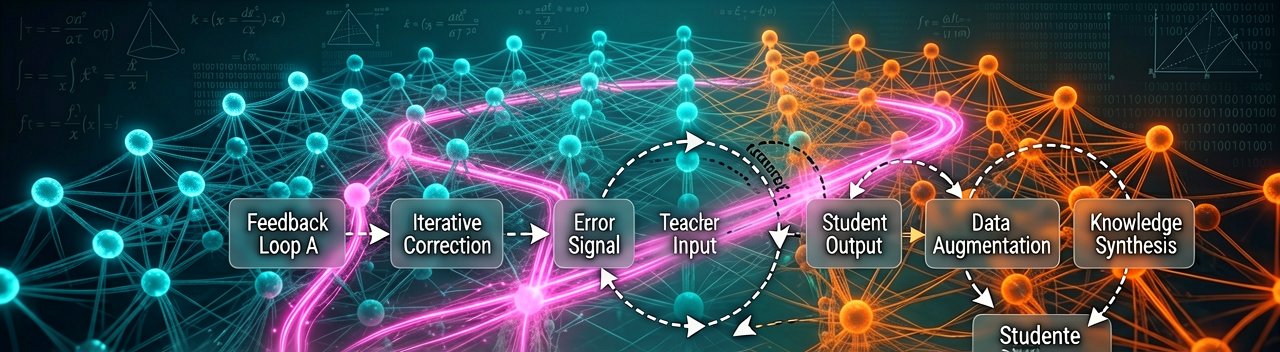
One of the quietest but most significant details of this event is how a nonprofit manages the massive "compute" costs associated with large language models. Unlike free versions of ChatGPT, running a persistent, high-logic tutor like Khanmigo is expensive. As reported by CNBC, Sal Khan has been transparent about the need for a per-user fee for school districts to cover these infrastructure costs. However, by leveraging partnerships and technological advances, the team is aggressively working to bring those costs down to as little as $10–$20 per year per student, aiming for true mass-market accessibility.
A Vision Beyond the Chatbox
The collaboration is already eyeing a future that transcends text-based chat. During early demonstrations, leaders from both organizations explored "vision" technology, which would allow the AI to "see" a student’s paper through a camera and offer feedback on handwritten work. CBS News highlighted that this evolution aims to make the AI feel less like a software application and more like a companion in the room, capable of understanding non-verbal cues and the physical context of a student's struggle.
Expanding the Global Classroom
While much of the focus has been on the U.S. market, the OpenAI-Khan Academy alliance has sparked a global ripple effect. In early 2026, the partnership's influence reached as far as Vietnam, where the localized version of the AI assistant was launched to help teachers design digital learning materials. According to the Vietnam Foundation, this expansion is part of a broader "Digital Competency Framework" designed to ensure that AI doesn't just benefit wealthy western nations but acts as a bridge for digital transformation worldwide.
The Pedagogical Pivot: Shifting from Answers to Inquiry
Reading Between the Lines: The OpenAI and Khan Academy partnership is less about the "chatbot" itself and more about a fundamental restructuring of the global educational market. By the beginning of 2026, the AI education sector is projected to hit a staggering $12.3 billion, according to a 2026 Trends Report from X-Pilot. This explosion isn't just driven by technology, but by a desperate need for scalability. Khanmigo represents the first major "autonomous teaching assistant" to move from pilot experimentation to mass execution, signaling a shift where educational value is measured by instructional quality rather than just access to content.
The 5% Illusion and the Engagement Gap
However, an analytical look at the data reveals a "5% illusion"—the phenomenon where AI tutors perform brilliantly for students who already possess high metacognitive skills but struggle to engage those who don't. As noted by Professor Venkat Ramaswamy, the system assumes a level of student self-regulation that isn't always present. Internal reviews have shown that while some students use the tool to deepen their inquiry, others simply respond with "Bro, IDK," highlighting that a Socratic bot is only as effective as the human’s willingness to engage in the dialogue. This gap suggests that the next frontier for OpenAI won't be smarter logic, but better behavioral "hooks."
Democratization vs. the Digital Divide
There is also the critical question of equity. While a National Bureau of Economic Research study found that students using Khanmigo showed 34% greater learning gains—with particularly strong results in underserved communities—the cost of "compute" remains a gatekeeper. To combat this, the partnership has pivoted toward lowering costs to the $10–$20 range per student. Yet, as Forbes points out, if our metrics-driven society continues to prioritize standardized test scores over essential human skills, these tools risk becoming "sophisticated score-boosters" rather than true mentors of critical thought.
The Competitive Landscape of 2026
Finally, this collaboration has forced other tech giants to accelerate their own pedagogical AI frameworks. The market is no longer a monopoly of "chat"; it is a battle for "integrated learning ecosystems." With Microsoft bringing Khan Academy content directly into Microsoft Teams for Education, the goal is to make AI an ambient presence in the classroom. This competitive pressure is driving a 36% compound annual growth rate in the sector, ensuring that by the end of 2026, 83% of educational institutions plan to have some form of AI teaching assistant deployed.
"In the end, we’ve successfully built a tutor that has the patience of a saint and the knowledge of a thousand libraries. Now we just have to figure out how to stop students from trying to convince it that '2+2=5' because they saw a meme about it once. Progress is slow, but at least the AI doesn't need coffee breaks—yet."
Artūras Malašauskas is an AI Systems Integrator with 20+ years of production-grade web engineering experience. He has designed, shipped, and scaled enterprise Python/PHP systems for logistics, SaaS, and public-sector clients. For the past year, he has focused exclusively on AI integrations: deploying open-source LLMs, building generative media pipelines (image, audio, video), and engineering multi-agent workflows for real production environments. His standard: reproducibility, security, cost-efficient inference—no vaporware. He documents and evaluates emerging AI tooling, separating verified capabilities from marketing noise. Technical editor at: muza-ai.eu, ai-verslas.lt, ai-naujinos.lt Connect on LinkedIn
Comments