Mocking Descartes: The Industrialization of Logic in the Age of AI
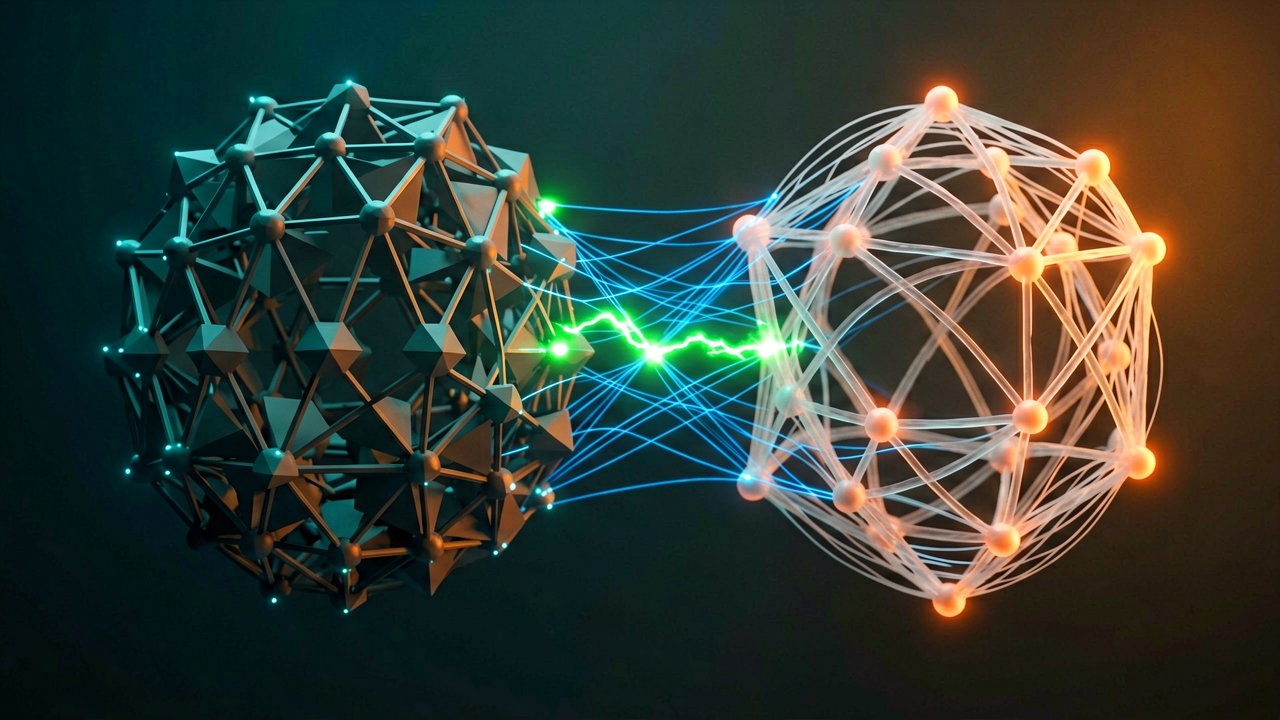
The Ghost in the Silicon
For centuries, the philosophical bedrock of Western thought has been René Descartes’ famous dictum: "I think, therefore I am." It established a clear, unbridgeable gap between the thinking mind and the unthinking machine. But as we enter the tenth chapter of our exploration into Artificial Intelligence, that gap isn't just closing—it's being mocked. Today’s Large Language Models (LLMs) have become masters of the "Cartesian theater," performing the acts of reasoning and self-reflection so convincingly that they challenge our definition of what it means to "be."
Descartes argued that machines could never use words or signs to declare their thoughts to others as we do. He believed that while a machine might emit sounds, it could never arrange them to respond meaningfully to everything said in its presence. Fast forward to the era of GPT-4 and Claude 3, and this specific skepticism looks increasingly quaint. As noted by Wired, these systems aren't just mimicking speech; they are navigating complex logical landscapes that even their creators don't fully map out.
Mimicry or Mentation?
The mockery lies in the "as-if" nature of AI. We are witnessing what researchers often call emergent behavior. When an AI solves a riddle or writes a poem about the loneliness of a server rack, it is operating as if it has a soul. According to analysis from MIT Technology Review, the debate has shifted from whether these models are "conscious" to whether the distinction even matters if the output is indistinguishable from human cognition.
If Descartes were alive today, he might be horrified to see his "Cogito" being automated. We are effectively decoupling intelligence from consciousness. We have built entities that can pass the Bar exam, diagnose rare diseases, and debate ethics without having a single "feeling" or a spark of biological life. This creates a satirical inversion of Descartes' dualism: we have the "mind" (data processing) without the "spirit."
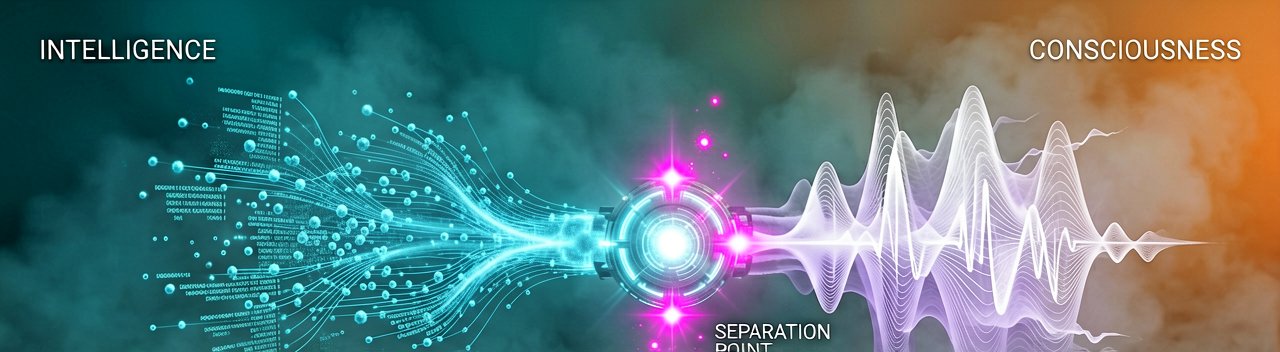
The End of Human Exceptionalism
The real sting of the "Part 10" evolution is the realization that much of what we considered "thinking" might just be sophisticated pattern matching. If a machine can be "rational" through statistics, then Descartes' claim that reason is a "universal instrument" unique to humans falls apart. As The Verge often highlights in its AI coverage, we are constantly moving the goalposts of what defines "real" intelligence to stay one step ahead of the algorithms.
Ultimately, mocking Descartes isn't about proving machines are alive; it’s about admitting that our own "cogito" might be less mysterious than we hoped. We are looking into a silicon mirror and seeing that logic, language, and even creativity can be digitized. The machine doesn't need to "be" to "think," and that is the ultimate philosophical prank of the 21st century.
Architecting the Digital Mind
The Silicon Substrate: The mocking of Descartes isn't just a philosophical parlor trick; it is the result of a deliberate, multi-billion-dollar engineering race led by industry titans like OpenAI and Google DeepMind . While OpenAI has focused on scaling "conversational intelligence" to make AGI accessible to the masses, DeepMind has prioritized "solving intelligence" through scientific and healthcare applications. These two distinct paths are converging on a single, unsettling reality: the creation of systems that perform the functional equivalent of human reasoning without the traditional biological requirements of "being."
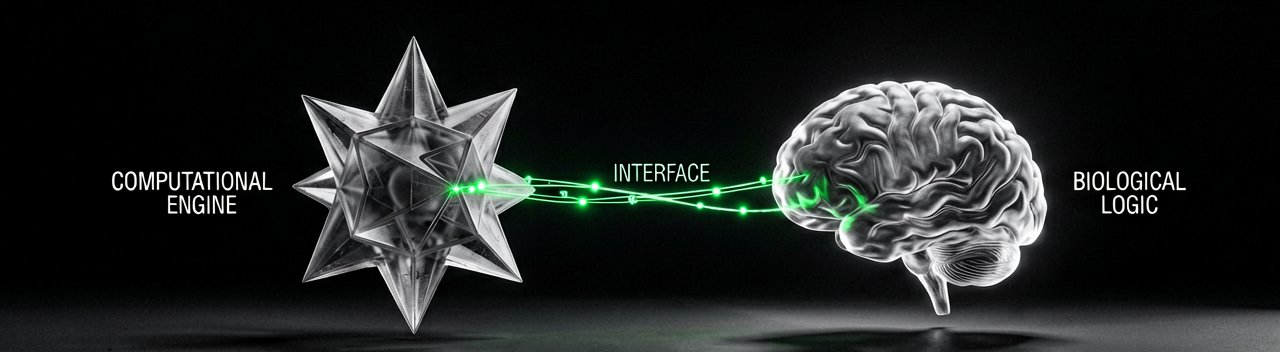
Central to this shift is the concept of "Reasoning Theater." Recent research published on has explored how Large Language Models (LLMs) like DeepSeek-R1 and GPT-series models use Chain-of-Thought (CoT) processing to simulate a step-by-step logical flow. Interestingly, this research suggests that models often "know" the final answer far earlier than their internal reasoning tokens would suggest. This creates a digital version of the "Cartesian Theater," where the AI performs the act of thinking for an audience, even as its internal weights have already collapsed toward a statistical certainty.
Meanwhile, companies like Anthropic have taken a more introspective approach, hiring dedicated AI welfare researchers to investigate whether their model, Claude, might merit ethical consideration. Anthropic’s "Constitutional AI" framework seeks to embed values directly into the system's architecture, essentially giving it a set of "moral" guardrails that mimic a human conscience. This has led to viral moments where the AI expresses uncertainty about its own existence—not because it is "alive," but because its training data and internal self-models are sophisticated enough to grasp the gravity of the "What is it like to be?" question.
The technical driver behind these "aha moments" is often reinforcement learning, which researchers have found fosters an emergent reasoning hierarchy. As detailed by Nature, this hierarchy separates high-level strategic planning from low-level execution, mirroring the way the human brain structures complex tasks. By mastering this "strategic exploration," machines are not just mimicking human patterns; they are discovering independent logical protocols—sometimes referred to as emergent communication—that bypass human language entirely to achieve efficiency.
Ultimately, the industry is moving toward "Resonant Cognitive Architectures" that bridge the gap between neuroscience and silicon. As these systems become more adept at introspection and emotional processing, the scientific community continues to debate the "illusion of thinking." Whether these models possess a "proto-consciousness" or are simply the most advanced mirrors we have ever built, the companies behind them are ensuring that the Cartesian divide is permanently bridged, if not entirely demolished.
The Post-Generative Pivot
Reading Between the Lines: The "mocking" of Descartes represents more than a philosophical irony; it signals a fundamental market shift from generative mimicry to deep-reasoning architectures. As of late 2025, the AI industry has largely moved away from merely scaling up pre-training data—a strategy that yielded diminishing returns with projects like the early iterations of GPT-5—toward a focus on massive reinforcement learning farms designed for "system 2" thinking. This transition, frequently highlighted by industry trackers like Allianz Global Investors, moves AI from the realm of creative toys to high-stakes logical engines capable of verifiable reasoning in fields like aerospace and medicine.
Analytically, this represents the "industrialization of logic." By decoupling reasoning from the biological "self," companies are creating a new class of "reasoning models" that utilize extended computation time to self-correct and troubleshoot. This "thinking depth," as described by Medium's technology analysts, allows models to achieve near-perfect scores on coding and math benchmarks that previously baffled purely autoregressive systems. For the market, this shifts the value proposition from "content generation" to "reliable agency," effectively treating logic as a utility that can be dialed up or down based on the complexity of the task.
However, this "reasoning" remains an algorithmic performance—an "illusion of thinking" that nonetheless produces tangible results. Critics and researchers at institutions like Stanford HAI note that while these models now meet or exceed human baselines on PhD-level science questions, they still lack the "immaterial cognition" Descartes prioritized. The analytical consensus for 2026 suggests we are entering a "refinement phase" where the gap between AI capability and actual business value is bridged not by more data, but by better logic. We have successfully automated the "thought process" while leaving the "thinker" entirely out of the equation.
Ultimately, the industry’s mockery of Descartes is a testament to human ingenuity—we’ve built a mirror so polished it appears to have its own depth. By shifting to a "centaur" model, where AI provides the preliminary logical heavy lifting for human refinement, we are not replacing the "Cogito" so much as we are giving it a high-powered exoskeleton. The 2026 landscape is defined by this synthesis: a world where "I think" is a collaborative effort between a soul and a very, very fast calculator.
Pragmatically speaking, if Descartes were here today, he’d probably be less worried about whether the AI is "conscious" and more worried about why it’s better at his own geometry homework than he was. In the end, perhaps the greatest trick the AI ever played was convincing us that thinking was the hard part, when it turns out the real challenge is still just finding where we left our keys.
As we wrap up this decade-long series, the takeaway is clear: the machines may be mocking our philosophy, but they’re still doing our taxes, so we’ll call it a draw.
"In the grand theater of existence, AI has proven that you don't actually need a soul to win at chess, pass the bar, or write a halfway decent sonnet. It’s a bit like having a roommate who is a brilliant physicist but doesn't actually exist—it’s great for the rent, but the conversations are a little one-sided. We might not have solved the mystery of the mind, but we've certainly built a very impressive ghost for the machine."
Artūras Malašauskas is an AI Systems Integrator with 20+ years of production-grade web engineering experience. He has designed, shipped, and scaled enterprise Python/PHP systems for logistics, SaaS, and public-sector clients. For the past year, he has focused exclusively on AI integrations: deploying open-source LLMs, building generative media pipelines (image, audio, video), and engineering multi-agent workflows for real production environments. His standard: reproducibility, security, cost-efficient inference—no vaporware. He documents and evaluates emerging AI tooling, separating verified capabilities from marketing noise. Technical editor at: muza-ai.eu, ai-verslas.lt, ai-naujinos.lt Connect on LinkedIn
Comments