The Prompt-to-Prototype Pivot: Anthropic Challenges Figma’s Visual Dominance
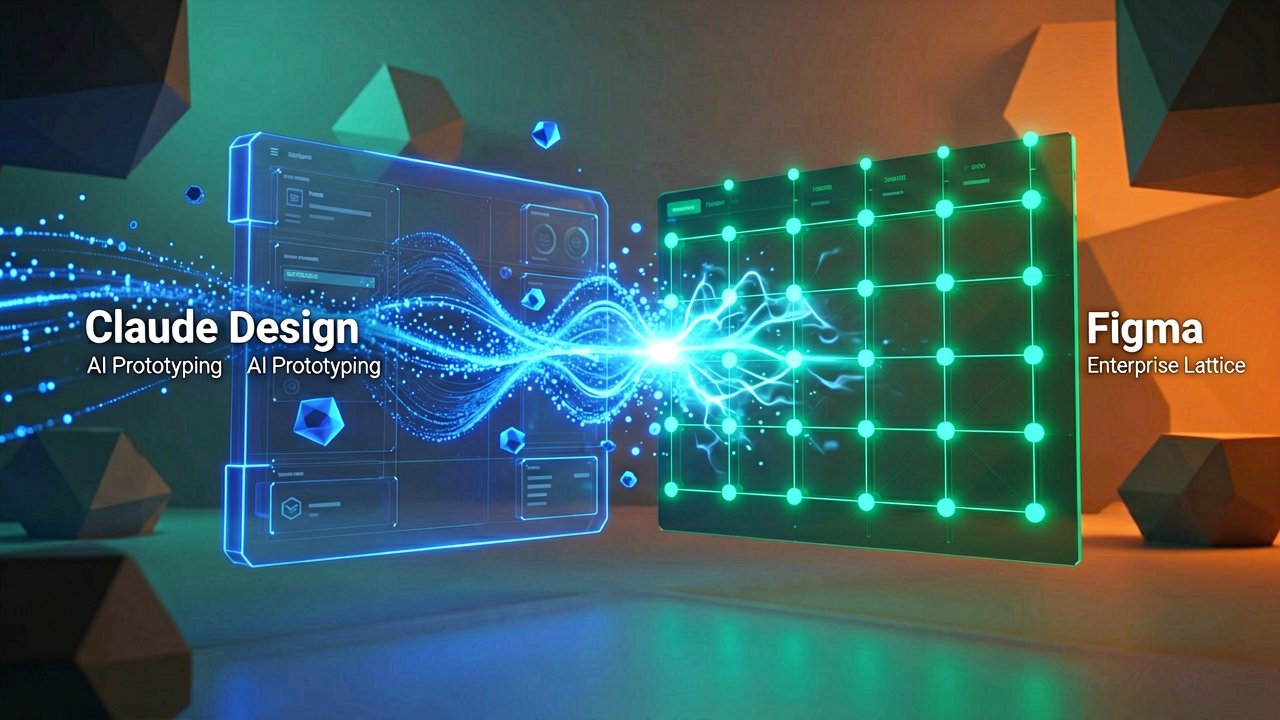
In a week where the lines between generative AI and professional creative workflows blurred even further, the tech industry witnessed two major power moves. Anthropic officially stepped into the spotlight with "Claude Design," a suite of tools aimed at reimagining how visuals are prompted and polished, while Figma bolstered its long-term financial outlook, signaling that the design world isn’t just surviving the AI revolution—it’s scaling with it.
Anthropic’s Creative Pivot
Anthropic, long known for its safety-first approach and the nuanced reasoning of its Claude models, is now challenging the visual incumbents. The launch of Claude Design marks a strategic shift toward multimodal creative assistance. This new interface allows users to bridge the gap between abstract brainstorming and high-fidelity design execution, leveraging the model’s improved spatial reasoning to help layout and iterate on visual projects in real-time. According to reports from The Verge, this move puts Anthropic in more direct competition with OpenAI’s DALL-E integrations and Adobe’s Firefly ecosystem.
The core appeal here isn't just "generating an image." Instead, Claude Design focuses on the iterative "designer-in-the-loop" philosophy. It treats design as a conversational process, allowing for granular adjustments to UI components and aesthetic styles through natural language. Industry analysts at TechCrunch suggest that this focus on "artifacts" and structured visual output is what sets Claude apart from typical chat-based image generators, making it a more viable tool for actual product teams.
Figma’s Resilient Growth
While Anthropic builds new tools, the platform where most of those designs eventually live—Figma—is proving its dominance. Following the collapse of its acquisition by Adobe, many wondered if Figma would lose its momentum. However, the company recently raised its financial outlook, citing a massive uptick in enterprise adoption and the successful rollout of its own native AI features. Data shared by Bloomberg indicates that Figma’s annual recurring revenue continues to climb as it expands beyond mere prototyping into dev-mode and whiteboarding.
Figma’s optimistic forecast is a testament to the "prosumer" economy’s strength. By integrating AI to handle "drudge work"—like naming layers, organizing files, and generating placeholder content—Figma has managed to keep its core user base of professional designers while lowering the barrier to entry for non-designers. As noted by Reuters, the company's ability to stay independent and profitable in a volatile market has made it a prime candidate for an eventual IPO.
The Convergence of Prompting and Prototyping
The synchronicity of these two announcements highlights a broader trend: the "democratization of craft." Anthropic is making the creation of design assets more accessible through language, while Figma is making the management of those assets more efficient through automation. We are moving away from a world where design is defined by mastery of complex toolbars and moving toward a world defined by the quality of one's creative direction and intent.
For the average tech worker, this means the tools are becoming more invisible. Whether you are using Claude to spin up a quick landing page mockup or using Figma to refine a complex design system, the friction between "idea" and "execution" is evaporating. As highlighted by Wired, the challenge for the next year won't be finding the right tool, but rather maintaining a unique human perspective in a sea of AI-optimized aesthetics.
Ultimately, Anthropic’s entry into the design space and Figma’s financial confidence suggest that the AI boom is entering its second phase. We are past the "magic trick" era of simple chat bots and entering a period of deep, functional integration where AI is a foundational layer of the professional creative stack. For now, the winners are the users who get to play with these increasingly powerful, intuitive platforms.
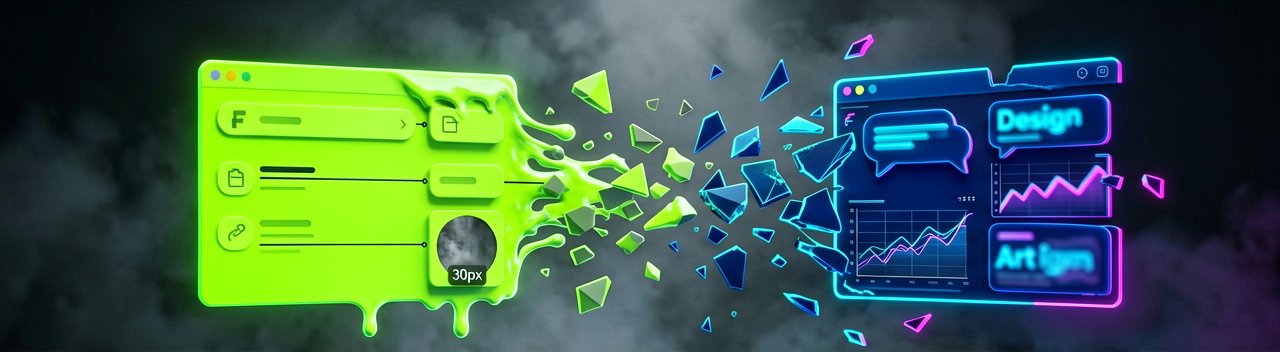
Bridging the Gap Between Concept and Canvas: The emergence of Claude Design represents more than just a new feature; it is the culmination of Anthropic’s push to move AI from a passive chatbot into an active, collaborative agent. Powered by the newly unveiled Opus 4.7 vision model, the tool allows users to transform text prompts, screenshots, and even entire codebases into functional, clickable prototypes. This shift was underscored by a significant leadership change just days before launch: Anthropic’s CPO, Mike Krieger—a co-founder of Instagram—resigned from Figma’s board of directors, a move that analysts at The Rundown AI viewed as a clear signal of the intensifying competition between the two tech giants.
Anthropic Labs and the Low-Code Revolution
Anthropic Labs designed Claude Design with a specific user in mind: the "non-designer" who needs to communicate visual ideas quickly. Whether it’s a founder pitching a new app or a product manager building a one-pager, the tool uses a "designer-in-the-loop" philosophy. It doesn't just spit out a static image; it generates interactive "Artifacts" that can be refined via natural language or direct visual tweaks using custom sliders. According to TechCrunch, while the tool may appear to compete with Canva, Anthropic positions it as a complementary starting point that can eventually be handed off to more traditional design suites or even "Claude Code" for full production implementation.
The technical backbone of this launch is the Opus 4.7 model, which boasts state-of-the-art visual reasoning. This capability allows the AI to "read" a company’s existing brand identity directly from their web assets, ensuring that every new slide or prototype automatically adheres to established color palettes and typography. This level of contextual awareness is part of why early reactions, as noted by Anthropic, suggest that the tool effectively eliminates the "blank canvas" problem that plagues early-stage creative projects.
Figma’s Financial Fortress and AI Monetization
Despite the new pressure from Anthropic, Figma’s financial standing has never looked more robust. In its latest earnings report, Figma announced a massive 46% year-over-year revenue jump for the first quarter of 2026, reaching $333.4 million. This performance significantly outpaced Wall Street's expectations and led the company to raise its full-year 2026 guidance to a range between $1.422 billion and $1.428 billion. As reported by Reuters, this confidence is largely driven by "promising early traction" on AI monetization, as enterprise teams increasingly pay for premium AI-driven features like "Figma Make."
Figma’s strategy involves leaning into its "multiplayer" nature—the collaborative environment that made it a household name in tech. Rather than seeing AI as a threat, CEO Dylan Field has leaned into a "Code to Canvas" capability that allows developers to bring UIs generated in external tools like VS Code or even Claude Code directly into Figma as editable layers. This interoperability ensures that Figma remains the central "source of truth" for design systems. According to , over 60% of their largest enterprise customers are now using these AI tools on a weekly basis, reinforcing the idea that professional designers are augmenting their skills rather than being replaced by them.
Ultimately, the rivalry between Anthropic’s generative agility and Figma’s established infrastructure is creating a "best-of-both-worlds" scenario for users. While Anthropic focuses on the spark of an idea, Figma is solidifying its role as the engine of execution. This dual evolution suggests that the future of the design stack will be less about which single tool you use and more about how seamlessly your AI collaborator can move between brainstorming and building.
The Strategic Uncoupling of Creation from Tools: Anthropic’s aggressive expansion into visual design via Claude Design signifies a fundamental shift in the "moat" strategy for software-as-a-service (SaaS) companies. Historically, a design platform’s strength lay in its canvas—the specialized environment where professional mastery of complex toolsets resided. By allowing users to generate high-fidelity, interactive prototypes directly from a chat box or an external codebase, Anthropic is essentially decapitating the tool-centric workflow. This "headless design" model suggests that the value is no longer in the proprietary interface of a design tool, but in the intelligence that can interpret a design system and execute visual logic across any surface.
The "Pro-Code" vs. "No-Pixel" Tension
While Figma has long been the darling of the product development world, its recent financial surge reflects a pivot toward defensive AI—integrating generation into its existing multiplayer canvas to retain its professional user base. However, as noted by MindStudio , the core difference remains: Figma is built for manual interface design assisted by AI, whereas Claude Design is built for automated interface generation that bypasses manual pixel-pushing entirely. This creates an interesting market tension where Figma must prove that the "human-in-the-loop" precision of its canvas is worth the premium, while Anthropic bets that for a growing segment of "non-designers," the conversation is the only tool they need.
Furthermore, the resignation of Anthropic CPO Mike Krieger from Figma’s board—just as Claude Design was revealed—highlights the breakdown of the "frenemy" relationship that once characterized the AI-design ecosystem. Analysts at The Verge and TechCrunch observe that large language model (LLM) providers are no longer content being the "engine" inside other people's apps; they want to own the entire workflow. This vertical integration, moving from raw intelligence to specialized vertical products like Claude Design and Claude Code, threatens the specialized "point solutions" that have dominated the last decade of tech.
Enterprise Inertia and the Design System Moat
Despite the "Figma killer" headlines, Figma’s 46% revenue growth and 139% net dollar retention rate, reported by , indicate that enterprise inertia is a powerful force. Large organizations with deeply entrenched design systems and complex handoff rituals between thousands of designers and developers are unlikely to migrate to a prompt-based workflow overnight. As argued by experts at Medium, Claude Design currently excels at creating the *illusion* of a design system—reproducing patterns and styles—but it lacks the rigorous underlying structure and version control that enterprise-scale products require.
The real competitive battlefield will be the "middle market." Startups, solo founders, and agile product teams are the most likely to adopt a hybrid workflow: using Claude Design for rapid ideation and then moving into Figma only for final, production-ready refinement. This shift could commoditize the early stages of the creative process, forcing incumbents like Figma and Adobe to innovate even faster on their AI-monetization strategies, such as the "Figma Make" credit system mentioned by Bloomberg.
Ultimately, the news confirms that the "prompt-to-prototype" era has arrived. We are entering a phase where the bottleneck is no longer "knowing how to use the tool," but rather having the "taste and distribution" to make a design successful. As the barrier to high-quality visual output drops toward zero, the market will likely reward those who can most effectively bridge the gap between AI generation and production-ready engineering.
"In a world where Claude can design your landing page in ten seconds, the real challenge for designers might soon shift from mastering the pen tool to mastering the art of convincing their boss that the AI-generated 'serene mobile meditation app' didn't actually steal its color palette from a brand of laundry detergent."
Artūras Malašauskas is an AI Systems Integrator with 20+ years of production-grade web engineering experience. He has designed, shipped, and scaled enterprise Python/PHP systems for logistics, SaaS, and public-sector clients. For the past year, he has focused exclusively on AI integrations: deploying open-source LLMs, building generative media pipelines (image, audio, video), and engineering multi-agent workflows for real production environments. His standard: reproducibility, security, cost-efficient inference—no vaporware. He documents and evaluates emerging AI tooling, separating verified capabilities from marketing noise. Technical editor at: muza-ai.eu, ai-verslas.lt, ai-naujinos.lt Connect on LinkedIn
Comments