The Weather Machine: How Field-Space Autoencoders Are Revolutionizing Climate Emulation
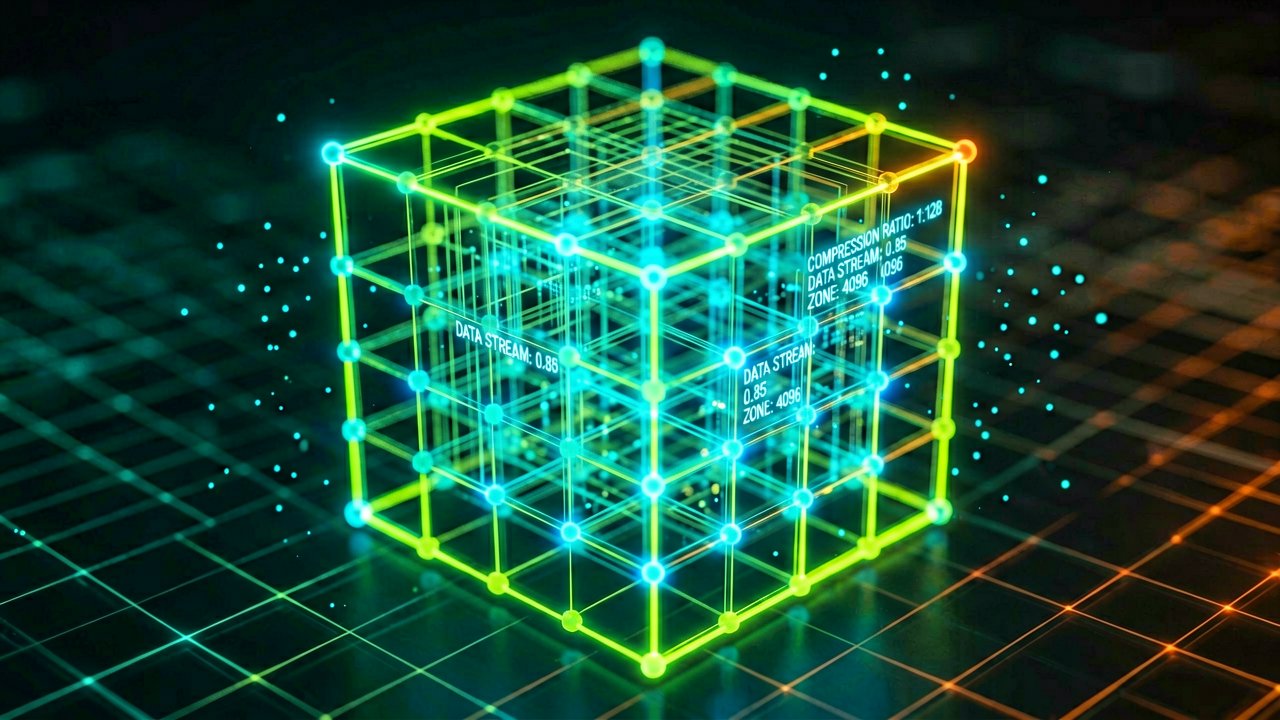
For decades, climate science has been a prisoner of computational limits. Traditional General Circulation Models (GCMs) are marvels of physics, but they are notoriously "heavy." Simulating a century of global climate change at high resolution can take months of supercomputer time, creating a bottleneck for policymakers who need rapid, ensemble-based projections to prepare for a warming world.
Enter the era of the climate emulator. Instead of solving grueling partial differential equations for every cubic meter of air, researchers are turning to machine learning to "mimic" the behavior of these complex systems. The goal isn't to replace physics, but to approximate it with enough accuracy and speed to make real-time experimentation possible.
The biggest hurdle in this transition is the sheer dimensionality of climate data. High-resolution global grids contain millions of variables across time and space. Processing this data directly with standard neural networks is like trying to shove an ocean through a garden hose; the system quickly runs out of memory and processing power, a problem known as the "curse of dimensionality."
The Power of Field-Space Compression
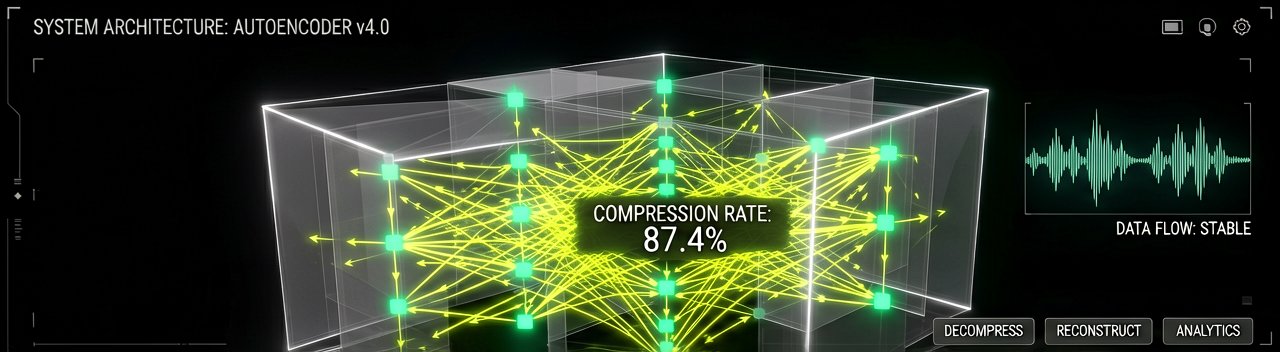
To solve this, scientists are deploying a specific architecture known as the field-space autoencoder. At its core, an autoencoder is a dual-component system: an encoder that compresses high-dimensional input into a tiny "latent space" and a decoder that reconstructs the original data. By focusing on "field-space"—the spatial relationships across the entire globe—these models learn to identify the most critical patterns of atmospheric flow.
This approach allows for massive data reduction without losing the essential physics. According to research highlights from Nature, these deep learning frameworks can represent complex atmospheric states using only a fraction of the original data footprint, effectively creating a "zip file" for the planet's weather patterns.
Once the climate state is compressed into this latent space, the emulator can perform its "forecasting" step much more efficiently. Because it is working with a simplified mathematical representation rather than a multi-million-point grid, the computational cost drops off a cliff. This is the secret sauce behind the next generation of scalable climate tools.
Scalability and the Path to Interactive Science
Scalability is the watchword here. Traditional models don't scale down well to smaller hardware, but an autoencoder-based emulator can often run on a single high-end GPU. This democratization of climate modeling means smaller research institutions can run their own sophisticated simulations without needing a Tier-1 supercomputing center.
The speed gains are staggering. Recent developments discussed by the ECMWF suggest that AI-driven weather and climate models can produce forecasts orders of magnitude faster than conventional methods, while maintaining competitive accuracy for medium-range horizons.
However, the journey isn't without its critics. Purely data-driven models sometimes ignore the fundamental laws of thermodynamics, leading to "unphysical" results—like rain falling when there is no moisture. To counter this, researchers are integrating "physics-informed" constraints into the autoencoder's loss function, forcing the AI to respect gravity, mass conservation, and energy balance.
Bridging the Gap with Hybrid Models
The industry is now moving toward a hybrid approach. In these systems, the field-space autoencoder handles the spatial heavy lifting, while physical kernels ensure the results stay grounded in reality. This synergy is what makes the technology truly "scalable" for long-term climate projections rather than just short-term weather snapshots.
As documented by technical reports on arXiv, the use of Variational Autoencoders (VAEs) in this space has also helped quantify uncertainty. By treating the latent space as a probability distribution, scientists can generate multiple "possible futures," providing a clearer picture of the risks associated with extreme weather events.
The implications for disaster preparedness are profound. If we can run 10,000 different climate scenarios in the time it used to take to run one, we can better identify the statistical outliers—the "black swan" events that cause the most devastation. This predictive power is exactly what urban planners and insurance companies are clamoring for.
Looking ahead, the integration of these emulators into global climate frameworks seems inevitable. As noted by the NOAA, the push for more integrated AI solutions is part of a broader strategy to enhance environmental intelligence and provide faster, more actionable data to the public.
Ultimately, field-space autoencoders represent more than just a clever coding trick; they are a fundamental shift in how we process the Earth's complexity. By teaching machines to see the "big picture" of our atmosphere, we are finally building a weather machine that can keep pace with a rapidly changing world.
The road from experimental code to global standard is still long, but the foundation is solid. With the backing of major tech players and atmospheric research centers, as highlighted by Google Research, the dream of a real-time, high-fidelity digital twin of the Earth is closer than ever to becoming a reality.
The Weather Machine: How Field-Space Autoencoders Are Revolutionizing Climate Emulation
For decades, climate science has been a prisoner of computational limits. Traditional General Circulation Models (GCMs) are marvels of physics, but they are notoriously "heavy." Simulating a century of global climate change at high resolution can take months of supercomputer time, creating a bottleneck for policymakers who need rapid, ensemble-based projections to prepare for a warming world.
Enter the era of the climate emulator. Instead of solving grueling partial differential equations for every cubic meter of air, researchers are turning to machine learning to "mimic" the behavior of these systems. The goal isn't to replace physics, but to approximate it with enough accuracy and speed to make real-time experimentation possible.
The biggest hurdle in this transition is the sheer dimensionality of climate data. High-resolution global grids contain millions of variables across time and space. Processing this data directly with standard neural networks is like trying to shove an ocean through a garden hose; the system quickly runs out of memory and processing power, a problem known as the "curse of dimensionality."
The Power of Field-Space Compression
To solve this, scientists are deploying a specific architecture known as the field-space autoencoder. At its core, an autoencoder is a dual-component system: an encoder that compresses high-dimensional input into a tiny "latent space" and a decoder that reconstructs the original data. By focusing on "field-space"—the spatial relationships across the entire globe—these models learn to identify the most critical patterns of atmospheric flow.
This approach allows for massive data reduction without losing the essential physics. According to research highlights from Nature, these deep learning frameworks can represent complex atmospheric states using only a fraction of the original data footprint, effectively creating a "zip file" for the planet's weather patterns.
Once the climate state is compressed into this latent space, the emulator can perform its "forecasting" step much more efficiently. Because it is working with a simplified mathematical representation rather than a multi-million-point grid, the computational cost drops off a cliff. This is the secret sauce behind the next generation of scalable climate tools.
Scalability and the Path to Interactive Science
Scalability is the watchword here. Traditional models don't scale down well to smaller hardware, but an autoencoder-based emulator can often run on a single high-end GPU. This democratization of climate modeling means smaller research institutions can run their own sophisticated simulations without needing a Tier-1 supercomputing center.
The speed gains are staggering. Recent developments discussed by the ECMWF suggest that AI-driven weather and climate models can produce forecasts orders of magnitude faster than conventional methods, while maintaining competitive accuracy for medium-range horizons.
However, the journey isn't without its critics. Purely data-driven models sometimes ignore the fundamental laws of thermodynamics, leading to "unphysical" results—like rain falling when there is no moisture. To counter this, researchers are integrating "physics-informed" constraints into the autoencoder's loss function, forcing the AI to respect gravity, mass conservation, and energy balance.
Bridging the Gap with Hybrid Models
The industry is now moving toward a hybrid approach. In these systems, the field-space autoencoder handles the spatial heavy lifting, while physical kernels ensure the results stay grounded in reality. This synergy is what makes the technology truly "scalable" for long-term climate projections rather than just short-term weather snapshots.
As documented by technical reports on arXiv, the field-space autoencoder achieves up to 64x higher compression efficiency while maintaining superior accuracy compared to standard convolutional models. This robust foundation enables downstream generative emulation that preserves the complex physical structure of the atmosphere.
The implications for disaster preparedness are profound. If we can run 10,000 different climate scenarios in the time it used to take to run one, we can better identify the statistical outliers—the "black swan" events that cause the most devastation. This predictive power is exactly what urban planners and insurance companies are clamoring for.
Looking ahead, the integration of these emulators into global climate frameworks seems inevitable. As noted by NOAA, the push for more integrated AI solutions is part of a broader strategy to enhance environmental intelligence and provide faster, more actionable data to the public.
Ultimately, field-space autoencoders represent more than just a clever coding trick; they are a fundamental shift in how we process the Earth's complexity. By teaching machines to see the "big picture" of our atmosphere, we are finally building a weather machine that can keep pace with a rapidly changing world.
The road from experimental code to global standard is still long, but the foundation is solid. With the backing of major tech players and atmospheric research centers, as highlighted by Google Research, the dream of a real-time, high-fidelity digital twin of the Earth is closer than ever to becoming a reality.
Under the Hood: The shift toward field-space autoencoders isn't just an academic exercise; it is a high-stakes race involving the world’s most powerful tech conglomerates and atmospheric research centers. At the center of this movement is the realization that traditional numerical weather prediction is hitting a wall of diminishing returns. Companies like NVIDIA and Google have pivoted their massive computational resources toward solving this, recognizing that the "Digital Twin" of the Earth is the ultimate test of their hardware’s capabilities.
NVIDIA’s Earth-2 initiative serves as a primary example of this industrial-scale commitment. By utilizing nested autoencoder architectures, they are attempting to create a sub-kilometer scale simulation of the planet. This isn't just about pixels; it's about the "FourCastNet" architecture, which uses Fourier Neural Operators to process the compressed representations generated by field-space encoders. This allows for the simulation of extreme weather events with a fraction of the energy consumption required by traditional supercomputers.
Google Research has also entered the fray with GraphCast, a model that relies heavily on efficient spatial encoding. While their approach utilizes graph neural networks, the underlying philosophy remains the same: project the massive, multi-variable field of the atmosphere into a structured, manageable space where learning can occur. By doing so, they’ve managed to outperform the industry-standard HRES model in several key metrics, proving that AI isn't just a supplement—it's a superior alternative in specific forecasting windows.
The Architecture of the Hidden Layers
Deep within these models, the "field-space" focus specifically addresses the non-local nature of weather. A pressure system in the Atlantic can influence rainfall in Europe days later. Traditional convolutional layers often struggle with these long-distance dependencies because they only "see" neighboring pixels. Field-space autoencoders, however, use global attention mechanisms to ensure that the compressed latent code captures these planetary-scale teleconnections.
This technical nuance is what allows for "scalability." In this context, scalability refers to the model's ability to maintain accuracy as the resolution of the input data increases. By learning a hierarchy of features—from local turbulence to global jet streams—the autoencoder ensures that the emulator doesn't get bogged down by noise as we feed it more detailed data from new satellite constellations.
The European Centre for Medium-Range Weather Forecasts (ECMWF) has been instrumental in providing the "ground truth" data required to train these encoders. Their ERA5 dataset, a comprehensive record of the global climate from 1940 to the present, serves as the primary textbook for these AI models. Without this high-quality historical record, the autoencoders would have nothing but "blurry" visions of how the atmosphere truly moves.
Commercial Stakes and Policy Implications
Beyond the tech giants, a new wave of "Climate Tech" startups is emerging to commercialize these emulators. Companies are looking to sell "Climate-as-a-Service," providing hyper-local, rapid-fire risk assessments for agriculture, logistics, and renewable energy sectors. These businesses rely on the speed of field-space autoencoders to provide instant feedback to farmers or grid operators during volatile weather shifts.
From a policy perspective, the speed of these emulators changes the game for international climate negotiations. During events like COP summits, negotiators often have to rely on reports based on simulations that are years old. Scalable emulators allow for "on-the-fly" scenario testing, where a diplomat could theoretically ask, "What happens if we hit net-zero by 2045 instead of 2050?" and receive a visualized atmospheric response in minutes.
However, the rapid involvement of private tech companies in a field traditionally dominated by public weather services raises questions about data sovereignty. If the most accurate climate emulators are proprietary and sit behind a corporate paywall, the global south—which is most vulnerable to climate change—might find itself at a disadvantage. This has led to a push for open-source AI frameworks to ensure the technology remains a public good.
The Future of the Latent Atmosphere
Looking forward, the next milestone for field-space autoencoders is "multi-modal" integration. This involves teaching the encoder to process not just atmospheric data, but also ocean currents, soil moisture, and even human-driven carbon emissions simultaneously. By compressing all these different "fields" into a unified latent space, we can create a truly holistic model of the Earth system.
We are also seeing a move toward "Generative" autoencoders. Instead of just reconstructing a single state, these models can generate an ensemble of possible outcomes, much like a more sophisticated version of the AI used to generate images. This helps scientists visualize the "spread" of uncertainty, making it easier to communicate the likelihood of a catastrophic heatwave or hurricane to the general public.
As these technologies mature, the line between a "simulation" and an "emulation" will continue to blur. We are moving toward a world where our digital representation of the planet is so fast and so accurate that it becomes our primary tool for survival. The field-space autoencoder is the engine driving this transition, turning the chaotic noise of the wind and rain into a language that our silicon-based tools can finally understand and predict.
Reading Between the Lines: The emergence of field-space autoencoders is not merely a performance upgrade; it is a fundamental reconfiguration of the global weather prediction economy. By drastically lowering the computational barrier to entry, these models are disrupting the "supercomputing monopoly" held by a few wealthy nations. We are witnessing the pivot from a world where weather intelligence was defined by hardware brute force to one where it is governed by the elegance of architectural compression.
This efficiency has direct market consequences. The global AI-based climate modeling market is projected to reach approximately $1.48 billion by 2032, according to analysts at KBV Research. This growth is fueled by a desperate need for real-time risk assessment in sectors that can no longer wait for weekly supercomputer cycles. When high-resolution forecasts can be run on-site, the "middleman" of centralized meteorology faces a period of intense re-invention.
However, a critical "warning shot" has been fired by recent academic research. A study highlighted by Carbon Brief indicates that while AI models excel at average conditions, they still tend to underperform compared to traditional models when predicting record-breaking extreme events. This suggests that the "latent space" of autoencoders might be too efficient for its own good, smoothing over the chaotic outliers that actually matter most to public safety.
The Paradox of Accuracy and Generalization
Analytically, this presents a "compression paradox." The more we compress the climate state to gain speed, the more we risk losing the fine-scale "noise" that triggers catastrophic events. Field-space autoencoders attempt to bridge this by using spherical attention, but the fundamental tension remains. We are essentially trading a sliver of physical absolute for a massive leap in operational utility.
Furthermore, the "democratization" of these tools is a double-edged sword. While it empowers local agencies, it also enables the rise of "shadow forecasts" where private entities might produce conflicting weather intelligence for profit. Without a unified standard for AI-based climate emulation, we risk a fragmented landscape of "private climates" that could undermine coordinated disaster response efforts.
The role of public-private partnerships is thus becoming the defining theme of the decade. Groups like the World Meteorological Organization (WMO) are now coordinating intercomparison projects to benchmark these AI emulators against physical models. The goal is to ensure that "fast" doesn't become a synonym for "fictional" when it comes to the safety of millions.
Closing the Loop on Environmental Intelligence
We must also consider the environmental irony of the technology. Training massive autoencoders on decades of global data consumes significant energy—the very thing driving climate change. However, reports from institutions like UNESCO suggest that a shift toward compact, efficient AI models could reduce operational energy use by up to 90%. In this light, the field-space autoencoder is a green technology in its own right, optimizing the "brainpower" of our climate response.
The ultimate success of this technology won't be measured in compression ratios, but in the minutes of lead time added to a flood warning or the accuracy of a drought projection in sub-Saharan Africa. The shift to field-space representations is the technical bridge that allows us to finally move from reactive disaster management to proactive planetary stewardship.
As we integrate these models into "foundation models" for the Earth, the atmosphere becomes a searchable, predictable database. The analytical takeaway is clear: the future of climate science is not just about understanding the weather, but about building the most efficient mathematical summary of it possible. The autoencoder isn't just watching the sky; it's learning how to rewrite the rules of how we see it.
"We’ve finally built a mathematical 'shorthand' for the sky that runs 1,000 times faster than the real thing. It’s the ultimate productivity hack: we can now predict a century of climate change in the time it takes to brew a decent espresso—though, given the results, you might want to make that a double shot."
Artūras Malašauskas is an AI Systems Integrator with 20+ years of production-grade web engineering experience. He has designed, shipped, and scaled enterprise Python/PHP systems for logistics, SaaS, and public-sector clients. For the past year, he has focused exclusively on AI integrations: deploying open-source LLMs, building generative media pipelines (image, audio, video), and engineering multi-agent workflows for real production environments. His standard: reproducibility, security, cost-efficient inference—no vaporware. He documents and evaluates emerging AI tooling, separating verified capabilities from marketing noise. Technical editor at: muza-ai.eu, ai-verslas.lt, ai-naujinos.lt Connect on LinkedIn
Comments