Freshworks Launches Agentic AI Platform for IT Operations
At its annual Refresh conference in New York, Freshworks announced a unified AI service operations platform designed to address the growing gap between employee work patterns and IT support availability. The company's new Freddy AI Agent Studio enables organizations to deploy autonomous service agents in weeks rather than quarters, according to the official press release.
The urgency behind this launch stems from Freshworks' own telemetry data. Analysis of millions of service interactions revealed that 47% of all IT tickets are now submitted outside standard business hours, with 35% arriving on weekends. Response times during these periods lag by at least an hour compared to working hours, and SLA compliance drops by as much as 5%. Modern workforces operate around the clock, but IT teams remain tethered to traditional schedules.
Srini Raghavan, Chief Product Officer at Freshworks, framed the problem bluntly: "The true measure of AI's value isn't what it can do, it's what it gives back: time, focus, and the freedom for teams to stop fixing yesterday's problems and start building what's next." The company's solution combines service management, operations management, asset intelligence, and AI into what they're calling AI Service Operations.
The May 2026 release includes four core components. Freddy AI Agent Studio lets teams build AI workforces that execute end-to-end service work without engineering support. Prebuilt agents handle access provisioning, password resets, and policy questions. A no-code builder allows customization for any business function. The studio is available on Growth and Pro plans for Freshservice customers starting May 14.
The Model Context Protocol (MCP) Gateway enables Freddy AI to pull external context from third-party tools like Atlassian, Notion, ClickUp, and Linear without custom code. This bypasses the integration friction that typically stalls enterprise AI deployments. The gateway also includes inbound MCP, allowing users to service live Freshservice data from within their LLM of choice, such as Cursor, Claude, and Microsoft Copilot.
AI Insights and Experience Level Agreements (xLAs) shift measurement from legacy metrics to meaningful outcomes. Leaders can connect service performance directly to employee sentiment using weighted calculations and AI-driven analysis. The platform gives visibility to make faster, data-informed decisions that improve both service delivery and employee experience.
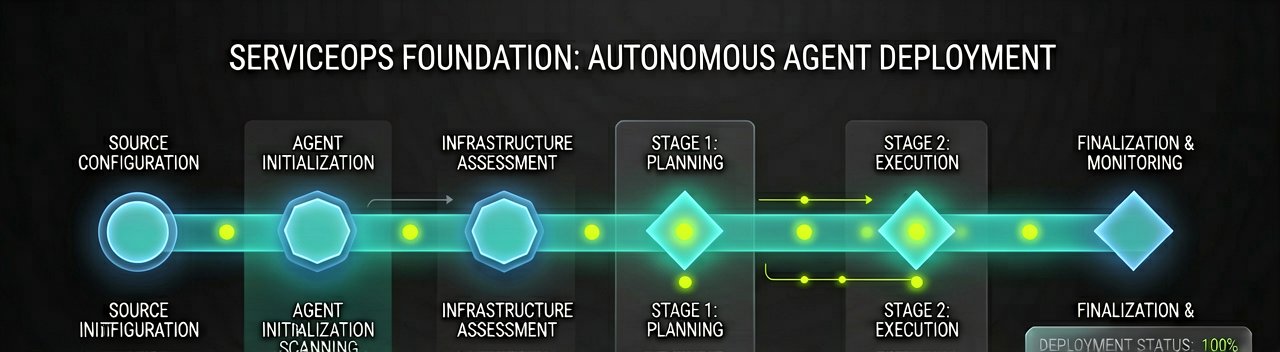
Underpinning everything is the ServiceOps foundation, which includes reimagined Freshservice IT Asset Management (ITAM) and FireHydrant incident management products. Unlike legacy platforms where data cleanup can stall progress, Freshworks' unified data layer integrates service, assets, and enterprise knowledge to give AI agents the context they need to execute agentic workflows immediately.
Customer impact is already visible. Daniel McMaster, IT Service Management Analyst at Amerisure, reported: "We used to spend an hour every morning looking at ticket trends. Now we spend three minutes with Freddy Insights—and get better data." That's the kind of time reclamation that matters when you're managing hundreds of tickets daily.
Keith Kirkpatrick, Vice President & Research Director at The Futurum Group, noted that Freshworks is positioning platform unification as a key enabler of autonomous service execution. "Freddy AI Agent Studio's combination of deployment flexibility, pre-built domain agents, and embedded governance reflects a broader market focus on moving agentic AI initiatives from pilot projects into production environments."
The physical reality of this shift is tangible. Instead of clicking through multiple dashboards, waiting for human handoffs, or hunting for someone on call at 2 AM, employees get instant resolution through Microsoft Teams, Slack, or employee portals. The AI agents connect to HRIS systems like Workday and Rippling to execute secure enterprise workflows from onboarding to payroll.
Enterprise Times reported that for businesses like Carrefour Belgium, which serves 700,000 customers with operations running through the night, an IT glitch can lead to empty shelves. Stijn Stabel, from Carrefour Belgium, noted the stakes clearly. After-hours means less support, often with IT teams on call rather than at their desks. AI, with the ability to deliver services 24x7x365, fills that gap.
The Futurum Group report cited by Freshworks claims enterprises replacing costly, complex legacy ITSM platforms can achieve 168% ROI over three years. Whether that holds true across different organization sizes remains to be seen (though the math looks compelling on paper).
What's notable here is the emphasis on governance and control. Freshworks isn't selling a black box. Teams manage agent behavior with role-based access, audit trails, and deployment guardrails. Analytics and feedback loops allow continuous improvement over time. This addresses a real concern: enterprises want AI speed without losing oversight.
The pricing structure matters too. Email AI agents are available on Pro and Enterprise plans for Freshdesk beginning May 29. The no-code approach means IT teams don't need to wait on engineering support to deploy custom agents. That's a significant friction point removed from the adoption curve.
Legacy providers struggle with this because their platforms were built before AI existed. Service, operations, and assets lived in separate worlds with their own data, workflows, and languages. Freshservice brings those worlds together on one platform with a shared data layer. Teams work from the same source of truth for tickets, assets, incidents, services, and workflows.
Whether organizations actually pay for this transformation remains the real question. The technology is ready, the use cases are documented, and the ROI projections exist. But enterprise buyers have been burned before by AI promises that delivered chatbots instead of actual autonomy. The difference here is the unified foundation—AI grounded in real service data rather than layered on top of fragmented systems.
Time will tell if the deployment speed claims hold up in practice. Weeks instead of quarters sounds aggressive, but the no-code builder and prebuilt workflows suggest Freshworks has thought through the implementation friction. The real test comes when companies actually try to deploy these agents across complex, multi-departmental environments.
For now, the announcement positions Freshworks differently from competitors still stitching together point solutions. The platform unification approach, combined with domain-specialized AI trained on years of service data, gives them a structural advantage. Whether that translates to market share gains depends on execution—and whether IT leaders actually trust autonomous agents with their infrastructure.
Artūras Malašauskas is an AI Systems Integrator with 20+ years of production-grade web engineering experience. He has designed, shipped, and scaled enterprise Python/PHP systems for logistics, SaaS, and public-sector clients. For the past year, he has focused exclusively on AI integrations: deploying open-source LLMs, building generative media pipelines (image, audio, video), and engineering multi-agent workflows for real production environments. His standard: reproducibility, security, cost-efficient inference—no vaporware. He documents and evaluates emerging AI tooling, separating verified capabilities from marketing noise. Technical editor at: muza-ai.eu, ai-verslas.lt, ai-naujinos.lt Connect on LinkedIn
Comments