VCI Global Launches Strategic Gold Treasury Program With Tether Gold

VCI Global (NASDAQ: VCIG) announced a Strategic Gold Treasury Program on May 14, 2026, positioning itself to integrate physical gold holdings and Tether Gold (XAUT) into its capital allocation framework. The initiative represents the company's latest attempt to diversify treasury reserves through real-world asset structures, though execution remains subject to multiple contingencies.
The press release, distributed via Globe Newswire, describes the program as a long-term treasury framework designed to enhance balance sheet flexibility. Management emphasized that implementation will be phased and conditional on market conditions, financing availability, operational readiness, and regulatory requirements.
Stock Titan's analysis of the announcement notes that VCIG shares gained 2.77% following the news, with a peak intraday move of +5.2%. The stock was trading at $0.82 at the time of reporting. This reaction contrasts sharply with the company's historical pattern around crypto-tagged announcements, which averaged a -6.18% move over the past year.
That historical volatility matters. Over the last six months, VCIG's crypto-related news has produced wildly inconsistent market responses. A November 2025 Tether strategic stake announcement triggered a 26.6% selloff. An October 2025 gold-backed platform plan generated an 11.5% gain. The pattern suggests investors remain skeptical about execution risk, regardless of how strategically positive the framing becomes.
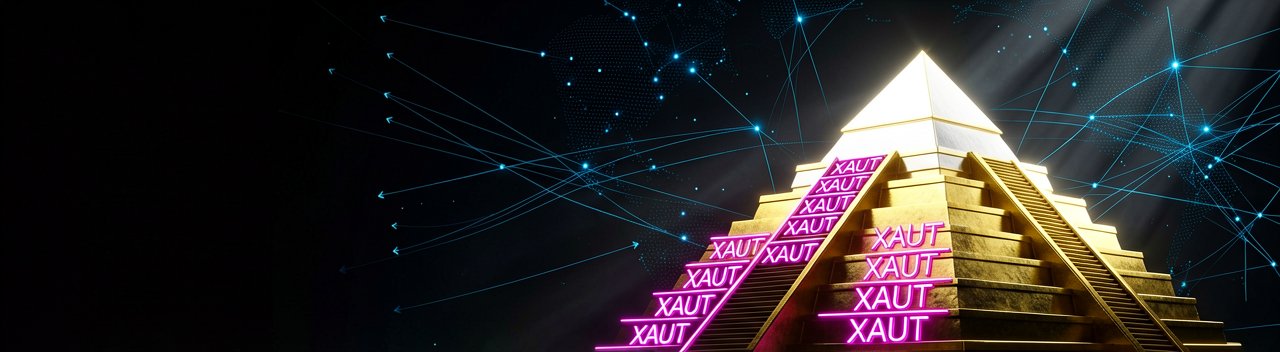
The treasury program itself hinges on two asset classes: physical gold bars and XAUT tokens. Tether Gold is a gold-backed digital asset issued by Tether, the same entity behind USDT, the largest stablecoin by market capitalization. Each XAUT token represents ownership of physical gold held in custody arrangements backed by allocated reserves, according to issuer disclosures and periodic attestation reports.
For treasury teams, this creates a dual-layer structure. Physical gold requires vault access, insurance, and custody agreements—tangible logistics that involve shipping containers, security protocols, and audit trails. XAUT offers blockchain-based settlement, which means clicking through a wallet interface rather than coordinating with a vault operator (though the underlying gold still sits somewhere in a vault, presumably). The friction between these two realities—digital convenience versus physical custody—defines the operational complexity here.
VCIG's broader platform strategy centralizes AI-enabled execution, standardized KPI frameworks, and strategic capital allocation across subsidiaries and portfolio companies. The gold treasury program fits into this architecture as a potential reserve asset structure within the evolving real-world asset landscape. The company operates across advisory, AI, digital infrastructure, energy, automotive, and consumer sectors.
Regulatory context adds another layer of uncertainty. VCI Global maintains an active F-3 shelf registration dated March 30, 2026, allowing up to 10,515,886 ordinary shares for resale by Alumni Capital LP. The company does not receive proceeds from Alumni's resales but would receive funds if convertible notes are converted or warrants exercised, implying potential future dilution tied to these instruments.

Management commentary in the press release frames the program as disciplined treasury management and long-term reserve diversification. The language is characteristically cautious: "may enhance," "subject to market conditions," "internal approvals." These qualifiers appear repeatedly throughout the announcement, suggesting the company is aware of the gap between strategic intent and operational reality.
Industry analysts tracking the move note that VCIG's crypto-tagged history shows a progression from launching a gold-backed crypto-fiat platform to deeper Tether-linked digital-treasury structures and a large gold-backed RWA consultancy mandate. Today's gold-treasury program continues that evolution, but the market's mixed reception to previous announcements raises questions about whether investors will reward this iteration.
The real-world asset sector has seen significant interest from institutional players seeking alternatives to traditional reserve frameworks. Gold-backed digital assets offer liquidity advantages over physical holdings while maintaining exposure to the underlying commodity. However, the custody chain remains opaque for most retail investors, and regulatory clarity varies significantly across jurisdictions.
VCIG's approach positions the company at the intersection of traditional treasury management and blockchain-based financial infrastructure. Whether this convergence translates into durable balance sheet strength depends on execution speed, regulatory approvals, and the company's ability to navigate the operational complexities of managing both physical and digital gold reserves simultaneously.
Market participants will likely watch for concrete milestones: actual gold purchases, XAUT acquisition volumes, and disclosure of custody arrangements. Until then, the program remains a strategic framework rather than an operational reality. The stock's +2.77% gain reflects cautious optimism, but history suggests that optimism alone doesn't guarantee sustained price appreciation.
Whether this treasury diversification actually strengthens VCIG's balance sheet or becomes another line item in a series of ambitious announcements remains to be seen. Investors who remember the 26.6% selloff following the November Tether stake announcement might approach this news with appropriate skepticism. The difference between a strategic framework and executed treasury management is measured in actual gold bars and verified token holdings, not press releases.
The market will decide if this is substance or another strategic pivot that looks better on paper than in practice. Until then, the gold bars stay in the vault and the tokens stay on the blockchain—neither of which directly translates to shareholder value without execution.
Artūras Malašauskas is an AI Systems Integrator with 20+ years of production-grade web engineering experience. He has designed, shipped, and scaled enterprise Python/PHP systems for logistics, SaaS, and public-sector clients. For the past year, he has focused exclusively on AI integrations: deploying open-source LLMs, building generative media pipelines (image, audio, video), and engineering multi-agent workflows for real production environments. His standard: reproducibility, security, cost-efficient inference—no vaporware. He documents and evaluates emerging AI tooling, separating verified capabilities from marketing noise. Technical editor at: muza-ai.eu, ai-verslas.lt, ai-naujinos.lt Connect on LinkedIn
Comments