LLNL's 'STEM with Phones' Workshop Integrates AI for High School Physics Research
Lawrence Livermore National Laboratory is shifting how high school students approach scientific research. The facility's STEM with Phones summer workshop now integrates artificial intelligence directly into student investigations, replacing spreadsheet-based analysis with AI-generated code for data processing.
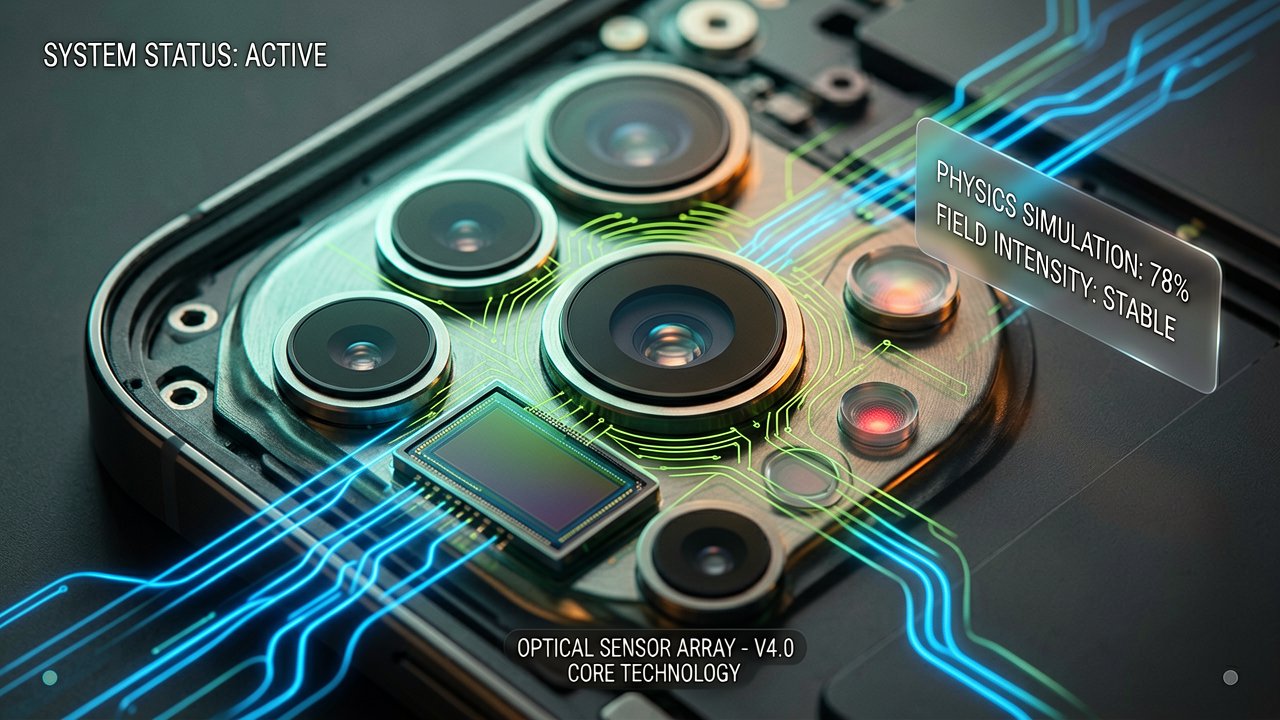
According to the program's official documentation, the week-long workshop runs July 6–10, 2026, at the LLNL campus in Livermore, California. Participants use smartphones equipped with accelerometers, gyroscopes, pressure transducers, and cameras to measure physical phenomena ranging from human heart movement to GPS satellite precision.
David Rakestraw, the program lead, describes a fundamental shift in methodology. Two years ago, students relied on smartphone sensors paired with spreadsheets for analysis. Last year, AI began appearing in the curriculum. This year, AI serves as an instrumental component throughout student investigations, with spreadsheet analysis nearly eliminated from the workflow.
The program's evolution produced a concrete research outcome. Daniel Kim and Tsimur Havarko, both from Acalanes High School in Lafayette, California, designed a project to measure Earth's rotation rate using observational astronomy. The pair captured 945 photographs of the night sky, then used AI to develop a custom application that blended the images into a single composite showing star trails.
Measuring those star arcs manually would have been time-consuming. Instead, the students created additional code to calculate arc length and distance from the North Star, deriving Earth's angular velocity from the data. Rakestraw noted the software totaled approximately 1,000 lines of code—work that would have taken professional software engineers several weeks to complete.
This illustrates how high school students with no coding experience are able to create sophisticated analysis tools, which completely changes the kinds of problems they're able to investigate (the real bottleneck in student research has always been analysis time, not data collection).
Rakestraw served as mentor, collaborating with the students to evaluate output validity against fundamental physics principles. He emphasized that the problem remained challenging, but AI dramatically expanded what was possible within the time frame and experience constraints of a student-led project.
The study was published in The Physics Teacher, a peer-reviewed journal, as an example of cognitive-activated learning with AI augmentation. The publication validates the approach as more than a classroom exercise—it represents a replicable framework for science education.
For Rakestraw, the project's success offered a proof of principle for the new approach to science education in the age of AI. Educators can help students accomplish incredible research by teaching students to use these tools effectively.
Application requirements for the 2026 cohort include entering grades 10–12 in Fall 2026, being 15 years or older by workshop start, maintaining a 3.3 cumulative GPA, and meeting National Defense Authorization Act Section 3112 eligibility requirements. Students must bring their own laptops and smartphones, though lunch and snacks are provided at no cost.
The physical reality of the workshop involves students holding phones up to the night sky, waiting for long exposures to capture star motion, then watching AI-generated code process hundreds of images in minutes rather than hours. The tactile experience of pointing a device at the stars, combined with the immediate feedback from automated analysis, creates a different kind of engagement than traditional lab equipment.
Whether this model scales beyond a single national laboratory remains uncertain. The program requires significant mentorship infrastructure, and not every school has access to a physicist willing to validate AI-generated analysis against fundamental principles. The technology is accessible, but the human oversight isn't.
Students who successfully navigate the application process will find themselves using tools that blur the line between consumer device and scientific instrument. Whether that distinction matters to their future careers is less important than whether they can think critically about the output they receive.
Applications open January 19, 2026, and close February 26, 2026. Space is limited and competitive. The real question isn't whether AI can do the analysis—it's whether students will learn to question what the AI tells them.
The program is free, but students must arrange their own transportation to and from the facility. No letter of recommendation is required, though transcripts are mandatory.
Artūras Malašauskas is an AI Systems Integrator with 20+ years of production-grade web engineering experience. He has designed, shipped, and scaled enterprise Python/PHP systems for logistics, SaaS, and public-sector clients. For the past year, he has focused exclusively on AI integrations: deploying open-source LLMs, building generative media pipelines (image, audio, video), and engineering multi-agent workflows for real production environments. His standard: reproducibility, security, cost-efficient inference—no vaporware. He documents and evaluates emerging AI tooling, separating verified capabilities from marketing noise. Technical editor at: muza-ai.eu, ai-verslas.lt, ai-naujinos.lt Connect on LinkedIn
Comments