Hyundai's New Grandeur Debuts With Generative AI Assistant Gleo
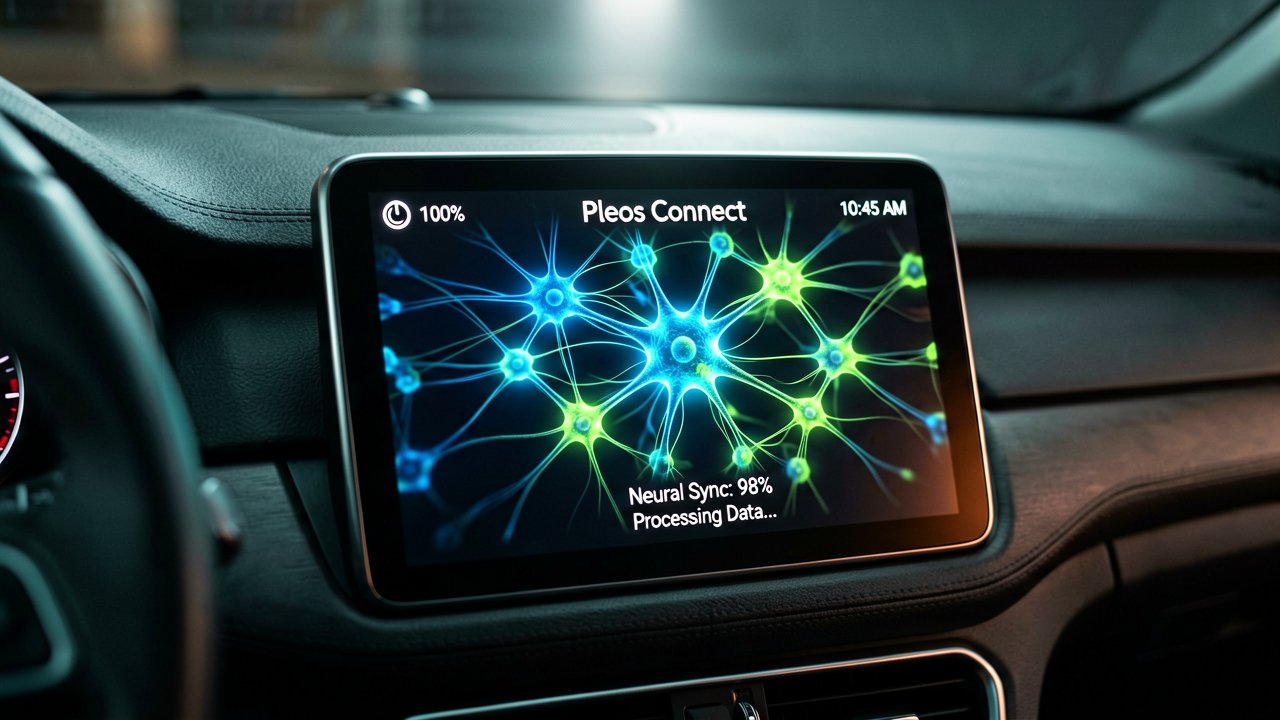
Hyundai Motor Company has officially launched The New Grandeur in South Korea, introducing what the automaker calls its first mass-produced infotainment system featuring a generative AI voice assistant. The updated seventh-generation flagship sedan arrives with Pleos Connect, an Android Automotive-based platform that integrates Gleo AI, a large language model-powered agent developed by Hyundai's software subsidiary 42dot.
The vehicle was announced on May 14, 2026, following a media unveiling the previous day at the Walkerhill Hotel in Seoul. This marks a significant shift in how Hyundai approaches software-defined vehicles, moving beyond traditional button-and-knob interfaces toward conversational control. According to Maeil Business Newspaper, the system understands natural, continuous conversations and supports vehicle control, knowledge searches, schedule recommendations, and emotional conversation.
At the center of the cabin sits a 17-inch display with a 16:9 aspect ratio, replacing the conventional instrument cluster setup. Drivers can check speed, route, navigation, and media information on a single screen through this tablet-like interface. The design choice mirrors approaches taken by Tesla and Chinese automakers, though Hyundai frames it as inheriting the model's premium heritage while embracing SDV technologies.
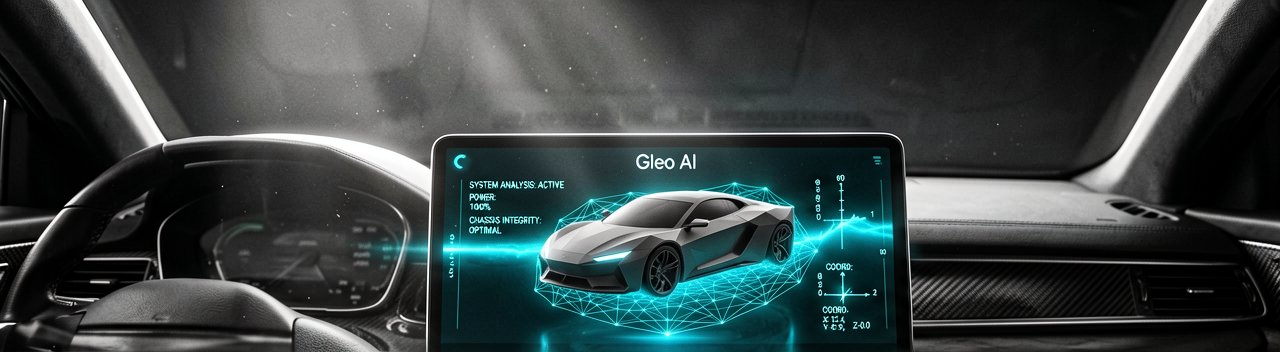
Gleo AI's capabilities extend beyond simple command recognition. The assistant can conduct knowledge searches, recommend travel itineraries, and engage in contextual conversations. For instance, saying "Gleao, it's too dark" automatically adjusts interior lighting brightness, while asking "Where is the nearest Starbucks?" displays candidate locations on the navigation system. Hyundai plans to expand the number of AI-controllable apps and update functionalities over time (a promise we've heard before, but the LLM foundation is genuinely different).

The exterior design emphasizes the shark nose shape, a key part of Hyundai's sedan design identity. The straight Horizon Lamp has been redesigned into a thinner and longer form, reinforcing a futuristic image. The front grille features a unified mesh pattern, replacing the previous two-part design. The front overhang measures 15mm longer than the previous model, creating a sharper impression.
Inside, the interior was designed around a comfortable lounge feel. Hyundai created a living-room-like atmosphere by applying a spacious second-row area and furniture-inspired design. The New Grandeur introduces an electric air vent for the first time. Instead of conventional climate-control vents, it uses a display-based integrated control system that allows users to adjust airflow volume and direction. It also supports various climate functions, including passenger focus mode and automatic circulation mode.
The Smart Vision Roof represents another notable change. Using polymer-dispersed liquid crystal film, it can adjust roof transparency across six zones. Without a mechanical blind, it delivers both openness and heat-blocking performance. The system allows transparency levels across six roof sections to be individually adjusted, delivering improved openness, quiet operation, and enhanced thermal insulation.
Advanced driver-assistance features have also been upgraded. Memory Reverse Assist remembers the path the vehicle has traveled and automatically controls steering when reversing. The new Grandeur becomes Hyundai's first internal combustion vehicle to feature pedal misapplication safety assist, which detects unintended acceleration caused by drivers mistakenly pressing the accelerator instead of the brake at low speeds or while stopped. The system automatically limits power delivery and applies braking to help prevent accidents.
The New Grandeur will be offered in four powertrain lineups: gasoline 2.5, gasoline 3.5, LPG 3.5, and gasoline 1.6 turbo hybrid. The hybrid model is the first sedan to adopt Hyundai Motor Group's next-generation hybrid system, which combines the drive motor and starter motor in parallel to improve both performance and fuel efficiency. The carmaker will soon unveil the vehicle's fuel efficiency after receiving certification from the Ministry of Trade, Industry and Resources.
Prices start at 41.85 million won for the gasoline 2.5 model, 44.29 million won for the gasoline 3.5 model, 48.64 million won for the hybrid model, and 43.31 million won for the LPG model. This represents a 3.87 million won increase from the previous model for the base gasoline version, with the hybrid model up 5.1 million won.
Since its debut in July 1986, the Grandeur has remained at the forefront of Korea's premium sedan market for nearly four decades. Hyundai Motor hopes to redefine the flagship sedan segment by integrating its Pleos Connect infotainment system with a newly developed hybrid system. The model is positioned as Korea's representative flagship sedan.
The Android-based automotive operating system supports wireless over-the-air updates for major vehicle functions. This capability is essential for maintaining the AI assistant's relevance as language models evolve and new features become available. The 1st-row Monitoring System uses an inside mirror camera to check the driver's gaze and seatbelt usage.
For the first time in its class, the hybrid sedan model includes reclining and ventilated seats in the rear. The vehicle was designed not only as a means of transportation, but also as a sophisticated lifestyle space capable of delivering relaxation and digital entertainment even while stationary.
Whether the Korean market will embrace a 17-inch touchscreen over traditional controls remains an open question. The technology is impressive, but the real test comes when drivers actually need to adjust climate settings while navigating a busy intersection. Time will tell if Gleo AI's conversational interface proves more practical than a physical button in the heat of the moment.
The pricing increase reflects the added technology, but whether consumers will pay a premium for AI features that may become standard within 18 months is the real calculation Hyundai needs to make.
Artūras Malašauskas is an AI Systems Integrator with 20+ years of production-grade web engineering experience. He has designed, shipped, and scaled enterprise Python/PHP systems for logistics, SaaS, and public-sector clients. For the past year, he has focused exclusively on AI integrations: deploying open-source LLMs, building generative media pipelines (image, audio, video), and engineering multi-agent workflows for real production environments. His standard: reproducibility, security, cost-efficient inference—no vaporware. He documents and evaluates emerging AI tooling, separating verified capabilities from marketing noise. Technical editor at: muza-ai.eu, ai-verslas.lt, ai-naujinos.lt Connect on LinkedIn
Comments