AI Stock Reality Check: Nvidia, Microsoft, and Hidden Plays
The artificial intelligence investment landscape has shifted from speculation to hard infrastructure spending. Nvidia alone has committed over $40 billion in equity bets across the AI supply chain this year, according to CNBC reporting. The chipmaker's fiscal 2026 revenue hit $215.9 billion, up 65% year-over-year, with Q4 alone generating $68.1 billion in record sales.
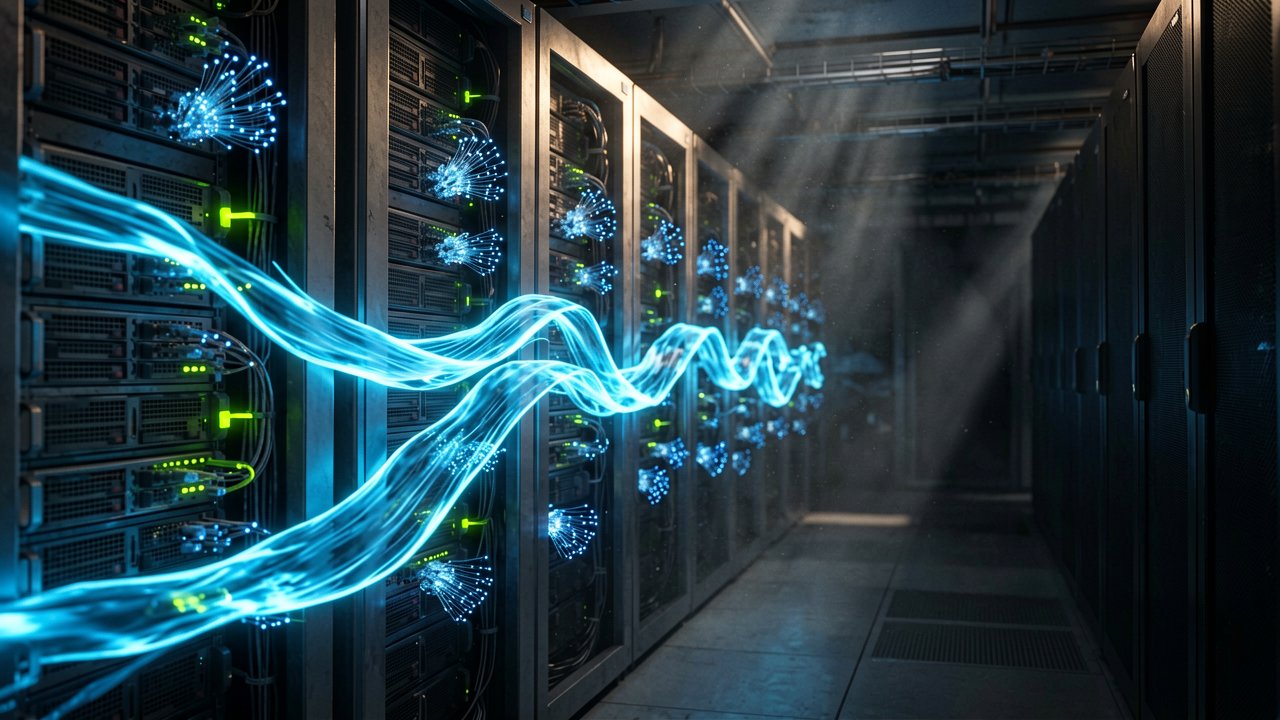
That's not just growth. That's a complete reordering of market power. Jensen Huang, Nvidia's founder and CEO, told investors the "agentic AI inflection point has arrived" during the company's earnings call. The physical reality of this shift shows up in data centers worldwide—thousands of racks humming with Blackwell and now Rubin platform chips, consuming megawatts of power to train models that generate tokens at costs dropping by orders of magnitude.
But here's the uncomfortable truth for retail investors: the obvious plays are crowded. Microsoft is spending an estimated $190 billion on AI infrastructure in 2026 alone, with cloud and AI segments now dwarfing Windows and Xbox revenue combined. The company's Intelligent Cloud division grew 30% year-over-year to $34.7 billion while its legacy products shrink in relative importance.
Analysts at Morningstar have identified a different angle. Their bottom-up analysis shows that fewer than 20 stocks qualify as pure-play AI names—companies expected to derive 50% or more of revenue from AI within five years. Of those, between 80-100% are screening as undervalued. That's counterintuitive in a market that's already priced AI into nearly everything (a problem that has plagued investors for years, frankly).

The report flags names like Oracle, Snowflake, AMD, and Broadcom as 4-star stocks with meaningful AI exposure. But the more interesting finds are less obvious: IT consulting firms like Globant, CGI, and Tata Consultancy Services will have significant AI revenue exposure in coming years. Less than 2% of AI fund managers currently hold these positions.
Hardware infrastructure remains the backbone. Dell reported 19% top-line growth to $113.5 billion last fiscal year, driven by 40% growth in its infrastructure solutions group selling AI-optimized servers. The company's Dell AI Factory platform lets organizations deploy AI without building custom solutions from scratch—something companies like McLaren, Worley, and Lowe's have already adopted.
ON Semiconductor operates in the physical layer most investors overlook. The company makes sensors, wireless antennas, and microcontrollers that convert real-world data into digital information AI systems can process. Their partnerships with EV makers like Geely and Nio, plus work with Nvidia on 800-volt power solutions for data centers, position them at the intersection of AI and automation.
Astera Labs addresses a bottleneck that emerged as AI data centers scaled. When thousands of processors need to communicate, off-the-shelf components struggle. Astera's Aries retimers, Scorpio fabric switches, and Leo memory controllers interconnect these systems, handling high-speed signals that older hardware couldn't manage efficiently.

Nvidia's investment strategy reveals the circular nature of this market. The company's $5 billion bet on Intel is now worth over $25 billion. It has invested $30 billion in OpenAI, plus significant stakes in Anthropic and xAI. Recent deals include $2.1 billion in IREN for data center capacity and $3.2 billion in Corning for optical fiber technology.
Critics have compared this to vendor financing that inflated the dot-com bubble. Matthew Bryson at Wedbush Securities noted the investments fit a "circular investment theme" that raises durability concerns. Jordan Klein at Mizuho called some deals "super smart" while noting neocloud investments "feel more questionable" because they smell like pre-funding GPU purchases.
The physical constraints are real. Data centers need power, fiber optics, cooling, and space. Microsoft announced a $5.5 billion investment in Singapore's AI infrastructure through 2029, alongside free Copilot access for 200,000 tertiary students. These aren't abstract bets—they're concrete deployments requiring construction, permits, and years of operational overhead.
For CFOs evaluating AI ROI, Microsoft research shows organizational factors account for 67% of reported AI impact versus 32% from individual behavior. Sixty-six percent of AI users say the technology lets them spend more time on high-value work, but only 26% report clear leadership alignment on AI strategy. That gap between adoption and execution matters when capital expenditures run into the billions.
Whether users actually pay for these capabilities remains the real question. The infrastructure is being built regardless, but translating compute capacity into profitable applications is where most companies will struggle. The market has priced in massive growth, yet the path from data center deployment to measurable business value remains uneven and poorly understood.
The AI stock boom isn't ending, but the easy gains are gone. Investors now need to distinguish between companies selling shovels and those actually finding gold.
Artūras Malašauskas is an AI Systems Integrator with 20+ years of production-grade web engineering experience. He has designed, shipped, and scaled enterprise Python/PHP systems for logistics, SaaS, and public-sector clients. For the past year, he has focused exclusively on AI integrations: deploying open-source LLMs, building generative media pipelines (image, audio, video), and engineering multi-agent workflows for real production environments. His standard: reproducibility, security, cost-efficient inference—no vaporware. He documents and evaluates emerging AI tooling, separating verified capabilities from marketing noise. Technical editor at: muza-ai.eu, ai-verslas.lt, ai-naujinos.lt Connect on LinkedIn
Comments