AI Tames Plasma Instabilities in Nuclear Fusion Race
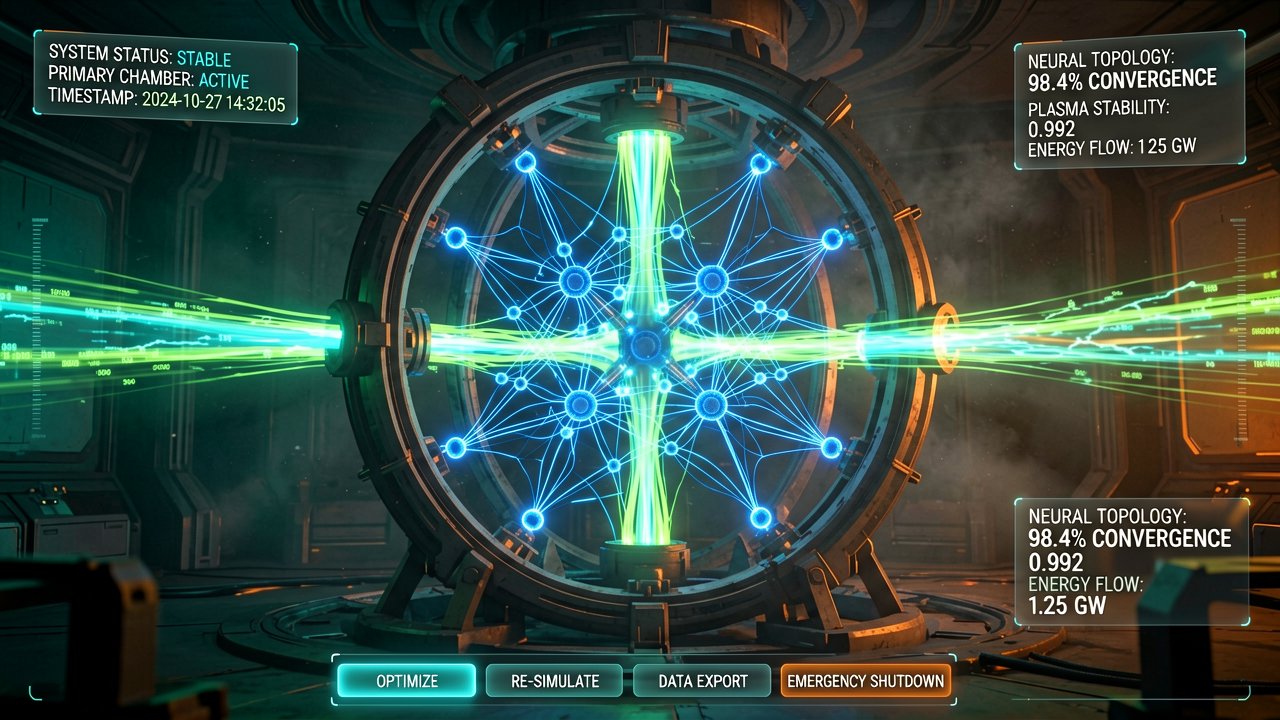
Artificial intelligence is moving from theoretical promise to practical application in nuclear fusion research, with machine learning systems now helping scientists predict and control the chaotic plasma instabilities that have long plagued tokamak reactors. The convergence of AI and fusion physics represents a critical inflection point for an energy technology that has been "30 years away" for most of the past three decades.
At the core of the challenge are tearing modes (TMs) — magnetic field instabilities that reconfigure the donut-shaped tokamak's symmetry and can grind plasma rotation to a halt before dispersing it into the reactor walls. AIP.ORG's Science & Technology article details how researchers Cristina Rea and Stuart Benjamin reviewed machine learning applications for predicting TM onset and developing AI-based plasma controllers.
"The mechanism by which TMs appear in tokamaks remains nonlinear, coupled, and chaotic," said author Benjamin in the review published in Physics of Plasmas. "But the end state of an unmitigated tearing mode is simple — a great magnetic bubble grows within the plasma like a slug, grinding rotation to a halt, before dispersing the plasma into the wall."
The physics models struggle with this stochastic complexity, but ML-empowered approaches can process large experimental tokamak datasets to identify patterns invisible to traditional analysis. This isn't about replacing physics — it's about giving scientists a telescope for phenomena that happen faster than human observation can track (frankly, the plasma doesn't wait for peer review).
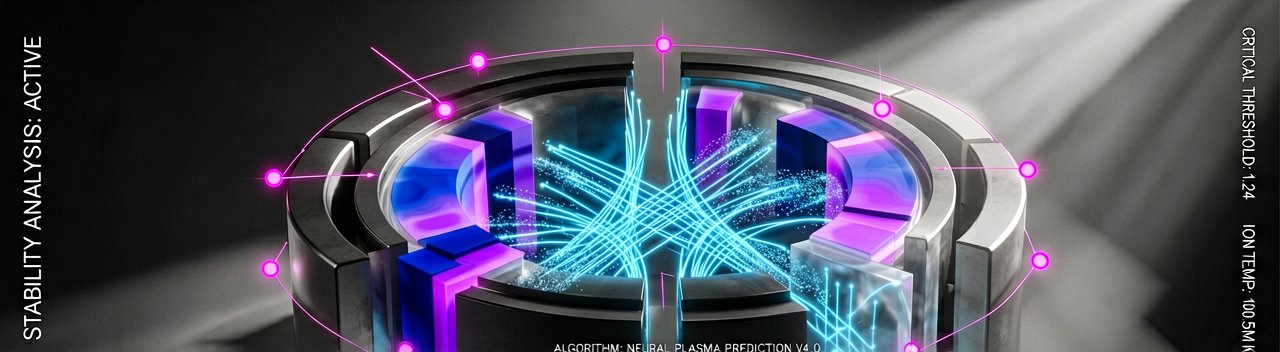
Parallel developments show AI's expanding role beyond prediction into active control. Google DeepMind announced a research partnership with Commonwealth Fusion Systems (CFS) to apply deep reinforcement learning to plasma stabilization. The collaboration builds on earlier work where DeepMind successfully controlled tokamak magnets to stabilize complex plasma shapes using academic partners at EPFL's Swiss Plasma Center.
DeepMind developed TORAX, a fast and differentiable plasma simulator that, combined with reinforcement learning or evolutionary search methods like AlphaEvolve, can explore vast numbers of operating scenarios to identify efficient pathways to net-energy production. The AI pilot will control magnetic configurations, optimize fusion power, and manage heat loads for CFS's SPARC reactor outside Boston.
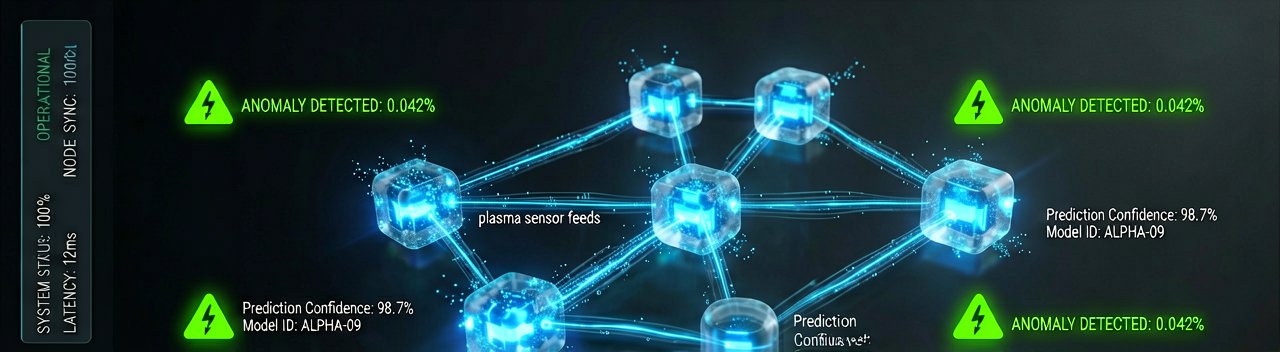
Hardware limitations remain a practical constraint. Princeton Plasma Physics Laboratory researchers developed Diag2Diag, an AI system that fills in missing sensor data by generating synthetic versions of measurements from different diagnostic types. This matters because commercial fusion systems will need far fewer diagnostics than today's experimental machines to remain economical.
"Today's experimental tokamaks have a lot of diagnostics, but future commercial systems will likely need to have far fewer," said PPPL Staff Research Scientist SangKyeun Kim. "This will help make fusion reactors more compact by minimizing components not directly involved in producing energy."
The timeline for commercialization is accelerating. The US Department of Energy published a fusion roadmap in October 2025 outlining how the technology could enter the country's energy mix by the early 2030s. A Massachusetts Institute of Technology study projects fusion generation rising from 2 TWh in 2035 to 375 TWh in 2050, reaching nearly 25,000 TWh by 2100.
CFS aims to bring its first grid-scale fusion plant online in the early 2030s and has secured off-take agreements from Google and Eni, the latter valued at more than $1 billion. The company claims it could scale to produce up to 1,000 plants per year by 2050 if materials constraints don't intervene.
Global competition is intensifying. A report from Swiss company EconSight shows China leading fusion patent filings with 67% of world-class patents between 2016 and 2023, compared to 19% in the US and 5% in Europe. At least 45 companies worldwide are pursuing commercial fusion, with more than 160 fusion facilities operational, under construction, or planned according to the International Atomic Energy Agency.
The economic stakes are substantial. As demand for clean electricity generation rises, fusion could add trillions of dollars to global gross domestic product. But the technology must prove it can operate reliably 24/7 without interruption — a standard that separates experimental physics from grid infrastructure.
Whether AI can deliver on fusion's decades-old promise depends less on algorithmic sophistication and more on whether the hardware can survive the extreme conditions inside a reactor core where temperatures exceed 100 million °C. The math might be solved, but the materials science remains stubbornly difficult.
[Editorial note: Official DOE roadmap document not available in search results; timeline claims sourced from WEF reporting with DOE attribution.]
Time will tell if the AI-assisted breakthroughs translate to commercial viability, or if fusion remains the perpetual promise of tomorrow's energy grid. Either way, the physics community now has better tools to understand why the plasma does what it does — even if the plasma itself doesn't care about our understanding.
Artūras Malašauskas is an AI Systems Integrator with 20+ years of production-grade web engineering experience. He has designed, shipped, and scaled enterprise Python/PHP systems for logistics, SaaS, and public-sector clients. For the past year, he has focused exclusively on AI integrations: deploying open-source LLMs, building generative media pipelines (image, audio, video), and engineering multi-agent workflows for real production environments. His standard: reproducibility, security, cost-efficient inference—no vaporware. He documents and evaluates emerging AI tooling, separating verified capabilities from marketing noise. Technical editor at: muza-ai.eu, ai-verslas.lt, ai-naujinos.lt Connect on LinkedIn
Comments