NYSBA: AI Exposes Legal Profession's Judgment Deficit

The New York State Bar Association published a stark assessment in May 2026: artificial intelligence in law is not creating a new crisis, it is exposing an old one. The profession spent decades mistaking operational intelligence for wisdom, and now automation is stripping away the scaffolding that hid the difference.
The article, titled "AI Accelerates Operational Intelligence, Not Wisdom," argues that what appears to be a technology problem is actually an institutional one. The legal profession optimized for scale, speed, and volume while abandoning the human disciplines that gave precedent, process, and deliberation their meaning. Now AI does the machine part better than lawyers ever could. The result is not a threat to law as a societal function, but the logical conclusion of how the business of law commodified itself.
According to the NYSBA analysis, law evolved to manage risk through precedent, process, and delay. These structures are legitimate and necessary features of any institution. Precedent preserves continuity; process enables coordination; structured deliberation allows for reflection. But over time, law increasingly used these structures defensively, as shields against accountability rather than frameworks for judgment.
Precedent, when divorced from judgment, reduces exposure by anchoring decisions in what "had always been done" rather than serving as a framework for interpretation. Process diffuses responsibility across institutions in ways that could enable collaboration but increasingly serves to enable individuals to avoid accountability. Delay – which can enable reflection – is used to soften hard choices or make them disappear altogether. These structures worked when information was scarce and time was the constraint. Over time, they also ensured that judgment was no longer institutionalized as a measure of value.
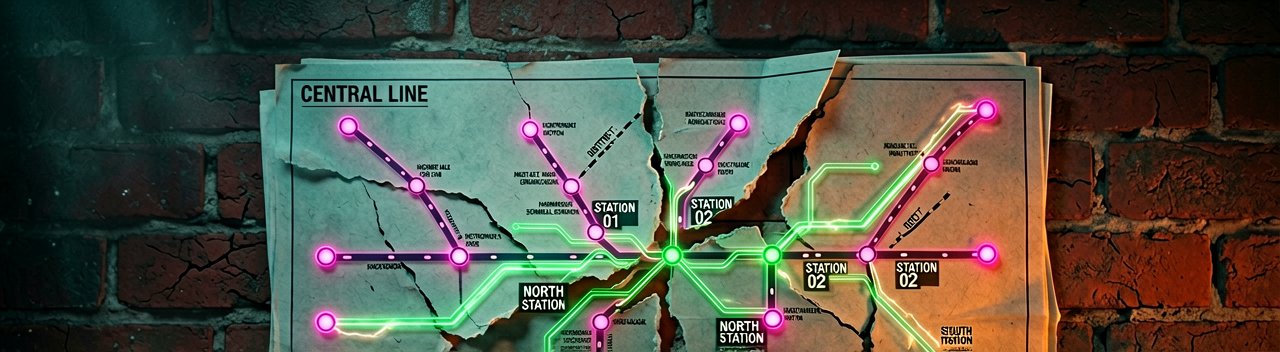
AI removes all the former scaffolding – both good and bad. It eliminates delay, compresses precedent, and automates pattern recognition at a scale no human can match. What once required teams, time, and billable hours now happens in seconds. The profession spent decades mimicking machine logic while abandoning the human disciplines that gave precedent, process, and deliberation their meaning. Now AI does the machine part better than we ever could. However, we optimized for operational intelligence and hollowed out the judgment that legitimacy requires.
Once the scaffolding falls away, what remains becomes clear: sound judgment, ethical stewardship, and the willingness to take responsibility for outcomes when process, precedent, and delay no longer provide cover. These capacities have not been institutional strengths because they were never systematically trained, reliably rewarded, or structurally reinforced. Rather, they have always been individual ones – and now they may be the only ones that ever really mattered.
The prevailing assumption in legal discourse is that artificial intelligence will reduce the need for human involvement by making legal work faster, cheaper, and more accurate. This assumption is backwards. As automation takes over the tasks that passed once for judgment (i.e. precedent matching, risk flagging, pattern recognition), it does not eliminate the need for human judgment. It concentrates responsibility in the decisions that remain: the ones involving ambiguity, competing values, incomplete information, and unpredictable consequences. Fewer lawyers will touch more consequential choices. The margin for error will narrow, not expand.
In practice, judgment is what remains when automated outputs conflict, when data is incomplete, when values collide, and when consequences cannot be predicted. It is the capacity to decide which risks are tolerable, which outcomes are unacceptable, and which principles must govern when no rule clearly applies. These decisions cannot be optimized or outsourced. They must be owned. In our most recent past, the lawyers who exercised real judgment by telling uncomfortable truths, making unpopular calls, and accepting accountability, were tolerated, sometimes admired, and often penalized. Risk minimization was rewarded. Moral clarity was not. Judgment existed, but it lived at the margins.
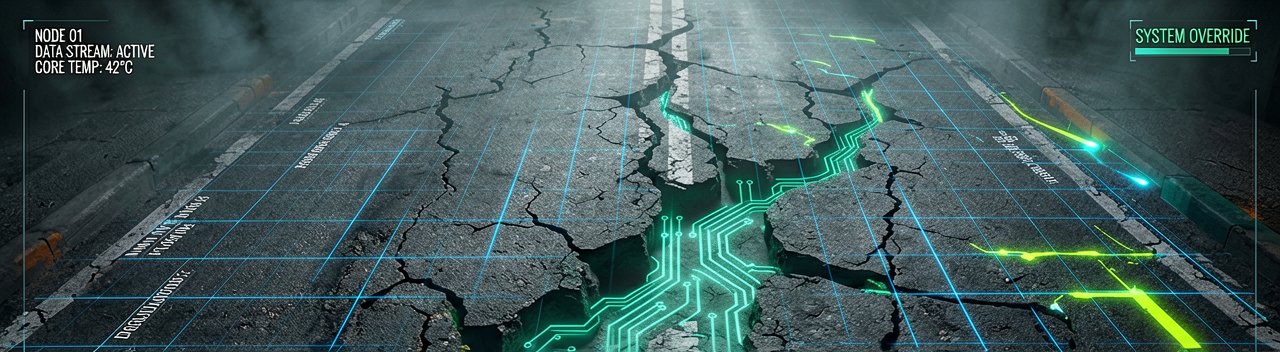
The cracks were visible long before AI forced a reckoning. Wellbeing initiatives and calls for reform revealed a profession trained to execute process – often at superhuman scale – while neglecting the cultivation of judgment. Precedent, meant to anchor judgment and preserve continuity, was increasingly used as a shield against responsibility rather than a framework for interpretation. Process and delay absorbed work that judgment once carried.
The problem, then, is not that law failed to adopt technology responsibly. It is that the profession has failed to treat judgment as a trainable, accountable discipline. Legal education has emphasized analysis without consequence. Professional advancement rewards risk avoidance over decision-making. Institutions are optimizing defensibility rather than discernment, and now AI simply exposes what the system deprioritized for decades.
That exposure brings the profession to a convergence point where the stakes extend beyond practice and into legitimacy itself. The rule of law depends on human judgment to resolve value conflicts that no algorithm can adjudicate. When AI compresses precedent and eliminates delay, the lawyer's role shifts from executor to owner of outcomes. The physical reality of this shift is immediate: fewer billable hours spent on document review, more pressure on the final decision that cannot be outsourced to a system. The keyboard clicks are the same, but the weight behind each keystroke is heavier.
The NYSBA's Committee on Artificial Intelligence and Emerging Technologies has been examining these issues through five distinct workstreams, including producing educational content and training modules for members of the profession. The committee also reviews AI-based software and machine-learning tools that may enhance the profession while analyzing those that pose societal and ethical risks. This institutional response acknowledges that the problem is not merely technical but structural.
Separately, the association released guidelines in January 2026 for civil legal service organizations looking to utilize AI technology. The recommendations emphasize using AI first for internal tasks such as research, drafting, and administration, which would minimize risk while increasing attorney productivity. Client-facing applications should be developed later with a clearly defined policy and an emphasis on human oversight. The report urges cautious and incremental steps, recognizing that training staff to evaluate AI is as important as training them to use it.
The distinction matters because the profession's response to AI will determine whether it becomes a tool for efficiency or a mechanism for further hollowing out the judgment that legitimacy requires. If law firms optimize for speed and cost reduction without cultivating the human capacities that technology cannot replace, they will produce faster, cheaper, and more dangerous legal work. The margin for error will narrow, not expand. In this environment, the absence of cultivated judgment is not merely inefficient; it is dangerous.
What must be restored is not a better toolset, but the human disciplines that technology cannot supply and institutions neglected to cultivate: the willingness to decide, to take responsibility, and to hold the line when systems cannot. The future of law will belong to professionals capable of deciding under pressure, taking responsibility without procedural cover, and exercising ethical stewardship when systems cannot resolve value conflicts.
Whether law firms actually invest in judgment training rather than just AI subscriptions remains the real question. The technology is already here, and it's not waiting for anyone to catch up.
Artūras Malašauskas is an AI Systems Integrator with 20+ years of production-grade web engineering experience. He has designed, shipped, and scaled enterprise Python/PHP systems for logistics, SaaS, and public-sector clients. For the past year, he has focused exclusively on AI integrations: deploying open-source LLMs, building generative media pipelines (image, audio, video), and engineering multi-agent workflows for real production environments. His standard: reproducibility, security, cost-efficient inference—no vaporware. He documents and evaluates emerging AI tooling, separating verified capabilities from marketing noise. Technical editor at: muza-ai.eu, ai-verslas.lt, ai-naujinos.lt Connect on LinkedIn
Comments