Demi Moore Says Film Industry Cannot Fight AI Rise
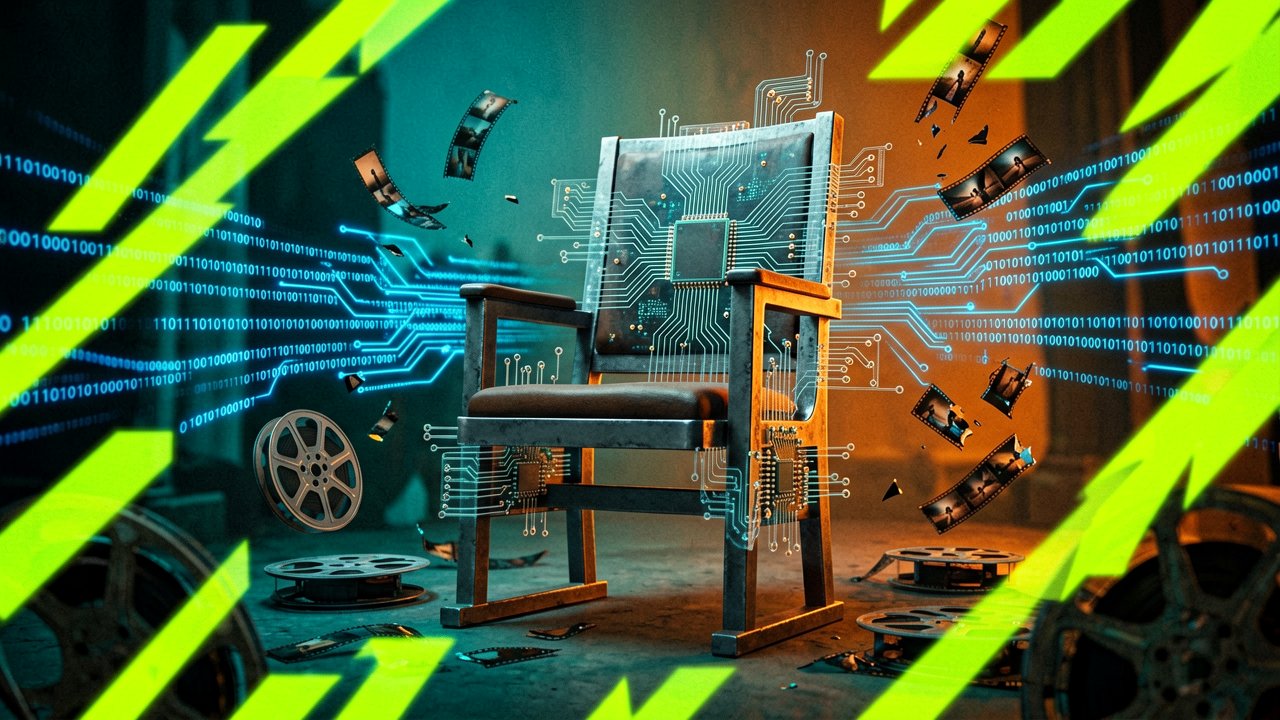
The Cannes Film Festival jury member Demi Moore has declared that the film industry cannot successfully resist the rise of artificial intelligence, calling opposition a battle that will ultimately be lost. Speaking during a press conference on Tuesday, May 12, 2026, the actress framed the issue as one of adaptation rather than confrontation.
According to The Guardian, Moore stated: "I always feel that against-ness breeds against-ness. AI is here. And so to fight it is to fight something that is a battle that we will lose. So to find ways in which we can work with it I think is a more valuable path to take."
The comments came during a press conference where Moore and fellow jury members, including chair Park Chan-wook, fielded questions about AI's impact on cinema. Moore acknowledged the technology's potential while drawing a hard line at what she believes machines cannot replicate.
"The truth is there really isn't anything to fear because what it can never replace is what true art comes from, which is not the physical, it comes from the soul," she said. "It comes from the spirit of each and every one of us sitting here, to each and every one of us who creates every day. And that they can never recreate through something that is technical."
Yet Moore's pragmatism extends beyond philosophical reassurance. When asked whether the industry is doing enough to protect artists from AI's encroachment, she offered a blunt assessment: "I don't know the answer to that. And so my inclination would be to say probably not."
This position places Moore in a growing cohort of A-list talent navigating the AI question. Reese Witherspoon recently advised followers to "do better" and "learn more" about AI before it eclipses public understanding. Sandra Bullock similarly suggested Hollywood will eventually "have to lean into" the technology, comments that drew criticism from recording artist Dionne Warwick.
The awards landscape reflects this tension. The Academy has implemented new rules to restrict AI in nominated productions, while the Golden Globes altered its regulations to more liberally permit AI use. The Globes' stipulations indicate that AI won't necessarily disqualify acting performances, provided they are "primarily derived from the work of the credited performer."
Moore's stance arrives as the industry grapples with practical implementation. The physical reality of AI integration means actors may face digital recreations of their likeness, writers could see scripts generated or altered by algorithms, and directors might work with synthetic performers alongside human talent. The friction points are tangible: contract negotiations, credit attribution, and the texture of on-set collaboration.
During the same press conference, screenwriter Paul Laverty raised separate concerns about Hollywood blacklisting actors who spoke in support of Gaza, citing Susan Sarandon, Javier Bardem, and Mark Ruffalo. The juxtaposition highlights how industry power dynamics intersect with technological disruption.
Moore's film The Substance, a body horror project, premiered at Cannes last year. The film's themes of physical transformation and artificial enhancement create an ironic backdrop for her AI commentary (though she didn't explicitly connect the two).
Whether the industry can genuinely "work with" AI while protecting artists remains the real question. Moore's acknowledgment that protections are likely insufficient suggests the path forward involves more than philosophical acceptance. It requires concrete safeguards, clear contracts, and mechanisms that prevent exploitation while enabling innovation.
The technology will arrive regardless of whether Hollywood welcomes it. The question is whether the industry arrives prepared to manage it, or whether it will be managed by it. Time will tell if "working with" AI means collaboration or capitulation.
Artūras Malašauskas is an AI Systems Integrator with 20+ years of production-grade web engineering experience. He has designed, shipped, and scaled enterprise Python/PHP systems for logistics, SaaS, and public-sector clients. For the past year, he has focused exclusively on AI integrations: deploying open-source LLMs, building generative media pipelines (image, audio, video), and engineering multi-agent workflows for real production environments. His standard: reproducibility, security, cost-efficient inference—no vaporware. He documents and evaluates emerging AI tooling, separating verified capabilities from marketing noise. Technical editor at: muza-ai.eu, ai-verslas.lt, ai-naujinos.lt Connect on LinkedIn
Comments