Sandia Deploys AI-Augmented Inspection for Ceramic Components
At Sandia National Laboratories, a new inspection workflow is taking shape that could help catch tiny defects earlier in the manufacturing process for ceramic components. The project represents a practical application of artificial intelligence in high-stakes manufacturing, where the margin for error is measured in microns and the consequences of failure extend far beyond the production floor.
Process engineer Jesse Adamczyk is leading the initiative, which involves installing new optical and acoustic imaging systems alongside an AI-assisted review tool. The goal is straightforward: speed up inspections while keeping people firmly in the loop. This isn't about replacing human inspectors with algorithms. It's about giving them better tools to do their jobs.
According to the official Sandia news release, the laboratory manufactures ceramic components for nuclear deterrence applications. These parts go into various weapon systems, making quality control non-negotiable. The current manual inspection process is extremely time-consuming, requiring operators to look through microscopes for defects that are subtle and hard to find.
The physical reality of manual inspection is grueling. Operators spend hours peering through microscope eyepieces, their eyes straining to spot anomalies that might be invisible to the naked eye. It takes one to two years to fully train an operator on the manual inspection process. That's two years of repetitive eye strain before someone is considered competent enough to work independently.
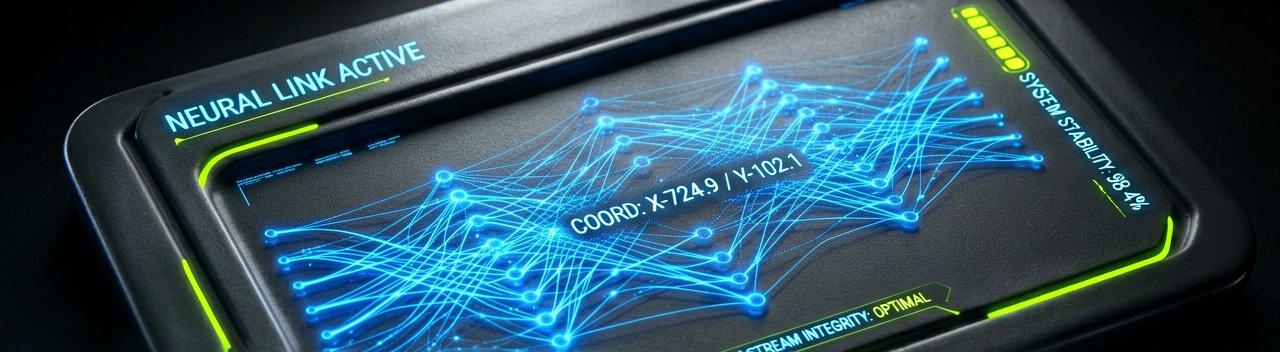
The new approach shifts that work to a digital workflow where images can be reviewed at a workstation. Operators will use an AI augmentation interface to perform anomaly detection from their desktops, with the AI highlighting potential defects for human verification. The system is designed so that while components are being scanned, operators can work on other tasks.
Adamczyk emphasized that inspections will not rely solely on AI. Operators will double-check to make sure the AI is highlighting real defects, and if there's a defect the AI misses, the operator will catch it. This human-in-the-loop design is critical for nuclear security applications where false negatives are unacceptable.
The project begins by scanning ceramic billets—the starter pieces that are later manufactured into finished components—using high-throughput imaging systems that create detailed digital records of each billet. It's pricey to get billets to their final component. If defects can be identified at the billet level, the laboratory doesn't put all that work into manufacturing the final component.
Earlier inspections will save time and money. The earlier you catch a defect, the less wasted effort you accumulate. This is basic manufacturing logic, but implementing it at scale requires sophisticated imaging and reliable AI detection. The acoustic imaging system recently installed at the lab adds another dimension to the inspection process, catching defects that optical systems might miss.

Independent reporting from Sandia's LabNews publication corroborates the timeline and scope of the changes. The new imaging systems and AI augmentation tool are scheduled to be up and running by early fall. Over the next few months, work documentation will be developed and released, and employees will be trained on the updated processes.
Adamczyk said operators are embracing the technology to help meet demand. They are thrilled to have these technologies coming online, and they're not going to be replaced. They're going to be reassigned because there's more work coming into the production floor. This is a crucial distinction—AI augmentation as workforce enhancement rather than workforce reduction.
The AI augmentation for active ceramics demonstrates what the Department of Energy's Genesis Mission is designed to accomplish: tackle the nation's most complex science and technology challenges using AI. In this case, it helps speed up the nuclear deterrence mission. The National Nuclear Security Administration's AI for Nuclear Security initiative, led by the Office of Advanced Simulation and Computing, is funding the project.
During a visit to the lab, employees were eagerly collaborating and learning how the new equipment works. The enthusiasm is notable because industrial workers often resist new technology that threatens their jobs. Here, the technology is positioned as a tool that makes their work less physically demanding and more efficient.
Adamczyk said the long-term goal is to deploy this workflow on the production floor as an exemplar and then take the same workflow and deploy it to other parts of Sandia and nuclear security enterprise sites. That's the scalability question that matters for government contractors and defense manufacturers watching from the sidelines.
The technical implementation involves several layers. High-throughput imaging systems create detailed digital records. The AI augmentation interface performs anomaly detection. Human operators verify the findings. Each layer adds redundancy, which is essential when the components being inspected are destined for nuclear weapon systems.
This approach differs from fully automated inspection systems that some manufacturers have deployed. Those systems run without human oversight, which can lead to false positives or false negatives that go undetected. The Sandia model keeps humans in the decision loop, which adds time but also adds accountability.
The training time reduction is significant. Instead of one to two years to train an operator on manual inspection, the new system should reduce that substantially. Operators still need to understand the technology and verify AI findings, but they don't need to develop the same level of visual acuity that years of microscope work requires.
There's also a quality-of-life component here. Looking through a microscope for hours is hard on the eyes and physically taxing. Working at a desktop workstation is less demanding. That's not just about comfort—it's about reducing fatigue-related errors in critical inspection work.
The funding source matters. The NNSA's AI for Nuclear Security initiative is backing this project, which signals government confidence in AI for critical infrastructure. This isn't experimental research; it's production deployment with taxpayer funding and national security implications.
Whether this workflow becomes the standard for nuclear component inspection remains to be seen. The technology works in theory, but real-world deployment always reveals edge cases that weren't anticipated during development. The early fall timeline suggests confidence, but also leaves room for adjustments.
Other defense contractors and government laboratories will be watching closely. If Sandia can demonstrate measurable improvements in defect detection rates, training time, and operator satisfaction, the model could spread across the nuclear security enterprise. That's the real value of this project beyond the immediate production floor.
The bottom line is that AI augmentation for component inspection is moving from concept to practice. Sandia is putting it to work on components that matter. Whether the technology delivers on its promises will become clear once the systems are fully operational and production data starts flowing.
For now, the operators are learning the new tools, the engineers are refining the processes, and the imaging systems are being calibrated. The work continues, and the real test begins when the first batch of AI-augmented inspections goes through the production pipeline. Whether users actually pay for it remains the real question—though in this case, the "users" are taxpayers and the "payment" is national security.
Artūras Malašauskas is an AI Systems Integrator with 20+ years of production-grade web engineering experience. He has designed, shipped, and scaled enterprise Python/PHP systems for logistics, SaaS, and public-sector clients. For the past year, he has focused exclusively on AI integrations: deploying open-source LLMs, building generative media pipelines (image, audio, video), and engineering multi-agent workflows for real production environments. His standard: reproducibility, security, cost-efficient inference—no vaporware. He documents and evaluates emerging AI tooling, separating verified capabilities from marketing noise. Technical editor at: muza-ai.eu, ai-verslas.lt, ai-naujinos.lt Connect on LinkedIn
Comments