SoftBank Unveils Five-Year AI Strategy Targeting 2031 Revenue Records
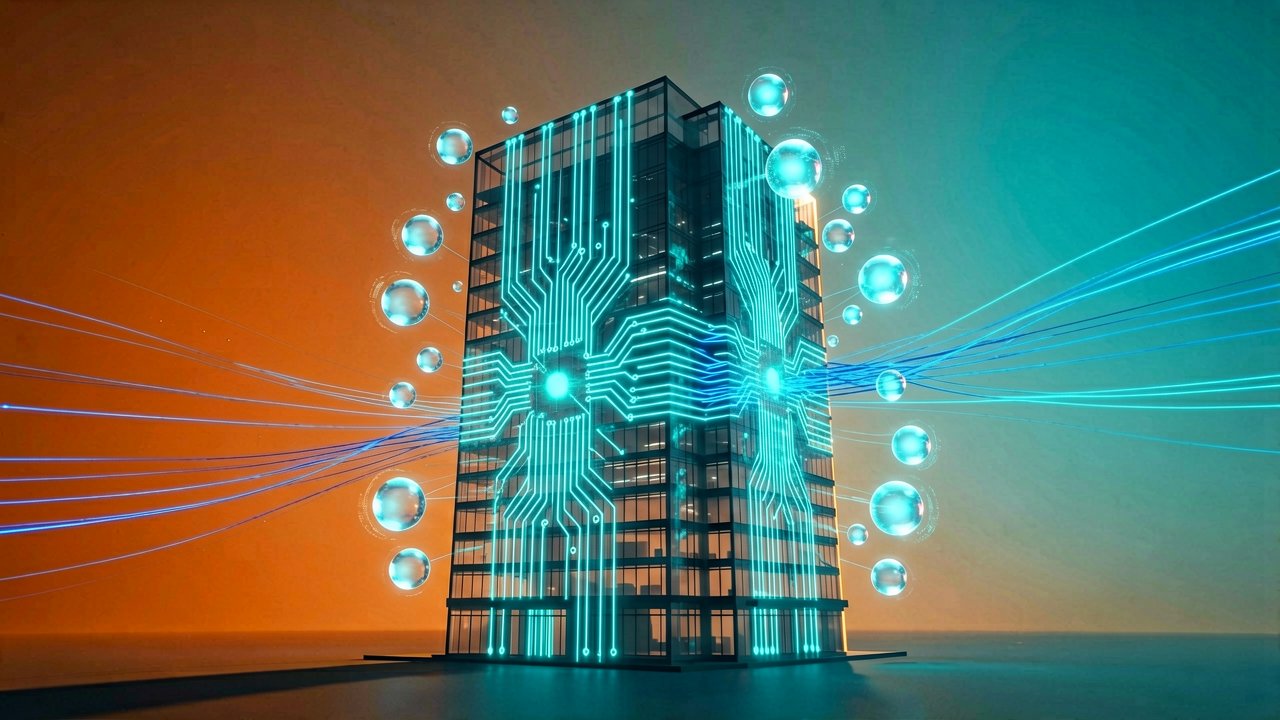
Japanese telecommunications operator SoftBank Corp. has officially pivoted from building AI infrastructure to monetizing it. The company unveiled a five-year strategic plan called "Activate AI for Society" that runs through March 2031, targeting record revenues of 9 trillion yen ($57.3 billion) and operating profits of 1.7 trillion yen ($10.8 billion).
The announcement follows fiscal year 2025 results that ended March 31, 2026. SoftBank reported an 8% revenue increase to 7.04 trillion yen ($44.8 billion) and a 5% operating profit rise to 1.04 trillion yen ($6.63 billion). All goals from the 2023-2026 medium-term management plan were achieved.
According to the official press release, the new strategy addresses a fundamental industry shift. AI focus is moving from large language model training and initial infrastructure investment toward inference execution and service deployment. The company refers to this combination of AI and electricity infrastructure as "next-generation social infrastructure."
SoftBank is integrating its commercial AI computing infrastructure and data centers into its Enterprise division, which currently generates about 14% of total revenues. This restructuring enables specific reporting on "cloud & AI" operations. The operator plans to monetize AI data centers in Tomakomai City, Hokkaido Prefecture, and Sakai City, Osaka Prefecture, providing GPU cloud and sovereign cloud services.

The infrastructure component is more than just servers. SoftBank announced a Japan-based battery business aimed at building power infrastructure to support rapidly increasing electricity demand from AI adoption. The Sakai, Osaka facility—formerly a Sharp LCD factory purchased for approximately ¥100 billion—will begin mass production in the fiscal year starting April 2026.
Target output is one gigawatt-hour annually once at scale. Partners include South Korea's Cosmos Lab, contributing zinc-halide cell chemistry, and DeltaX, handling systems integration. Zinc-halide manufacturing is targeted for 2027, with lithium-iron-phosphate supplying earlier volumes. The chemistry choice matters for data-center fire-code approval and avoids rare-earth and cobalt supply chains under Chinese export-control pressure.
On the software side, SoftBank is deploying "Telco AI Cloud," a vision that integrates GPU cloud, AI-RAN-based MEC (Multi-access Edge Computing), and a software stack called "Infrinia AI Cloud OS." This enables distributed AI infrastructure embedded within telecommunications networks rather than centralized hyperscaler clouds.
The AITRAS Orchestrator monitors computing resource demand for both AI processing and RAN control in real time. It dynamically allocates resources based on availability, application requirements, and projected power consumption. Within Telco AI Cloud, RAN itself is managed as a unified AI application, enabling cross-domain control across telecommunications networks and AI processing infrastructure.

SoftBank is also leveraging its enterprise customer base to accelerate monetization through AI services like Cristal Intelligence, an advanced enterprise AI system developed in partnership with OpenAI. The system is designed to securely integrate individual enterprise systems and data in ways customized for each company.
The operator is targeting sovereign cloud services provision to enterprise customers in 15 critical infrastructure sectors in Japan. It is building on development of its homegrown LLM, Sarashina, to offer industry-specific AI models to businesses.
Cloud & AI revenues are expected to double over the next five years. The company anticipates autonomous driving and robotics will become widespread as services within that timeframe. (The timeline is ambitious, to say the least.)
Physical AI collaboration with Yaskawa Electric Corporation and Ericsson has already demonstrated low-latency, high-reliability networks using AI-RAN. SoftBank has open-sourced the Dynamic Scoring Framework, a core function of the AITRAS Orchestrator, to lower barriers to AI-RAN adoption and accelerate commercial deployment.
The Sakai battery conversion represents one of the more concrete examples of Japanese industrial reuse. A high-volume display factory built for a category that lost out to OLED is now repurposed for the storage category AI has made urgent. The economics only work if utilization runs high, which is why SoftBank has chosen to vertically integrate.
Group debt remains the bigger conversation for investors. Sakai is, for now, a hedge that buys SoftBank a manufactured commodity it would otherwise be paying spot prices for. Whether users actually pay for the AI services remains the real question.
SoftBank shares closed roughly flat in Tokyo following the disclosure, with the battery story doing less to move the stock than ongoing OpenAI-margin-loan negotiations. The strategy is comprehensive, but execution in Japan's aging infrastructure landscape will determine whether these projections materialize or remain aspirational.
Artūras Malašauskas is an AI Systems Integrator with 20+ years of production-grade web engineering experience. He has designed, shipped, and scaled enterprise Python/PHP systems for logistics, SaaS, and public-sector clients. For the past year, he has focused exclusively on AI integrations: deploying open-source LLMs, building generative media pipelines (image, audio, video), and engineering multi-agent workflows for real production environments. His standard: reproducibility, security, cost-efficient inference—no vaporware. He documents and evaluates emerging AI tooling, separating verified capabilities from marketing noise. Technical editor at: muza-ai.eu, ai-verslas.lt, ai-naujinos.lt Connect on LinkedIn
Comments