Nvidia's $40B AI Push, Anthropic's Compute Deals, Mistral's European Expansion
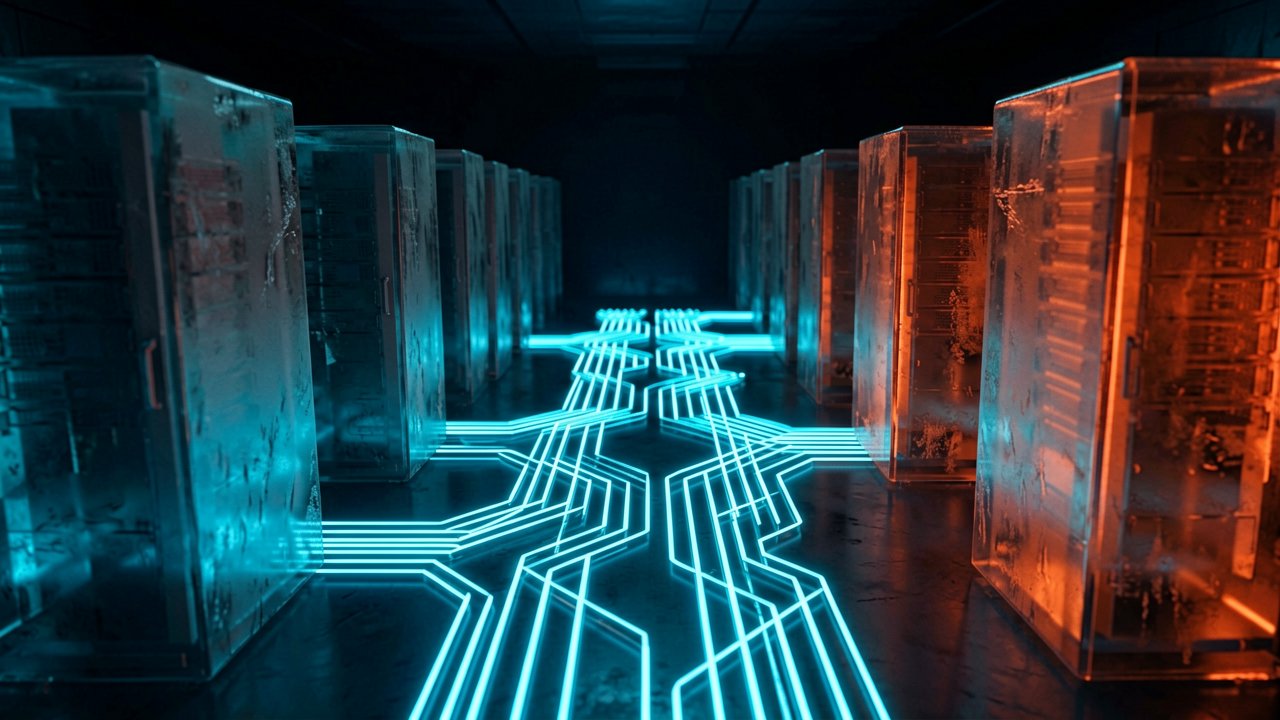
The AI infrastructure race has entered a new phase where chipmakers, model builders, and data center operators are converging into a single financial ecosystem. Nvidia has committed over $40 billion to equity investments in AI companies during the first half of 2026, according to TechCrunch. The chipmaker is no longer just selling hardware—it is financing the entire supply chain to ensure the world runs on Nvidia silicon.
Most of that $40 billion comes from a single $30 billion investment in OpenAI. The remainder includes seven multi-billion dollar deals with publicly traded companies, including up to $3.2 billion in Corning and up to $2.1 billion in data center operator IREN. Nvidia has also participated in around two dozen investment rounds in private startups in 2026 alone, following 67 venture deals in 2025.
This strategy creates a circular investment theme, as analyst Matthew Bryson of Wedbush Securities noted. Money flows from Nvidia to customers who then spend it back on Nvidia chips. If successful, this builds a competitive moat. If it fails, the entire ecosystem faces concentrated risk. The company's stock has risen more than 11-fold in four years, lifted by the global scramble to secure GPUs.
While Nvidia finances the hardware layer, model builders are racing to secure compute capacity. Anthropic has signed multiple agreements to secure gigawatts of next-generation capacity. The company announced a partnership with Google and Broadcom for multiple gigawatts of TPU capacity expected online starting in 2027.
Anthropic also expanded its collaboration with Amazon for up to 5 gigawatts of new compute, including Trainium2 capacity coming online in the first half of 2026 and nearly 1GW total of Trainium2 and Trainium3 capacity by year-end. The company is committing more than $100 billion over the next ten years to AWS technologies. Amazon is investing $5 billion in Anthropic today, with up to an additional $20 billion in the future.
Perhaps most surprisingly, Anthropic announced a deal with SpaceX to use all compute capacity at the Colossus 1 data center in Memphis, Tennessee—more than 300 megawatts. The agreement also includes interest in developing multiple gigawatts of compute capacity in space. This partnership came after Elon Musk repeatedly criticized Anthropic, calling it "doomed to become the opposite of its name." Musk later said he was "impressed" after meeting with senior Anthropic team members.
Anthropic's run-rate revenue has now surpassed $30 billion, up from approximately $9 billion at the end of 2025. The number of business customers spending over $1 million annually has doubled from 500 to over 1,000 in less than two months. Growth at this pace places inevitable strain on infrastructure, impacting reliability and performance for free, Pro, Max, and Team users during peak hours.
Meanwhile, Mistral AI is pursuing a different strategy: sovereign European infrastructure. The French startup secured $830 million in debt financing to fund a data center powered by 13,800 Nvidia GB300 GPUs near Paris. The facility will deliver 44 megawatts of compute capacity and is set to become operational in the second quarter of 2026.

Mistral aims to have 200 megawatts of capacity across Europe by the end of 2027. The company also announced a 1.2-billion-euro plan to build data centers in Sweden. CEO Arthur Mensch stated that scaling infrastructure in Europe is critical to ensure AI innovation and autonomy remain at the heart of the continent. The transaction was supported by a consortium of seven global banks including BNP Paribas, HSBC, and MUFG.
Mistral achieved a 20x growth in its ARR over the past year and is expected to cross $1 billion in ARR this year. The company positions itself as a sovereign, efficient enterprise layer for customers who want power without full dependency on US labs. Many of its customers are regulated, multinational, and infrastructure-heavy organizations that care deeply about jurisdiction, data handling, and vendor concentration risk.
The physical reality of this infrastructure race is becoming visible. Data centers consume megawatts of power. GPUs generate heat that requires liquid cooling systems. Engineers click through dashboards to allocate compute quotas that run out within hours. The abstraction of "cloud" disappears when you're waiting for a training job to queue while your competitors' models finish overnight.
These three companies represent different approaches to the same problem. Nvidia is buying its customers to lock in demand. Anthropic is diversifying across multiple hardware providers while spending billions on capacity. Mistral is building sovereign infrastructure to appeal to European governments and enterprises concerned about data sovereignty.
Whether any of these strategies prove sustainable remains to be seen. The $40 billion Nvidia has invested this year alone exceeds the total GDP of most countries. Anthropic's $100 billion AWS commitment spans a decade of uncertain technology shifts. Mistral's European data centers face regulatory scrutiny and power constraints.
The real question isn't which company wins. It's whether the infrastructure built today will still matter in three years when the next generation of chips arrives. (Nobody wants to be the company that bought yesterday's hardware at today's prices.)
For now, the money keeps flowing. The chips keep shipping. The data centers keep expanding. Whether users actually pay for all this capacity remains the real question.
Artūras Malašauskas is an AI Systems Integrator with 20+ years of production-grade web engineering experience. He has designed, shipped, and scaled enterprise Python/PHP systems for logistics, SaaS, and public-sector clients. For the past year, he has focused exclusively on AI integrations: deploying open-source LLMs, building generative media pipelines (image, audio, video), and engineering multi-agent workflows for real production environments. His standard: reproducibility, security, cost-efficient inference—no vaporware. He documents and evaluates emerging AI tooling, separating verified capabilities from marketing noise. Technical editor at: muza-ai.eu, ai-verslas.lt, ai-naujinos.lt Connect on LinkedIn
Comments