ImageKit Launches Conversational AI DAM Agent at No Extra Cost

Marketing and creative teams no longer need to navigate complex JSON configurations or build advanced search filters to manage their media libraries. ImageKit announced the launch of DAM Agent, a native AI assistant that translates plain English prompts into multi-step digital asset management operations.
The tool arrived on May 11, 2026, according to the official Business Wire press release. It's available immediately to all ImageKit users at no additional cost, which is unusual for enterprise-grade AI features that typically carry premium pricing.
Here's what actually changes in daily workflow. Instead of clicking through nested menus to find assets tagged "cars" uploaded in the last week, users type that request directly. The agent translates it into search logic across file names, tags, dimensions, upload dates, and custom metadata fields. For image-heavy libraries, it also guides users through visual search to find similar assets without manually constructing filter parameters.
Manu Chaudhary, co-founder and CTO of ImageKit, noted that traditional DAM interfaces relied on browser-based workflows and multiple clicks. These systems were powerful, but they weren't designed for the speed modern teams need (a problem that has plagued users for years, frankly). The agent exposes the same advanced DAM capabilities through descriptive prompts instead.

Technical teams will care about transformation URL generation. Describe the desired output in plain English, and the agent produces a valid ImageKit transformation URL with an explanation of applied parameters. This handles resizing, cropping, background removal, upscaling, and other real-time image transformations without assembling every parameter manually.
Governance automation gets simplified through Path Policy creation. Teams can describe rules for mandatory metadata, upload validation, default publishing states, and asset protection. The agent generates and configures the required policy logic. It also helps troubleshoot policy behavior when something isn't working.
Bulk operations include copying, moving, renaming, publishing, unpublishing, downloading, deleting, tagging, metadata updates, and archive creation. For sensitive actions, the agent summarizes proposed changes and requires explicit user approval before execution. This human-in-the-loop approach prevents accidental mass deletions or metadata corruption.
The agent operates within existing ImageKit permissions, ensuring users can only access and modify assets available to them. It also functions as an in-platform product guide, answering questions about features and workflows without leaving the dashboard.
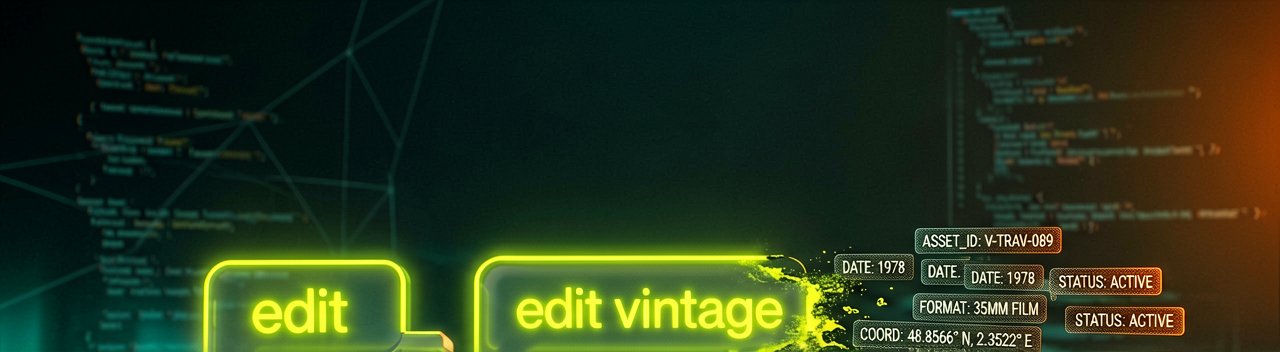
Image generation inside the DAM workflow supports quick mockups, campaign concepts, placeholder visuals, and first-draft creative variations. Teams can generate new visuals directly within ImageKit DAM without switching to a separate tool and importing files back.
According to ImageKit's official blog documentation, the agent helps configure AI Tasks that automatically classify and enrich assets based on business-specific taxonomy. Teams define tagging logic, connect AI-generated outputs to metadata fields, and apply classification workflows across multiple assets.
Industry observers note this positions ImageKit differently from competitors still requiring technical knowledge for advanced operations. The DAM News Round-Up from April 2026 highlighted the launch alongside broader industry concerns about AI adoption without proper metadata foundations.
Whether teams actually adopt conversational interfaces over traditional filters remains the real question. Some workflows still require precision that natural language can't guarantee, and the learning curve for prompt engineering exists even with AI assistance. The technology is there, but whether users trust it with critical asset operations is another matter entirely.
For now, the feature is live and free. Whether that changes once ImageKit introduces tiered pricing for advanced AI capabilities is something to watch. The real test comes when marketing teams stop treating it as a novelty and start depending on it for daily operations.
Artūras Malašauskas is an AI Systems Integrator with 20+ years of production-grade web engineering experience. He has designed, shipped, and scaled enterprise Python/PHP systems for logistics, SaaS, and public-sector clients. For the past year, he has focused exclusively on AI integrations: deploying open-source LLMs, building generative media pipelines (image, audio, video), and engineering multi-agent workflows for real production environments. His standard: reproducibility, security, cost-efficient inference—no vaporware. He documents and evaluates emerging AI tooling, separating verified capabilities from marketing noise. Technical editor at: muza-ai.eu, ai-verslas.lt, ai-naujinos.lt Connect on LinkedIn
Comments